
Container shipping has just lived through its third consecutive year of a peak season that arrived early and left just as fast. Shippers rushed cargo out ahead of the July 1 bunker adjustment factor reset, itself a product of fuel costs pushed up by the closure of the Strait of Hormuz. Meanwhile, continued avoidance of the Red Sea cut effective fleet capacity by around 12%, with slow steaming absorbing another 2%, according to MPC Container Ships chief executive Constantin Baack.
Idle capacity opened 2026 at just 0.6% of the global fleet. When ships run this close to full utilization, there’s no cushion left for the equipment side, either. A terminal that’s short on boxes during a front-loading rush can be sitting on a surplus a few weeks later, paying storage and demurrage on equipment nobody is ready to move.
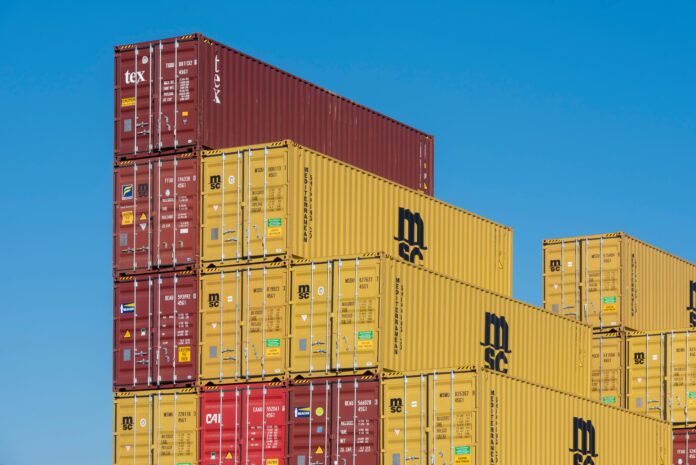
Imbalances like this are nothing new. They’re just happening more often and swinging harder, leaving less room to manage equipment by gut feel. The boxes stacking up in a yard are the part everyone can see, but they’re the symptom of a second pile that gets far less attention: the data sitting unused in the systems that were supposed to prevent this in the first place.
The second pile
Carriers, lessors, depots and container-heavy shippers aren’t short on information. TMS records, telematics feeds, gate moves, EDI booking data, depot inventories – most companies already have all of it. The trouble is that it lives in separate systems, owned by separate teams, built to answer separate questions.
Ask a planner where the network will be short in six weeks and where it’ll be long, and by the time anyone assembles an answer, the window to do anything useful with it has usually closed. That’s how a network ends up with shortages and surpluses side by side; a carrier leasing boxes at a premium at one port while, three time zones away, a terminal pays to store idle ones. Sometimes, both locations sit on the same trade lane, run by the same planning team, looking at data that was never merged.
That disconnect costs money and undermines sustainability, standardization, safety, and security. The fix for each one, however, starts in the same place. In practice, the data gap shows up in four places: sustainability, standardization, safety, and security.
Sustainability: fewer empty miles
Moving empty boxes around has always been part of the business. But Sea-Intelligence calculated this year that repositioning empties now accounts for 30% of all container shipping work measured in TEU-miles, up from 24% before the 2020 pandemic. The number of empty containers shipped has grown 65% since early 2019, while full containers grew 17%.
Each empty leg takes up a vessel slot and a crane lift, often with a truck or train move at either end, and it burns fuel without earning a cent. In June, Hapag-Lloyd told customers that operational disruptions were costing $50 million to $60 million a week, and the carrier has pointed to storage and inland transport as part of that bill.
A lot of empty moves exist to clean up earlier planning: a box gets sent somewhere on the assumption it’ll be needed, demand shifts, and a few weeks later it’s on the move again. The way out is to plan empty flows ahead of time instead of reacting once the imbalance is obvious.
A twelve- to sixteen-week forecast gives planners enough runway to reposition before a shortage hits, and also allows them to weigh the cost of storing a box against moving it across the whole network. If holding a container at a secondary depot is cheaper, that should be settled once, not argued over every week by whoever happens to be on shift.
Every reactive move that doesn’t happen saves fuel and emissions, and often a storage or demurrage charge as well. Getting there doesn’t take a single new ship or container.
Standardization starts with the inputs
A forecast can only work with data that lines up. Containers have a head start here that most industries would envy: every box carries an identity that means the same thing everywhere, thanks to an owner code register BIC has published continuously since 1970.
Location codes follow UN/LOCODE, and the Digital Container Shipping Association (DCSA), whose members account for about 75% of global container trade, has published data standards for bookings, track and trace and more. Implementation is where it falls down: early rollouts varied so much that, since mid-2025, the DCSA only lists the ones that pass its conformance testing.
Regulation is pushing in the same direction. Since January 1, 2026, amendments to SOLAS require every container lost or seen drifting at sea to be reported, and flag states now have to send annual loss figures to the International Maritime Organization (IMO). Until now, the industry relied on voluntary surveys to count losses, which the World Shipping Council estimates reached 1,478 containers in 2025. A mandatory, common reporting format is standardization at its most basic level.
For equipment planning, the day-to-day version of this is smaller and, quite frankly, more irritating. Two terminals on the same lane log a gate-out slightly differently, or a partner’s EDI feed codes a 40-foot high cube one way while the depot system codes it another, and suddenly the numbers don’t add up.
Before a forecast is worth trusting, booking patterns, gate moves, depot stock, and seasonal demand have to be pulled together and organized consistently by container type and location. Nobody needs to collect anything new to do that.
Safety: getting unsafe boxes out of circulation in time
Most planners know where their containers are, but far fewer know what state those containers are in; inspection and repair records usually live in maintenance systems the planning desk never opens.
Under the Convention for Safe Containers, every box has to be examined on a fixed schedule or under an approved continuous examination programme, and a container damaged badly enough to be unsafe has to come out of service. The approved programmes themselves are published in the Global ACEP Database, which BIC runs on the IMO’s recommendation.
The trouble starts when the exam schedule and the repositioning plan sit in separate systems: that’s how a container a few weeks from its exam date ends up on a long loop, or a damaged unit stays in use because the depot where it landed had no repair slot planned.
Condition also means cleanliness. The International Plant Protection Convention’s recommendation on the sea container pathway names incomplete unpacking and cleaning as a main source of pest contamination, and calls for empty containers to be examined and cleaned. Empties are exactly the boxes a repositioning plan moves around, so the same forecast that decides where they go can decide when they get checked.
Once condition data is part of the forecast, a planner can book repairs at the depots where boxes are going to sit idle anyway, and send units due for inspection or cleaning toward a facility that can handle them. Deciding whether to repair or retire a box then happens on a schedule rather than in a rush.
Security: knowing what should be where
Gaps between systems are also where criminals do their best work. Just last year, the World Customs Organization analyzed more than 2,600 drug seizures, and found that 68% involved someone working inside the maritime cargo supply chain. Containers accounted for 85% of the seizure events.
One finding should worry anyone managing empty equipment: gangs are increasingly hiding smaller loads inside the structure of refrigerated containers and collecting them at unsecured empty container yards once customs has cleared the box, often with help from insiders who can see logistics systems.
A network that forecasts where every box should be over the coming weeks has a baseline to check against, and a container sitting somewhere no booking explains – or one that has gone quiet for longer than usual – shows up as an exception instead of going unnoticed in an export file. That same record of equipment moves is also what compliance teams need when sanctions or conflict force a route change.
An intelligent layer, not another system
Most operators have invested heavily in the systems they run, and they’re right to be wary of anyone telling them to start over. But they don’t need to; the data for all of this already exists. What’s missing is something that reads systems together and turns data into a forecast planners can act on weeks ahead.
Ideally, it stays in the background, flagging when two terminals’ records don’t match, when a box due for inspection is about to head the wrong way, or when an empty in one yard is what another port will be short of next month.
Veson Nautical in July put the container orderbook at close to 40% of the existing fleet, with growth expected to outpace demand through the end of the decade. The next swing will hit a network with almost no idle capacity to absorb it, and the operators that handle it best will be the ones making full use of what they know about the boxes they have.
For them, better forecasting means fewer empty miles, data that lines up across partners, unsafe boxes pulled before they cause harm, and fewer blind spots for criminals to exploit – covering all four S’s with information they already hold.
This article was written by Asparuh Koev, CEO of Transmetrics