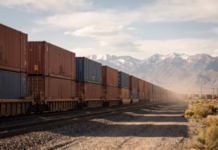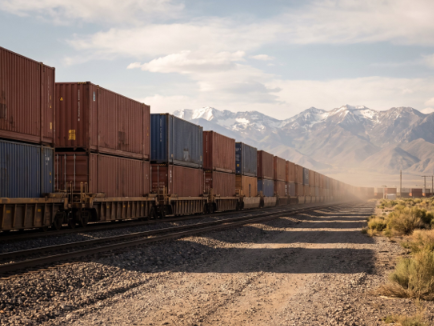
Coastal ports set the headlines, but the quieter story is what happens after the box leaves the ship. Once a container clears the terminal gate at Los Angeles or Long Beach, a growing share of it rides rail inland, where it gets unloaded, stored and sent on by truck.
Salt Lake City has become one of the clearer examples. Its west side now has two Class I railroads in reach, a state authority dedicated to freight-oriented development, and a warehouse market that has tightened as a result. For shipping lines, beneficial cargo owners and forwarders, the Utah story says something about where capacity is heading.
Why Containers Are Moving Inland

The logic is simple geography. Interstate 15 runs north-south, Interstate 80 runs east-west, and rail lines tie the valley back to the West Coast gateways. Moving a container by rail to an inland terminal frees up dock space and yard capacity at the port, and it pushes the storage and handling work to land that is cheaper and less congested.
That is what drives demand for 3PL warehousing Utah shippers can book close to the rail ramps, because the value of an inland container depends on how quickly it can be devanned, stored and re-dispatched. Warehouses within a short drayage run of the terminal save a leg of trucking and shorten dwell.
We’ve covered a version of the same idea in the UK, where port-centric warehousing puts storage right at the quayside. The Utah model applies it a few hundred miles inland, with rail doing the long haul instead of trucks.
What the Utah Inland Port Authority Is Building
Despite the name, Utah’s inland port isn’t a single facility and it isn’t a seaport. The Utah Inland Port Authority (UIPA) was created in 2018 as a special-purpose body that coordinates freight-related development across multiple sites. By its own account, UIPA’s project areas grew from one area to 13 additional ones beginning in April 2023.
The physical pieces are arriving in stages. A 43-acre intermodal facility opened in July 2025, giving the west side two Class I railroads, as Utah News Dispatch reported. In May 2026 the UIPA board approved $500,000 toward relocating the SLGW East Yard, and a groundbreaking followed on July 17, 2026 for a $31 million West Interchange aimed at reducing crossing delays.
Next up is Crossroads Port. UIPA said in August 2026 that remediation on Phase 1, roughly 175 acres, was substantially complete. Remediation isn’t construction, though, and shippers shouldn’t treat that land as available capacity yet.
Warehouse Space Is Tightening Where It Counts
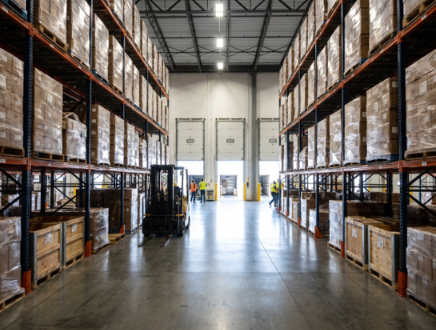
Broker data points the same way. CBRE put Salt Lake City industrial vacancy at 7.2% in the second quarter of 2026, the second straight quarterly decline, with about 2.8 million square feet of net absorption over six months. Colliers measured Salt Lake County direct vacancy at 4.79% for the same quarter, down from 5.46% a year earlier.
The two numbers look far apart because they cover different geographies and definitions. Read them as a direction, not a contradiction: space is getting harder to find. Smaller-footprint buildings generally appear to be tighter than the largest big-box blocks, so a shipper needing a modest pallet footprint may face more competition than one leasing a very large building. Check current size-band figures with a local broker before assuming either.
That pressure echoes our reporting on border warehouses as strategic infrastructure, which have become a planning question rather than a real estate afterthought.
What Shippers Should Weigh Before Committing to an Inland Node
An inland node isn’t a national answer. Salt Lake City serves the Western and Intermountain states well. For East Coast or Texas delivery it adds little, and some of the reach claims that circulate on provider websites are unsourced, so test them against actual transit times before building a network around them.
Transload is the other decision. Moving cargo from an ocean container into domestic trailers near the ramp can cut cost, but it needs dock capacity, labor and a clear handoff between the drayage and linehaul carriers. Foreign trade zone status, lease terms and tariff exposure all deserve a line in the business case too. Rail-linked transload is already being bought and built elsewhere, as we noted in a rail transload network deal in the Pacific Northwest.
Conclusion
Inland capacity is now part of container strategy, not a side detail. The things to watch in Utah are the completion of the West Interchange and how quickly Crossroads Port moves from cleanup to buildings that tenants can occupy.
Until then, the practical move is to treat vacancy figures as a trend, verify any reach or rate claim independently, and match the node to where your cargo is actually going.