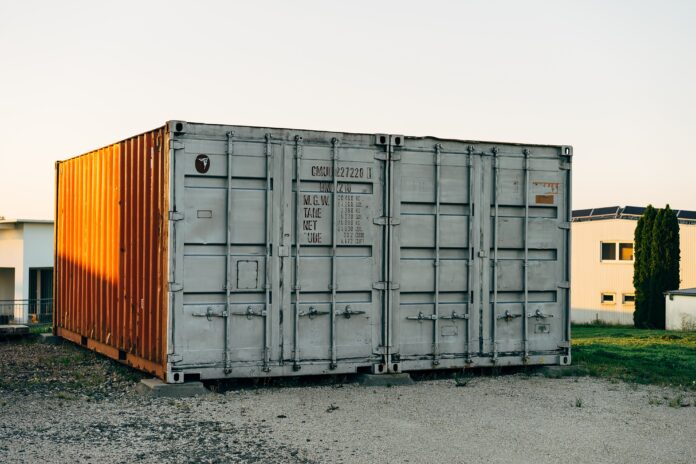
Three years ago a hardware buyer in Port of Spain was flying in forty kilos of fasteners every other week because it felt safer than committing to a container. Then a storm shut the airport for four days and his shelves went bare while a competitor’s container was already sitting on a dock, untouched. That competitor wasn’t smarter. They had just stopped treating a container like a gamble.
Here’s the math most importers run backward. They compare the freight invoice to the air waybill, see a bigger number on the container, and walk away. What they’ve skipped is the freight paid per unit moving through the box. Once you divide the container rate by the number of cases inside it, the margin usually flips, and it flips hard in favor of the ocean move. That’s the whole case for full container load shipping in a nutshell: you’re not buying space, you’re buying the unit cost hiding behind a scary total.
If your cargo is going to the Caribbean, the operator matters as much as the rate. Companies like full container load shipping specialists run fixed-day sailings into island ports where schedule slips cost real money, and a missed connection on a small lane can mean a week, not a day.
What Actually Changes When You Own the Box
Your freight stops sharing space with strangers. That’s the part people gloss over.
With a shared load, your pallets sit next to someone else’s chemicals, someone else’s returns, someone else’s mislabeled freight that customs decides to inspect. Your cargo waits for the problem to clear even though you did nothing wrong. When you book a dedicated container, the only freight the port has to examine is yours. That alone can save a week on a lane where berth windows are tight.
Dwell time is where island shipping gets expensive. A container sitting on a dock accrues detention charges, and detention doesn’t care whose fault the delay was. Own the box and you control the clock from stuffing to delivery.
There’s a security angle too, and it’s not paranoia. Fewer handoffs means fewer opportunities for a seal to get cut or a carton to go missing. If you’ve ever reconciled a shipment and found a short count no one could explain, you already understand why sealing the box yourself matters.
I’d take a dedicated container every time once volume clears roughly fifteen cubic meters. Below that, consolidation usually wins, and pretending otherwise lights money on fire.
Five Questions That Decide Your Booking in Ten Minutes
You don’t need a consultant to pick a mode. You need to answer five things honestly.
- How much cubic volume moves? Under fifteen cubic meters, look at consolidation first. Over that, run the container math before you dismiss it.
- How fast does the inventory need to sell? Air wins on perishables and launch stock. Ocean wins on anything that can sit thirty days without losing value.
- What’s your cash cycle? Ocean ties up capital longer. If that capital is expensive, price the delay honestly.
- How many handoffs can your cargo survive? Fragile, high-value, or theft-prone freight belongs in a box only you load.
- What does your carrier’s schedule look like at the destination? A cheap rate on a sailing that misses the weekly window is not cheap.
Run those before you run any rate comparison. Answering them first stops you from negotiating a price on the wrong service.
The Framework I Use: Ship, Sit, Sell
Every cargo decision splits into three costs, and naming them changes how you argue with your own finance team.
Ship is the freight: ocean or air, fuel, surcharges, drayage, port fees. Sit is what the cargo costs you while it’s in transit, which means your carrying cost, tied-up working capital, and any holding you pay on the receiving end. Sell is the demand clock, how long your customers will wait before they buy from someone faster.
Air shortens Sit and blows up Ship. Container shipping stretches Sit and collapses Ship. Sell tells you which one you can tolerate. A grocery distributor with a hard shelf-life window answers very differently than a hardware buyer with steady year-round demand. Most arguments about freight mode are really arguments about which of those three letters matters most that quarter.
Where Caribbean Lanes Break the Textbook
Island trades aren’t mainland lanes with a longer drive. Ports are smaller, berth windows are tighter, and a single weather event can reshape the whole schedule for weeks.
That’s why fixed-day sailings matter so much here. When a carrier commits to the same day every cycle, you can build receiving labor, customs brokerage, and trucking around a rhythm instead of a guess. Floating schedules force you to staff for a window that might slide three days either direction.
Documentation eats more time than shippers expect on these routes too. Island customs regimes vary widely, and a single missing certificate stalls the box at the worst possible moment. Sort your paperwork before the container leaves the yard, not while it’s floating.
It also helps to zoom out on why routes cost what they cost. According to the World Bank, logistics performance varies dramatically between economies, and port infrastructure is one of the biggest reasons. If you’re shipping into a smaller market, factor that variance into your lead time instead of pretending your schedule is guaranteed.
Where the Money Actually Comes From
Nobody is going to hand you a bigger budget just because you switched modes. The savings show up in smaller, quieter line items.
You stop paying per-unit air premiums on steady inventory. You stop re-buying stock at retail from a local supplier when a flight gets bumped. You stop eating detention because your cargo waited on someone else’s inspection. Stack those across a year and the container move stops looking like a cost and starts looking like margin you were giving away.
Market structure plays a role too. The OECD has documented how competition and pricing behave across freight markets, which is a polite way of saying rates move for reasons that have nothing to do with you. Locking in a predictable per-unit cost insulates you from some of that noise.
And freight security isn’t just a private concern. The Maritime Administration tracks cargo security and seal integrity as part of the broader supply chain picture, which tells you the risk is real enough to have a government office watching it.
What I’d Do Differently Starting Tomorrow
Pull the last twelve months of air invoices and calculate your blended cost per cubic meter. If that number is higher than a container rate divided by its capacity, you have your answer, and you probably have it in an afternoon.
Then check the calendar. If your inventory can survive a month at sea and your demand isn’t spiking, a container is doing exactly what it’s supposed to do: moving a lot of weight for a spread-out cost instead of a painful one.
One last thing I’d flag. Every early container booking I’ve watched go wrong failed in the same spot: someone assumed the schedule was airtight because the rate was good. Pick the sailing cadence before you pick the price. The rate saves you a few hundred dollars. The schedule saves you the customer.