
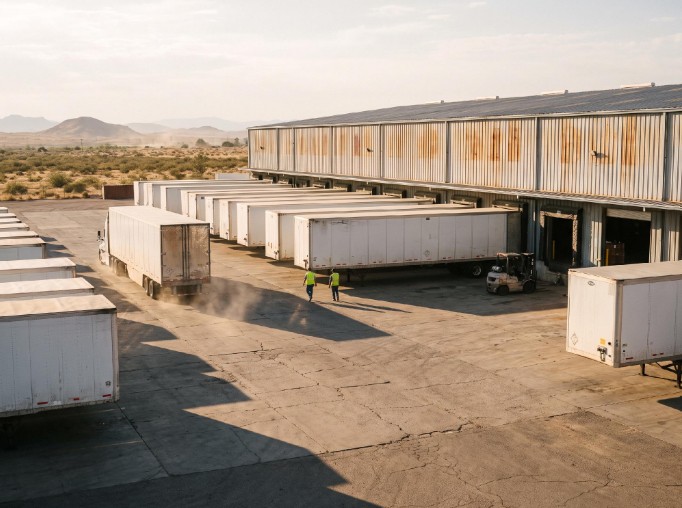
The US-Mexico border has become one of the busiest logistics corridors in North America. Record foreign direct investment, rising cross-border freight volumes, and a wave of manufacturing relocation are reshaping what shippers expect from a warehouse partner in the region. A pallet slot and a loading dock used to be enough. That’s no longer the case.
Mexico closed 2025 with $40.87 billion in foreign direct investment, up 10.8% year over year, and climbed to #19 on Kearney’s 2026 FDI Confidence Index, according to ITS Traffic. Much of that capital is landing in border-adjacent industrial parks, and it’s pulling freight, labor, and warehousing demand with it. For companies managing supply chains that touch the border, the question isn’t whether to add capacity. It’s what kind of capacity actually keeps pace with how fast the region is changing.
Why Basic Storage No Longer Cuts It
U.S. imports from Mexico rose 7.4% in 2025, according to a report from EAW Logistics, and that growth is straining warehouse capacity in border regions that were never built for this volume. A 2026 Deloitte study found that 62% of American companies are either considering or already relocating part of their production to Mexico, which means the freight surge isn’t a temporary spike. It’s a structural shift in where goods enter, get processed, and move north.
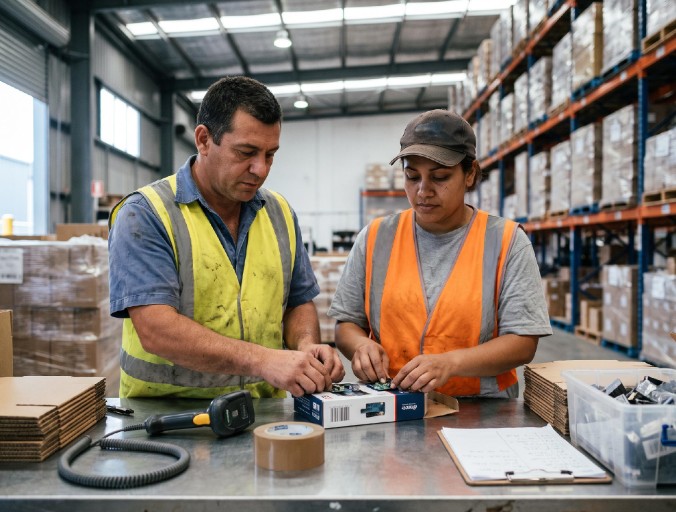
That kind of volume growth changes what shippers need from a warehouse. A facility that only stores pallets forces companies to run kitting, labeling, and returns processing somewhere else, usually farther from the border, which adds time and cost right when speed matters most. This is why more shippers are seeking out value-added warehousing services, facilities that combine storage with kitting, light assembly, reverse logistics, and vendor-managed inventory under one roof. Providers such as Loginam have built their border operations around this exact demand, positioning warehousing as an active part of the supply chain rather than a place where freight sits idle.
Bundling these functions close to the border cuts the number of handoffs a shipment goes through before it reaches a US retailer or distribution center. Fewer handoffs mean fewer chances for delay, damage, or a compliance error that holds up a container at the crossing.
What Value-Added Services Actually Include
Value-added warehousing covers more ground than most shippers realize until they need it. The core categories include:
- Kitting and light assembly, where individual components are combined into a single retail-ready unit before they ever leave the warehouse
- Product rework and refurbishment, catching damaged or mislabeled goods before they reach a customer
- Reverse logistics, managing returns efficiently enough that they don’t become a cost center
- Pick-and-pack fulfillment for direct-to-retailer or direct-to-consumer orders
- Vendor-managed inventory, where the warehouse partner tracks stock levels and replenishes automatically
- Specialized handling such as temperature-controlled storage or cleanroom operations for sensitive goods
None of this is new to logistics. What’s changed is where shippers need it done. A company relocating even part of its production to Mexico needs these services performed near the border, not at a facility three states away. Picking the right logistics partner increasingly means evaluating whether a provider can handle these functions on-site, not just whether it has open square footage.
The Nearshoring Numbers Driving Demand
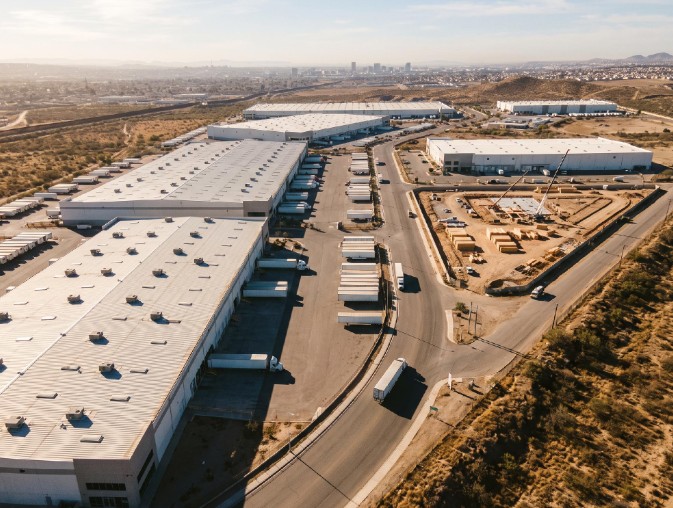
The financial case for nearshoring explains why this demand isn’t slowing down. Labor cost differentials, duty-free access under USMCA, and 2-5 day overland transit times create a total landed cost advantage of 20-30% compared with sourcing from Asia. Fully burdened Mexican manufacturing labor averages $6.51 an hour, against $31.59 to $32.27 in the United States.
Those numbers are pulling real capital into border-region infrastructure. Industrial real estate absorption in cities such as Tijuana, Monterrey, and Ciudad Juárez has climbed alongside the FDI figures, and warehouse operators in these markets are expanding faster than at any point in the past decade. The global 3PL market itself is projected to reach roughly $1.9 trillion by 2030, growing at CAGRs above 10%, driven in large part by e-commerce complexity and nearshoring.
Shippers who lock in border-region warehousing capacity now are positioning themselves ahead of a market that’s only getting tighter. Waiting until capacity is scarce means paying a premium for the same square footage that’s available at a fair rate today.
Why Border-Region Compliance Expertise Matters
Physical space and service capability only solve part of the problem. Cross-border freight also has to clear customs cleanly, and that side of the equation has gotten harder. Over 770 IMMEX programs were cancelled or suspended in 2025 as Mexican customs authorities intensified audit scrutiny. That enforcement wave means documentation and compliance support from a warehousing partner now carries as much weight as the physical storage itself.
IMMEX status allows manufacturers to import materials duty-free for processing before re-export, but it comes with strict recordkeeping requirements. A single documentation error can trigger an audit, a suspended program, or a container held at the border. Warehouse partners with IMMEX experience and current USMCA rules-of-origin knowledge reduce that risk considerably. The 3PL vs. in-house debate often comes down to exactly this kind of specialized compliance expertise. Most internal logistics teams simply don’t have the bandwidth to track regulatory changes on both sides of the border.
Organizations such as the Council of Supply Chain Management Professionals track these operational shifts closely, and their research consistently points to compliance capability as a differentiator among 3PL providers operating in cross-border corridors.
Choosing a Warehousing Partner for a Nearshoring Strategy
Not every 3PL is built for this moment. Shippers evaluating warehouse partners for a nearshoring strategy should weigh a few concrete factors before signing a contract.
Border proximity matters more than general geographic coverage. A warehouse an hour from the crossing behaves very differently than one three hours away when a shipment needs same-day processing. Scalable infrastructure matters too. Nearshoring volume isn’t static, and a partner that can’t flex capacity during a demand spike becomes a bottleneck rather than a solution.
Customs documentation support should be a standard offering, not an add-on request. And industry-specific handling capability, whether that’s temperature control for perishables or GMP-compliant space for pharmaceuticals, needs to match what a shipper actually moves. Companies focused on cutting logistics costs without sacrificing delivery speed tend to find that value-added warehousing pays for itself through fewer handoffs and fewer compliance headaches, not just lower per-pallet rates.
Border Warehousing Is Becoming Core Infrastructure
Nearshoring has moved past the planning stage for most companies that were considering it. The freight is already crossing the border in record volumes, and the warehousing infrastructure supporting it has to keep pace.
Value-added warehousing near the US-Mexico border isn’t a discretionary upgrade anymore. It’s becoming the baseline expectation for any shipper serious about executing a nearshoring strategy, and the providers who built for that reality early are the ones best positioned to handle what comes next.