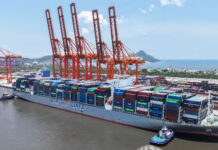


Around 1,000 suspected World War II-era bombs have reportedly been identified on the seabed at the Port of Thessaloniki, creating a new challenge for the ongoing expansion of Pier 6.
The findings were made following magnetic surveys carried out in the area of the major infrastructure project. According to local reports, around 80 of the objects identified weigh more than 50 kilograms.
The unexploded ordnance is understood to be located in areas associated with the construction and future operation of the expanded pier, including sections where dredging will be required to provide access for larger vessels.
State assistance sought
The Thessaloniki Port Authority (ThPA) is reportedly seeking assistance from Greek state authorities for the safe removal and management of the unexploded ordnance.
Handling the material requires specialised expertise and falls beyond the scope of conventional port construction activities. Greek military authorities are expected to play a role in determining how the objects can be safely removed or neutralised.
The issue could become particularly important for the construction schedule as work on the Pier 6 expansion progresses.
Installation of the caissons forming part of the new infrastructure is expected to continue, while clearance of affected seabed areas will be necessary before subsequent construction and dredging activities can proceed.
Previous ordnance discovery linked to Pier 6 project
The latest findings are not the first discovery of wartime ordnance connected with the Pier 6 expansion.
In June, a naval mine was discovered at a depth of approximately 28 metres in the sea area off Epanomi during survey work associated with the project.
At the time, the Thessaloniki Port Authority informed the Central Port Authority, while the relevant unit of the Hellenic Navy was also notified to take the necessary action.
The earlier discovery highlighted the possibility of additional wartime material being present in areas connected with the project.
Local reports suggest the newly identified objects may date back to the withdrawal of German forces from Thessaloniki during World War II. Their precise origin, however, has not been officially confirmed.
The discovery of unexploded ordnance now adds another operational consideration to the project, with the timely clearance of the affected areas likely to be important for maintaining the construction schedule.