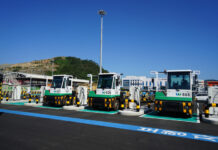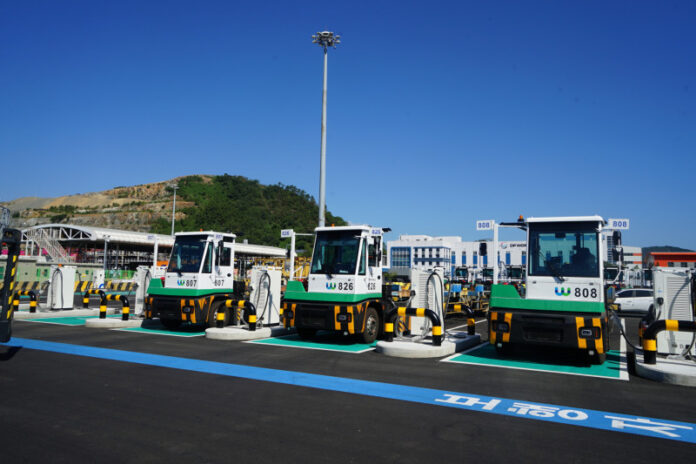
DP World has deployed 55 electric yard tractors at its Busan terminal in South Korea, replacing LNG-powered vehicles and accounting for approximately 36 percent of the terminal’s 154-strong yard tractor fleet.
The new electric tractors are expected to reduce CO2 emissions by approximately 70% per unit compared to the LNG-powered machines they replace, representing a significant step in reducing emissions from terminal operations at one of Asia’s busiest container ports.
As a participant in South Korea’s Emissions Trading Scheme, DP World Busan’s electrification programme aligns with both the company’s global decarbonisation commitments and South Korea’s broader ambitions for low-carbon logistics and greener port operations.
Beyond emission reductions, the transition will reduce the use and disposal of engine fluids, minimising leak risks and the environmental impact of terminal operations.
The electric tractors also offer quieter operation, smoother acceleration and more consistent performance during frequent stop-and-go movements, and with fewer moving parts than LNG-powered equivalents are expected to require less maintenance, supporting equipment availability and operational efficiency.
Anders Dømmestrup, Chief Operating Officer for Ports and Terminals Asia Pacific at DP World, described the deployment as an important milestone demonstrating that progress on emissions reduction can be achieved while continuing to deliver safe, efficient and reliable customer services.
The Busan deployment builds on similar electrification initiatives across DP World’s global terminal network, including the Port of Brisbane in Australia, Manila South Harbour in the Philippines and Laem Chabang International Terminal in Thailand.
DP World Busan plans to continue expanding electric equipment adoption as part of its longer-term terminal emissions reduction strategy.