DHL Global Forwarding has expanded its healthcare cold chain network with six new dedicated air cargo corridors connecting Europe and North America with major pharmaceutical markets across Asia.
The expansion is designed to improve the transportation of temperature-sensitive healthcare products, including pharmaceuticals, vaccines, biologics and clinical trial materials. It also provides customers with additional routing options and access to temperature-controlled air freight capacity.
The six new corridors connect Liège with Shanghai, Brussels with Shanghai and Singapore, and Cincinnati with Singapore, Tokyo Narita and Seoul Incheon.
Strengthening temperature-controlled air cargo operations
The new connections form part of DHL Health Logistics’ Cold Chain Network, which combines dedicated healthcare corridors with specialized handling procedures and temperature-controlled infrastructure.
Most flights supporting the corridors operate within DHL’s own air network, reducing the number of cargo handovers and allowing greater control over shipment conditions.
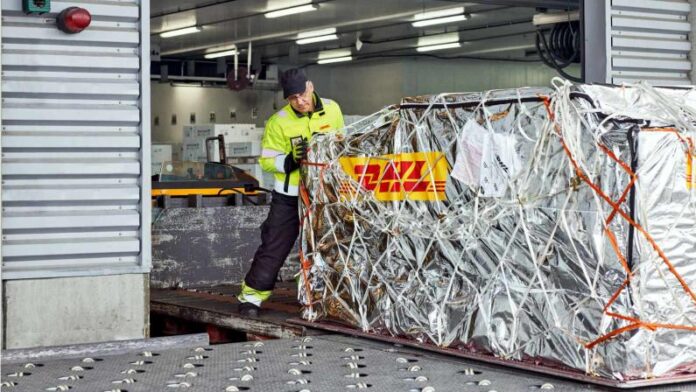
DHL uses Boeing 777 freighters with three compartments that can be configured for different temperature requirements. The network also incorporates thermal blankets and validated handling procedures to limit temperature exposure during cargo transfers.
“These new corridors further expand our Cold Chain Network into strategically important healthcare markets across Asia,” said Henk Venema, Global Head of Air Freight at DHL Global Forwarding.
The expansion follows the introduction of a Brussels–Cincinnati healthcare air corridor earlier this year.
Supporting healthcare logistics growth in Asia
The new Brussels–Singapore and Cincinnati–Singapore corridors reinforce Singapore’s position as a gateway for DHL’s healthcare logistics operations in Asia-Pacific.
DHL is also developing a new Singapore Cold Chain Hub, which will provide temperature-controlled storage and handling areas operating at 2–8°C and 15–25°C, alongside direct airside access.
In North America, Cincinnati remains an important gateway for pharmaceutical shipments to Asian markets. DHL is also expanding its life sciences and healthcare facility in Indianapolis, adding refrigerated operational and pallet storage space.
The company said the new corridors will support more reliable transportation of sensitive healthcare products while reducing supply chain risks.
DHL has not disclosed additional freight capacity or weekly flight frequencies for the six corridors.