
Asyad Drydock has announced its 2,200th drydocking milestone at Posidonia 2026, reporting record activity levels as the Omani shipyard continues to expand its repair and conversion business.
Drydockings in the first five months of 2026 increased by more than 10 percent compared to the same period last year, building on consecutive record years in 2024 and 2025 when the yard completed repairs on more than 230 vessels annually, the highest figures since the facility opened in 2011.
CEO Ahmed bin Ali Al Bulushi attributed the yard’s growth to its strategic positioning on the Arabian Sea, directly along the Asia-Europe and Asia-Africa maritime corridors.
This location enables vessel operators to optimise voyage efficiency by avoiding costly detours into the Arabian Gulf, preserving valuable sailing time.
The yard’s integration within the broader Asyad Group logistics and supply chain ecosystem further supports operational performance by accelerating the supply of equipment and spare parts.
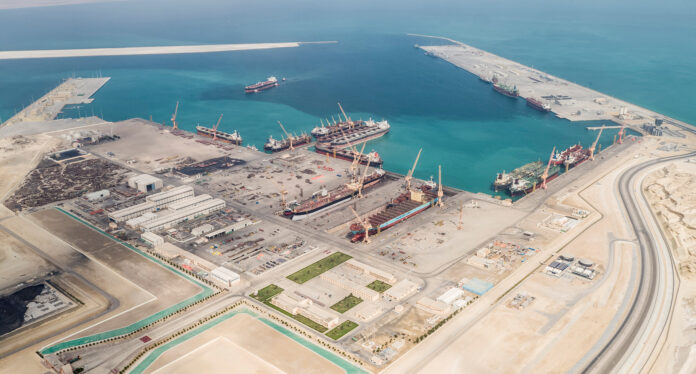
The 1.2 million square metre facility at the Port of Duqm features two graving docks capable of accommodating vessels up to 500,000 DWT and 600,000 DWT respectively, complemented by steel fabrication, engineering, coating and blasting capabilities.
The yard services a diverse range of vessel classes including VLCCs, tankers, car carriers, bulk carriers and cruise ships.
Recent operational enhancements include deployment of an additional floating drydock, ABS certification for large-vessel propeller blade repairs, advanced sustainable coating systems and robotic hull-cleaning technology.
The yard has also expanded into shipbuilding, securing an agreement to construct Oman’s first domestically manufactured tugboat for Oman LNG in partnership with Svitzer.
Al Bulushi highlighted continuing investment in infrastructure at Duqm and the incentives offered by the Special Economic Freezone, including tax benefits and full foreign ownership rights, as factors attracting new suppliers and OEM facilities to the port ecosystem.