

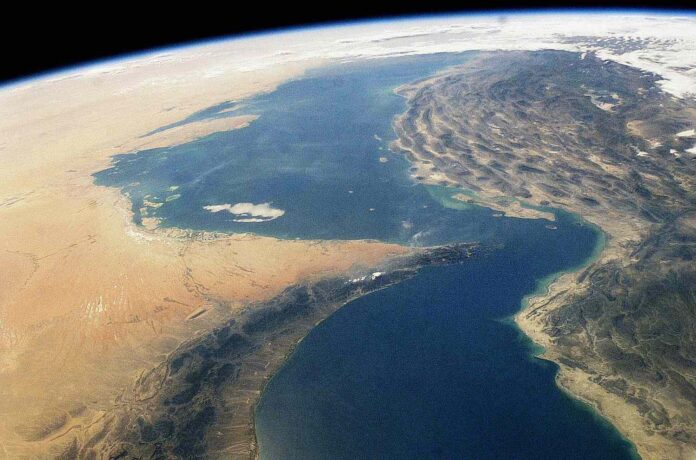
The US-Iran interim agreement appears to be driving a gradual reopening of the Strait of Hormuz, even with Iran announcing a renewed closure following Israel and Hezbollah exchanges of fire.
Though still well below pre-war levels, Hormuz transits have increased since the announcement of the Memorandum of Understanding. As part of this week’s renewed negotiations, Iran and the US have opened a hotline between the two to avoid miscommunications regarding traffic through the Strait. But talks have also shown Iran intends to assert some control over the waterway as part of the settlement – a big shift from the pre-war status quo.
The renewed traffic comprises mostly tankers, and container carriers are likely to activate mostly feeder services instead of long haul port calls to the Gulf once transits do rebound and until confidence returns to the lane. The prospect of peace has driven CMA CGM to increase its Red Sea transits, which could signal more carriers will follow that lead at some point if negotiations progress.
The prospect of more stability as well as the fact of an increase in oil flows have already driven down crude prices, with some measures now only 5% higher than before the war. Bunker and jet fuel prices are also easing with bunker rates down 25% from their March highs and 12% compared just to the start of June, though prices remain about 40% higher than in February. Jet fuel prices are down more than 40% from their peak and are 20% higher than before the closure.
But even as fuel costs ease, container rates continue to climb as peaking demand from an early busy season is keeping vessels full at least into July. This development likewise means spot rates will start easing from the current or near term levels as demand decreases, regardless of what happens in the Strait.
The early start to peak season – driven by multiple factors including frontloading ahead of BAF increases, coming Section 122 tariff expirations and Section 301 introductions for transpacific shippers, and July manufacturer price hikes – has some observers expecting bookings to peak in June, which could mean carriers will find more resistance to July rate increases than they have to June price hikes so far.
For now though, prices are high and getting higher. Transpacific rates climbed 19% to the West Coast to more than $5,700/FEU, with daily prices past the $6k/FEU mark so far this week. Rates to the East Coast increased 13% to $7,400/FEU last week with daily rates now past $8,000/FEU – a mark already above last year’s peak season high. Some carriers have announced additional steep increases for July.
Asia – Europe rates grew 13% last week to $4,700/FEU and Asia – Mediterranean prices increased 16% to $6,300/FEU, both well above last year’s peak season highs but level so far this week. The recent increases pushed Mediterranean rates to about the announced GRI or PSS levels, while Europe prices are about $1k/FEU beneath the target set by several carriers.
Planned July increases have some carriers aspiring for Asia – Europe rates $3k/FEU higher than current levels and Mediterranean prices $1-$2k/FEU higher, with increases announced across an array of secondary lanes as well.
The sharp June rate gains show that even as the global fleet continues to grow, significant increases in demand and shipper urgency – currently helped along by a fuel price-adjusted elevated starting point, Red Sea diversions, and peak season congestion causing delays and likewise effectively reducing capacity – are still enough to push spot prices to very elevated levels, at least for a while.
But with rates on some lanes already below aspired-to levels, and frontloading implying an early end to the fairly sudden demand boom, the question remains how much higher prices will climb and for how long.
As noted, jet fuel prices have eased since the prospects of a reopened Hormuz have increased. So far though, air cargo rates have stayed level, though down from earlier highs on most lanes, including for China, South Asia and Southeast Asia cargo flows to Europe. Prices to N. America have nonetheless trended upward, possibly buoyed by last chance Amazon Prime Day demand.
The European Union will suspend its de minimis exemption on July 1st. Though many observers expected last year’s US rule change to drive a transpacific e-commerce exodus from the air, the big e-comm platforms mostly adjusted tactics, preserving e-comm volumes as a still major – if not as colossal – driver of air demand. Most experts, therefore, don’t expect the EU rule change to trigger a sharp drop in e-comm flows or air rates.
But the change will make the EU, in comparison, suddenly much less attractive to cross-border e-comm sellers than the nearby UK market, which will only change its de minimis rules in 2029. This looming disparity has some in the UK warning of a coming flood of low cost goods starting in July, and urging the government to expedite the policy shift.
Judah Levine, Head of Research, Freightos Group (Nasdaq: CRGO)
![Maersk Container Industry [ Star Cool 1.1 ]](https://container-news.com/wp-content/uploads/2024/09/Star-Cool-1.1-218x150.jpg "Maersk raises Benelux intermodal fuel fees")