

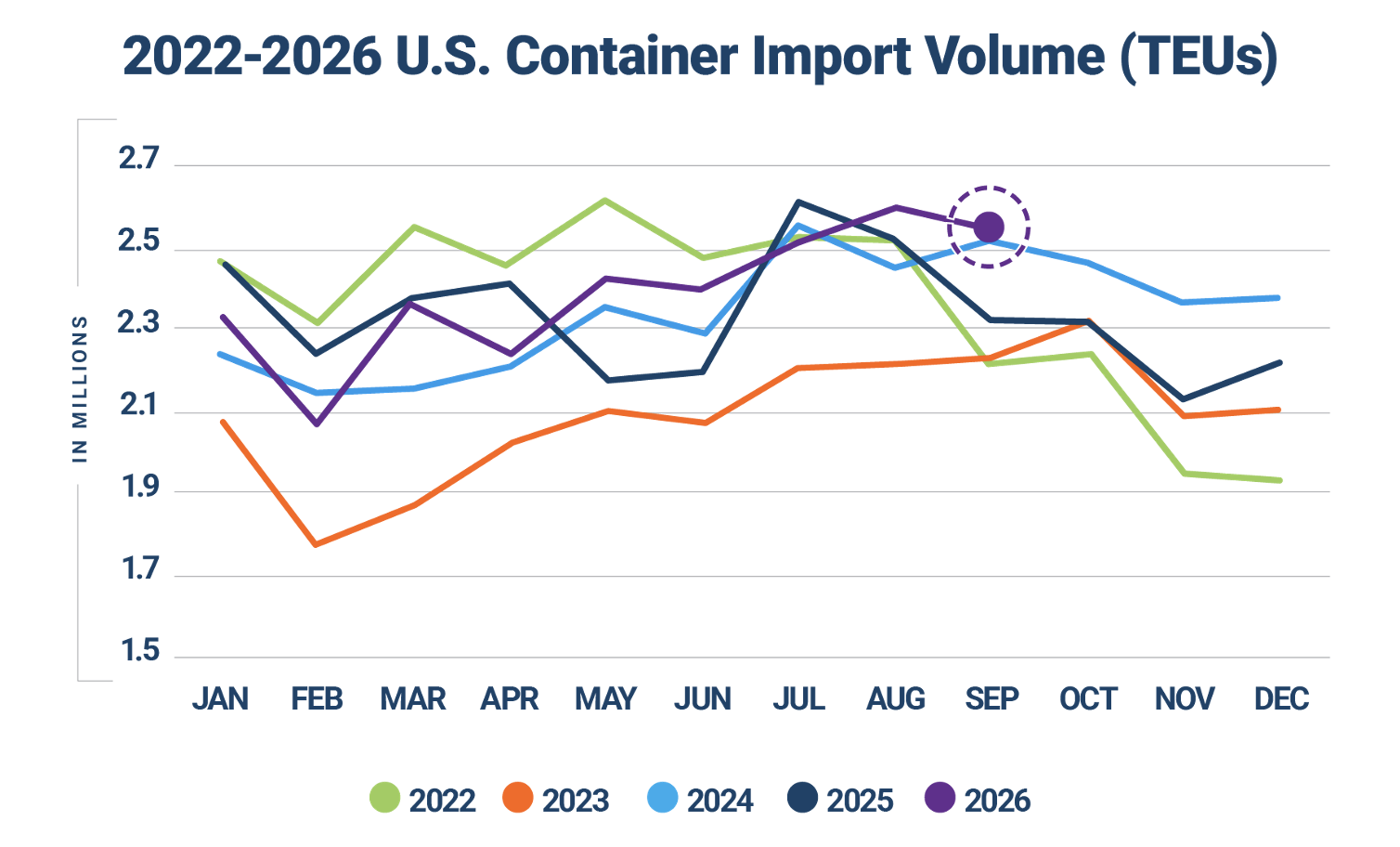
US container imports reached a record high for September 2026, despite a slight decline from the previous month, according to the latest Global Shipping Report from Descartes Systems Group.
Imports totaled 2,546,261 TEUs, marking a 10.3% increase from September 2025. Volumes were also 24.8% higher than in September 2019.
However, compared with August 2026, container imports declined by 2.2%.
The strong September performance pushed cumulative US container imports for the first nine months of 2026 to 0.8% above the same period last year. This marked the first time in 2026 that year-to-date volumes exceeded their 2025 levels.
Imports from China increase sharply
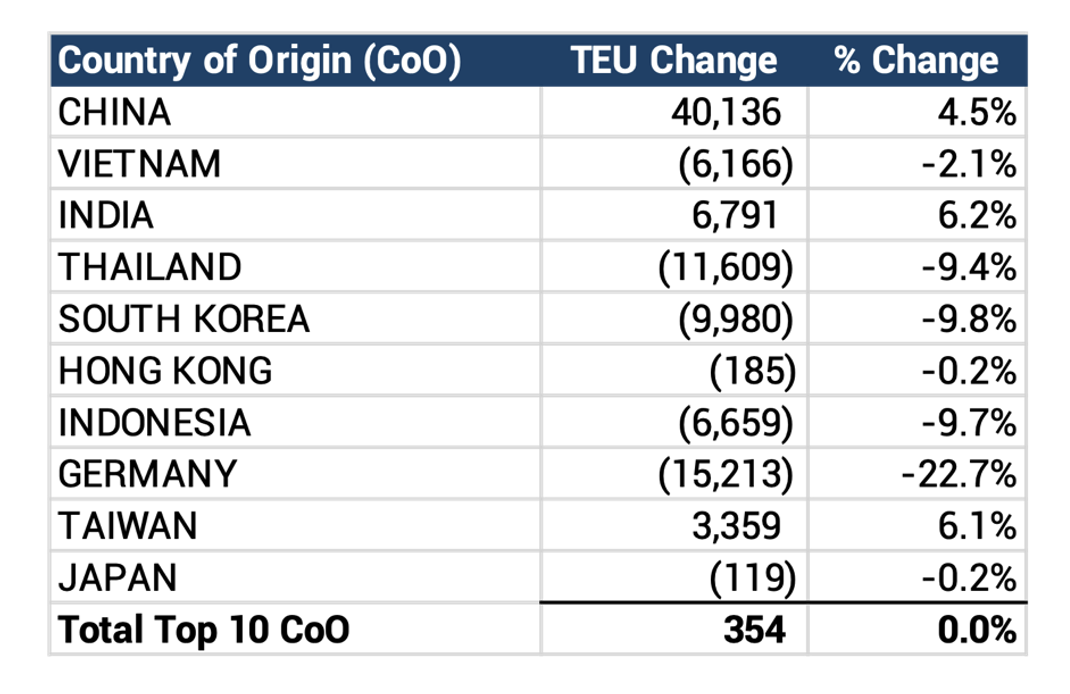
China remained the largest source of US container imports, with volumes reaching 924,454 TEUs in September.
This represented a 4.5% increase from August and a 21.2% rise compared with September 2025.
As a result, China’s share of total US container imports increased from 34% in August to 36.3% in September.
Plastics accounted for the largest share of China-origin shipments, totaling 135,097 TEUs. Furniture and bedding followed with 123,574 TEUs, while toys and sporting goods contributed 92,842 TEUs.
Meanwhile, India and Taiwan also recorded monthly increases. However, seven of the ten leading countries of origin reported lower import volumes.
US port delays rise despite strong volumes
The report also highlighted changes in cargo distribution across major US ports.
West Coast gateways gained market share during September. In contrast, several ports along the East and Gulf coasts recorded declines in their shares of total imports.
At the same time, port transit delays increased at eight of the ten largest US container ports.
The combination of strong import demand and rising delays points to continued operational pressure across the country’s maritime supply chains.
“Record September import volumes show that U.S. maritime trade remains remarkably strong despite persistent trade and geopolitical pressures,” said Jackson Wood, VP, Product Management, Trade Regulations, Descartes.
Wood also highlighted the challenges facing importers, including changing tariff requirements, rising port delays and uncertainty along major shipping routes.
The October report indicates that US container demand remains resilient as the final quarter of 2026 begins. Nevertheless, port congestion and shifting trade policies continue to complicate freight planning and cargo routing decisions.