
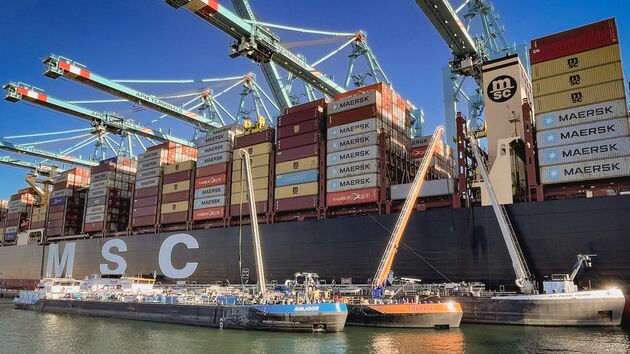
Bunker sales at the Port of Rotterdam declined by approximately 25% in the first quarter of 2026 compared to the same period in 2025, with the contraction concentrated in the fossil fuel segment.
VLSFO recorded the steepest drop at 44 percent, followed by HSFO at 25% and ULSFO at 13%. Fossil distillates also declined, with MGO down 7% and MDO down 11%.
Alternative fuels moved in the opposite direction, registering a modest increase. Sales of bio-LNG, LNG, bio-methanol and methanol grew by 6.4% combined, while bioblended fuels rose by 2.7%, driven primarily by a shift toward bioblended distillates.
Bioblended LNG was supplied at meaningful commercial scale for the first time, exceeding 15,000 cubic metres during the quarter.
Several factors contributed to the overall decline. The implementation of RED III in the Netherlands has resulted in higher bunker prices relative to neighbouring ports, potentially diverting demand to competing bunkering locations.
Regulatory and operational policy changes may also have influenced purchasing patterns, while price volatility and broader market uncertainty appear to have dampened bunker demand at Rotterdam during the period.
The port authority noted that the effects of developments in the Strait of Hormuz are not yet reflected in the first-quarter bunker figures, suggesting that the full commercial impact of Middle East disruptions on Rotterdam’s bunkering activity remains to be seen in subsequent quarterly data.