
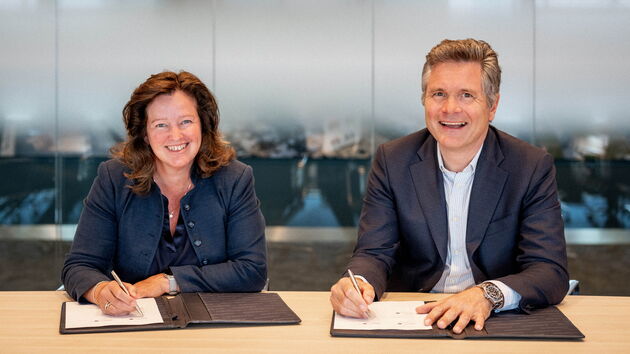
The Port of Rotterdam Authority has transferred Routescanner, its digital platform for comparing and planning container transport routes, to Royal Dirkzwager, a provider of maritime information and data solutions.
The move is consistent with the Port of Rotterdam Authority’s strategy of developing innovations internally before transferring them to market players for scaling, and is intended to give Routescanner the specialised environment needed for its continued international growth.
Routescanner was established by the Port of Rotterdam Authority in 2017 and has since been developed to improve transparency and efficiency in container transport.
The platform allows users to compare multimodal transport options across routes, providers, transit times and CO2 emissions, supporting smarter and more sustainable logistics decision-making.
The transfer creates a complementary pairing with Royal Dirkzwager’s existing Ship2Port platform, which provides real-time insights into ship movements, port calls and operational planning.
While Ship2Port addresses the maritime leg of the supply chain, Routescanner adds planning and optimisation capabilities for hinterland transport, together enabling end-to-end supply chain visibility from vessel arrival through to inland delivery.
Routescanner’s operations will remain based in Rotterdam, with some staff transitioning to Royal Dirkzwager. Existing clients and partners have been assured that current platform functionality will be retained and further developed under the new ownership.
Vivienne de Leeuw, CFO of the Port of Rotterdam Authority, expressed confidence that Routescanner is well positioned for further development under Royal Dirkzwager’s stewardship.
Joan Blaas, CEO of Royal Dirkzwager, highlighted the combined capability of the two platforms as enabling more effective prediction, planning and optimisation across the full supply chain from coast to hinterland.