
The Port of Antwerp-Bruges handled 65.5 million tonnes of maritime cargo in the first quarter of 2026, a 3.2% decrease compared to the same period in 2025.
The result reflects a combination of adverse weather conditions, industrial action, geopolitical tensions and structural weakness in European industrial output.
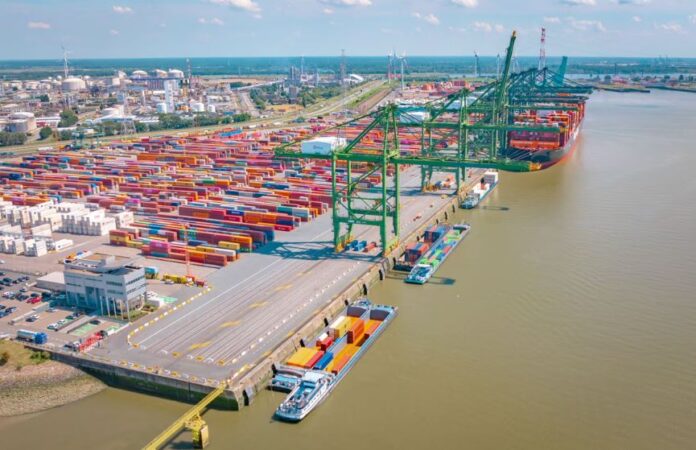
After a difficult January and February, volumes recovered in March, underscoring the port’s underlying resilience but also highlighting the need for additional container handling capacity.
Container throughput bore the heaviest impact, declining 5.5% in tonnage and 2.6% in TEU year-on-year. The comparison is partly unfavourable due to a strong start to 2025, when container alliance restructuring generated elevated inbound volumes.
The current weakness also reflects the deteriorating export position of Western European industry. Bulk cargo remained broadly stable, declining just 0.6%, while RoRo traffic increased.
Several discrete disruptions compounded the underlying pressure during the quarter. A snowstorm and prolonged cold spell in January, followed by severe storms in the Bay of Biscay until mid-February, disrupted shipping and terminal operations.
A four-day strike against pension reform further interrupted the nautical chain, causing vessel diversions to competing ports and constraining call-size handling due to insufficient spare terminal capacity.
In total, an estimated 100,000 TEU, equivalent to approximately 1.1 million tonnes, of container throughput was lost as a direct consequence of these disruptions.
The impact of the Middle East conflict and Strait of Hormuz closure was limited in the first quarter due to longer sailing times via the Cape of Good Hope, though initial effects began materialising from late March.
The last LNG tanker from Qatar arrived at Zeebrugge on March 23, and container lines began adjusting schedules toward alternative ports in the Middle East and eastern Mediterranean.
Imports from the Persian Gulf fell 12% and exports to the region declined 49% during the period, attributable largely to weather-related disruptions rather than the conflict directly.
The most significant ongoing impact of the Hormuz blockade is indirect, operating through rising energy and fuel prices that increase bunker and transport costs and further erode European industrial competitiveness.
Low European gas storage levels requiring replenishment ahead of winter, combined with supply chain disruptions for certain product categories, are generating additional uncertainty and inflationary pressure that may weigh more heavily on second-quarter performance.