
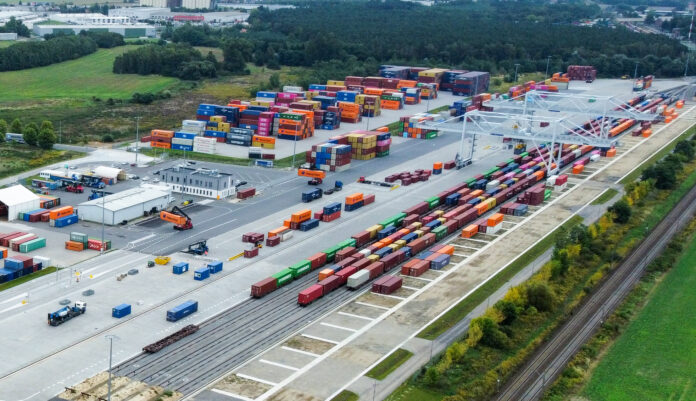
METRANS has completed a major expansion of its intermodal terminal in Gądki, near Poznań, Poland, increasing annual handling capacity by almost 80% to around 590,000 TEU.
The HHLA subsidiary has also increased the terminal’s maximum container storage capacity from 8,850 TEU to 11,800 TEU. The project included new rail infrastructure, additional handling equipment and expanded operational areas.
METRANS expands rail and container handling infrastructure
Two new remote-controlled rail gantry cranes, each with a span of 80 metres, have entered operation at the terminal. METRANS also added two railway tracks and extended the three existing tracks to more than 750 metres.
The longer tracks allow the Gądki terminal to accommodate full-length freight trains, strengthening connections between seaports and inland markets across Central Europe.
“Gądki demonstrates how modern inland terminals and a strong rail network can improve the connection between seaports and customers across Central Europe,” said Peter Kiss, CEO, METRANS Group.
In addition, METRANS constructed 53,000 m² of new paved areas to expand container storage, transhipment and transport operations.
New camera gate systems automatically identify containers entering the terminal and record their condition when they arrive by road or rail. The terminal has also installed a rail weighbridge for monitoring axle loads and a container weighing system.
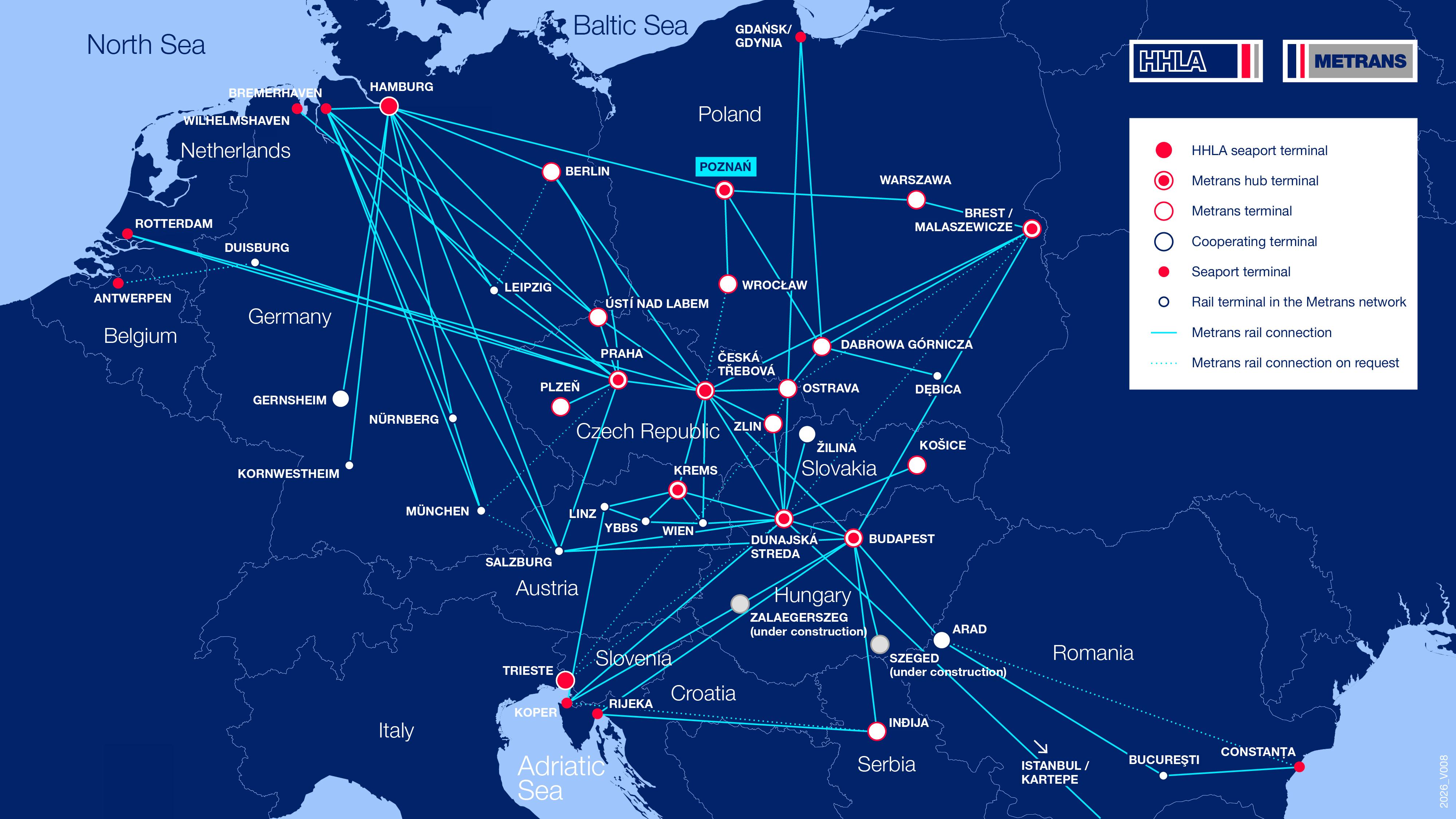
Gądki serves as an important hub within METRANS’ European intermodal network, connecting the Polish market with major economic centres across the continent.
The expansion was co-financed through Poland’s National Recovery and Resilience Plan.
METRANS currently serves terminals across 15 European countries. Its network stretches from the North Sea and Baltic Sea to the Adriatic and Black Sea.