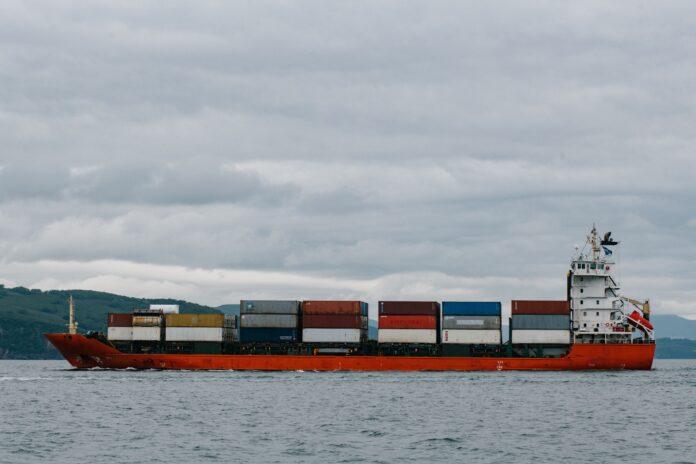
Lower total emissions do not necessarily mean that a container ship voyage operated more efficiently, according to a new VesselBot case study examining the relationship between emissions and transported cargo.
The analysis compares two voyages performed by the same vessel between Bremerhaven and Norfolk in May and July 2026.
The May voyage generated 3,104 tonnes of CO₂ equivalent emissions while carrying 2,783 TEUs. This resulted in emissions of 1.12 tonnes of CO₂e per TEU.
By comparison, the July voyage produced 2,547 tonnes of CO₂e and transported 2,077 TEUs. Although its total emissions were 557 tonnes lower, its emissions intensity reached 1.23 tonnes of CO₂e per TEU.
Consequently, the voyage with the higher absolute emissions transported its cargo more efficiently when emissions were measured against the volume carried.
Cargo utilisation shapes voyage emissions efficiency
VesselBot said that total CO₂e measures the environmental impact of a voyage but does not indicate how efficiently those emissions were used to transport cargo.
To assess voyage emissions efficiency, the company uses Well-to-Wake emissions intensity, measured in grams of CO₂e per TEU-kilometre. The metric relates emissions to the amount of cargo transported and the distance over which it was carried.
According to the case study, the average Well-to-Wake emissions intensity across container ship voyages during the second quarter of 2026 was 231.7 grams of CO₂e per TEU-kilometre. Average emissions amounted to 651.3 tonnes of CO₂e per voyage.
VesselBot divided the voyages into six emissions-intensity categories. Voyages in the most efficient category, producing up to 49 grams of CO₂e per TEU-kilometre, generated an average of 1,511 tonnes of CO₂e per voyage.
In contrast, voyages in the least efficient category, producing at least 800 grams of CO₂e per TEU-kilometre, emitted an average of 545 tonnes.
The most efficient voyages recorded average vessel utilisation of 80% and transported 8,946 TEUs. Average utilisation in the least efficient category fell to 31%, with only 340 TEUs carried.
The findings indicate that highly utilised vessels can generate more emissions in absolute terms while distributing those emissions across considerably more transport work.
Voyage-level modelling supports accurate comparisons
VesselBot noted that emissions-intensity calculations depend on the accuracy of the underlying voyage emissions estimates.
Fuel consumption is influenced by vessel characteristics, engine performance, sailing speed, time at sea, port stays and operating conditions. As a result, comparisons based only on voyage distance or general industry averages may not accurately represent individual vessel operations.
Combining fuel-consumption modelling with shipment-level cargo data allows emissions to be compared with the transport work delivered by each voyage.
According to VesselBot, this approach can help shippers evaluate carriers, services and individual sailings on a more comparable basis. It can also distinguish between a voyage that produces fewer emissions because it transports less cargo and one that genuinely uses fuel more efficiently.
The study concludes that absolute emissions and operational efficiency should be treated as separate measures when evaluating the environmental performance of container shipping.