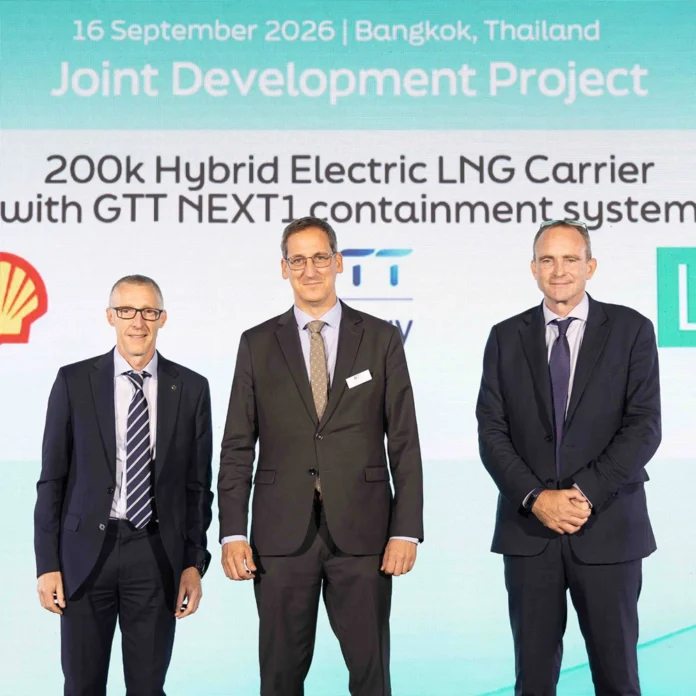
Lloyd’s Register (LR), Shell and GTT have launched a joint development project to explore the design of a 200,000 m³ LNG carrier equipped with hybrid-electric propulsion.
The project will combine battery technology with GTT’s NEXT1 cargo containment system. The three companies will assess whether the proposed design could improve fuel efficiency, increase operational flexibility and reduce the overall cost of transporting LNG.
The larger vessel concept is intended to carry more cargo per voyage, while the hybrid-electric system will be evaluated for its potential to improve energy management during operations.
Partners to assess propulsion and safety requirements
The project will focus on the design and safety assessment of the hybrid-electric propulsion system. This includes examining how batteries could be integrated into the vessel and how the system would maintain safe operations if individual components fail.
The partners will also evaluate the vessel’s overall operating costs and assess how GTT’s NEXT1 cargo containment technology could be incorporated into the design.
Another objective is to develop technical requirements and guidance for the use of hybrid-electric propulsion on LNG carriers.
“The industry is under increasing pressure to move more energy with lower emissions and greater operational flexibility,” said Constantinos Chaelis, Global Gas Segment Director at Lloyd’s Register.
The collaboration remains at the conceptual design stage. No vessel order, shipyard agreement or construction schedule has been announced.
The findings will help the partners assess the technical and commercial potential of hybrid-electric propulsion for future LNG carriers.