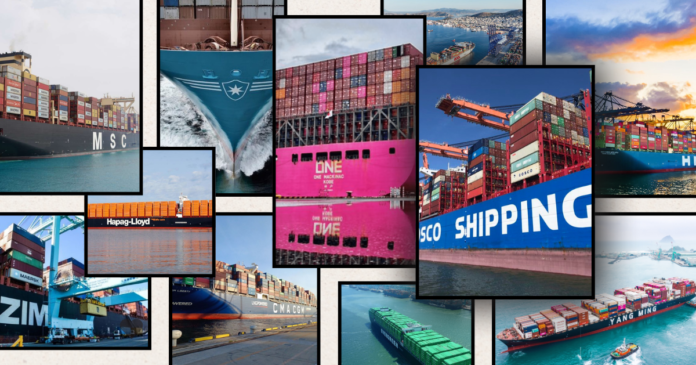

The largest container shipping companies continued to dominate global liner shipping during the first half of 2026, while maintaining strong investment in fleet renewal despite geopolitical uncertainty and a changing regulatory landscape.
According to the latest fleet data from Alphaliner, the world’s top ten carriers accounted for a significant share of global container shipping capacity. At the same time, they continued to expand their orderbooks, reflecting long-term confidence in global trade despite ongoing challenges such as tensions in the Strait of Hormuz, stricter environmental regulations and evolving supply chain dynamics.
The latest rankings also show that competition remains intense. While the leading positions have remained largely unchanged, differences in fleet expansion strategies, orderbook size and network development continue to shape the competitive landscape heading into the second half of 2026.
Largest container shipping companies by fleet size
| Rank | Operator | Fleet (TEU) | Market share | Orderbook (vessels) |
|---|---|---|---|---|
| 1 | Mediterranean Shipping Company (MSC) | 7,333,579 | 21.5% | 134 |
| 2 | Maersk | 4,723,293 | 13.8% | 88 |
| 3 | CMA CGM Group | 4,365,096 | 12.8% | 159 |
| 4 | COSCO Group | 3,633,023 | 10.6% | 138 |
| 5 | Hapag-Lloyd | 2,384,470 | 7.0% | 63 |
| 6 | ONE (Ocean Network Express) | 2,160,144 | 6.3% | 52 |
| 7 | Evergreen Line | 2,006,343 | 5.9% | 77 |
| 8 | HMM | 1,033,593 | 3.0% | 34 |
| 9 | Yang Ming Marine Transport | 741,640 | 2.2% | 16 |
| 10 | ZIM | 699,650 | 2.1% | 24 |
MSC strengthens its market leadership
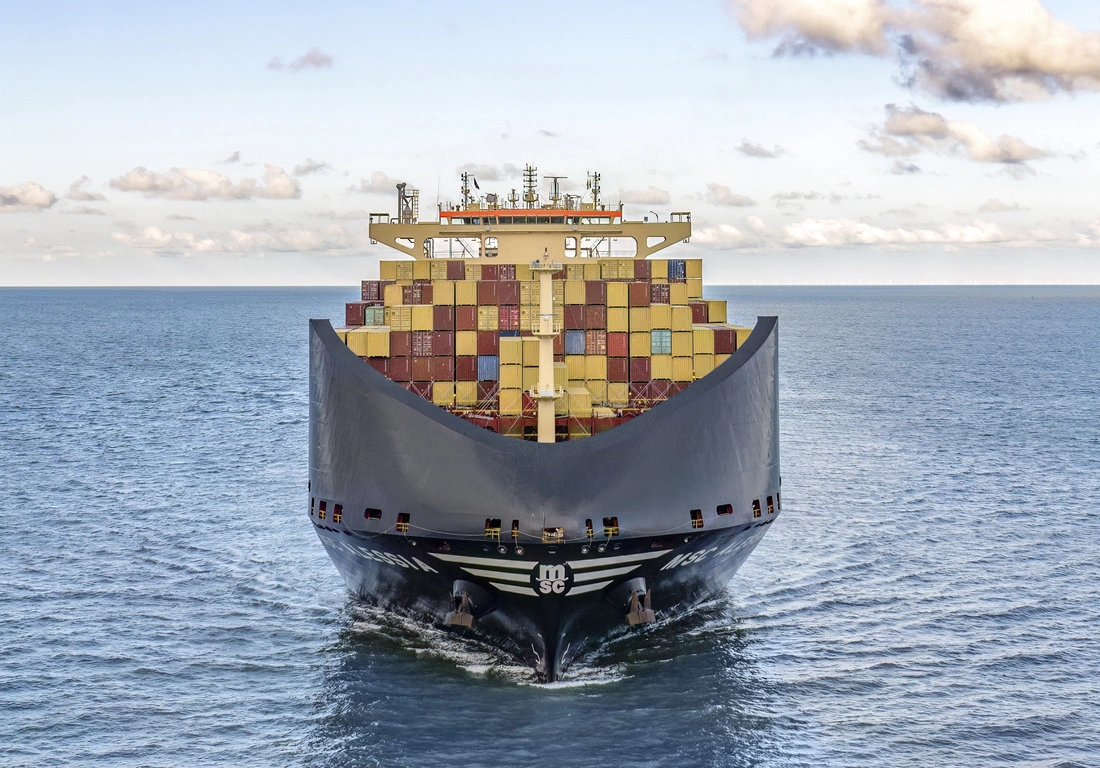
MSC remains the clear market leader.
The carrier now operates more than 7.3 million TEUs, giving it a market share of 21.5%. It also holds a lead of more than 2.6 million TEUs over second-ranked Maersk.
The Swiss carrier continues to expand through both acquisitions and newbuilding deliveries. With 134 vessels on order, MSC is expected to maintain its leadership position for the foreseeable future.
Fleet renewal continues across the industry
The latest orderbook data shows that investment remains strong among the largest container shipping companies.
CMA CGM currently has the biggest orderbook, with 159 vessels under construction. COSCO follows with 138 ships, while MSC has 134. Maersk, Evergreen and Hapag-Lloyd also continue investing heavily in new tonnage.
Much of this new capacity is designed to improve fuel efficiency and reduce emissions. LNG, methanol-ready and dual-fuel vessels are becoming increasingly common as carriers prepare for stricter environmental regulations.
These investments demonstrate that fleet renewal remains a long-term strategic priority rather than a short-term response to market conditions.
Geopolitical developments remain in focus
The first half of 2026 showed that fleet size alone is not enough.
Tensions in the Strait of Hormuz forced several carriers to reassess vessel movements, security procedures and network planning. While transits have gradually resumed, the disruption highlighted how quickly geopolitical events can affect global container shipping.
Operational flexibility, alternative routing options and resilient service networks are becoming increasingly important as carriers manage an unpredictable operating environment.
Consolidation could reshape the rankings
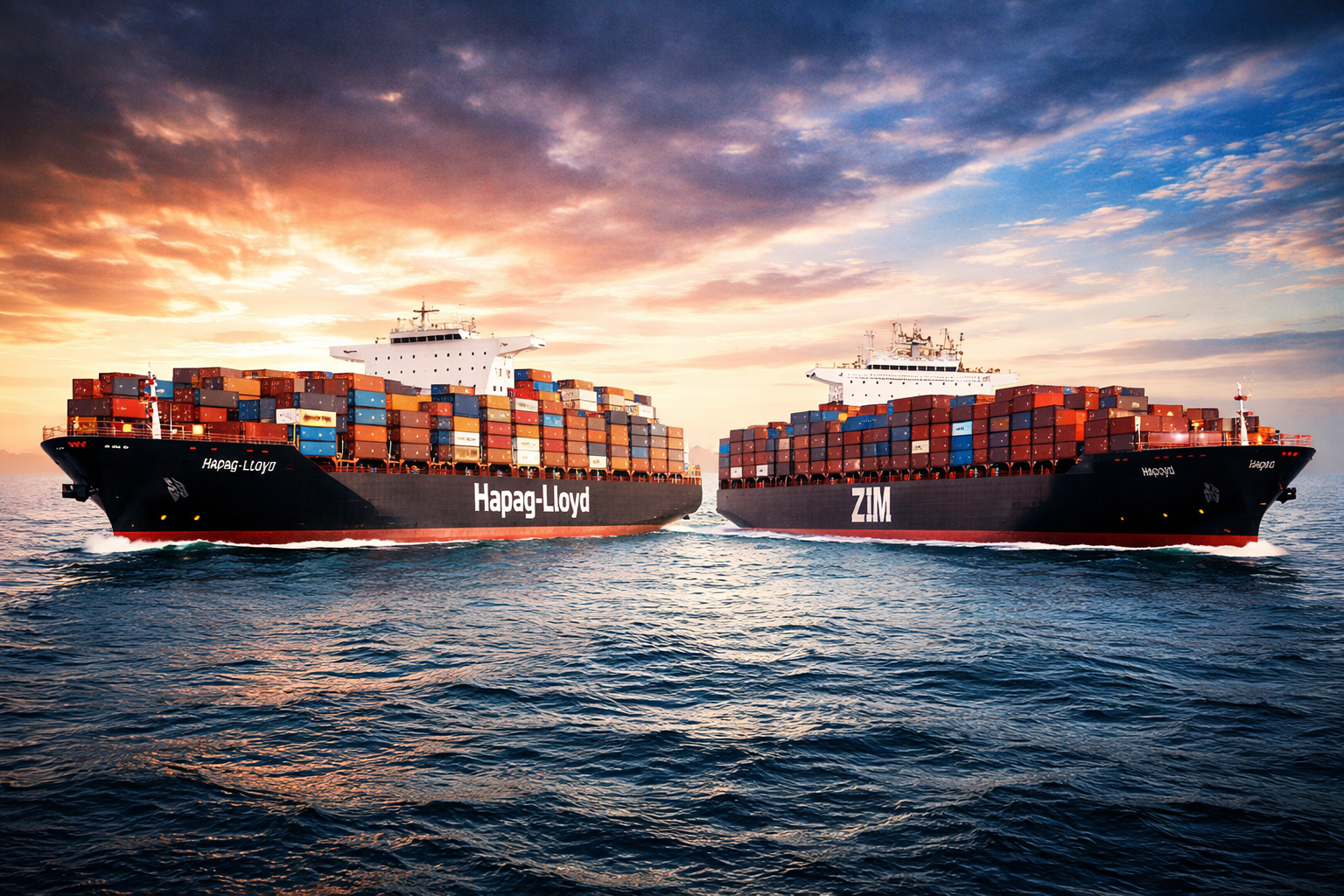
Industry consolidation remains another important theme.
Recent market speculation surrounding a possible acquisition involving ZIM has renewed discussion about further consolidation within the liner shipping sector. Although no agreement has been announced, any transaction involving a top-ten carrier would influence market share, regional competition and network coverage.
The industry has already undergone significant consolidation during the past decade, and further activity remains a possibility.
Outlook for H2 2026
The largest container shipping companies are expected to maintain their dominant positions during the second half of the year.
New vessel deliveries will continue entering the market, while environmental regulation and geopolitical uncertainty are likely to remain key factors shaping carrier strategies.
For the industry’s leading operators, future competitiveness will depend not only on fleet size but also on efficient vessel deployment, schedule reliability and continued investment in next-generation ships.