
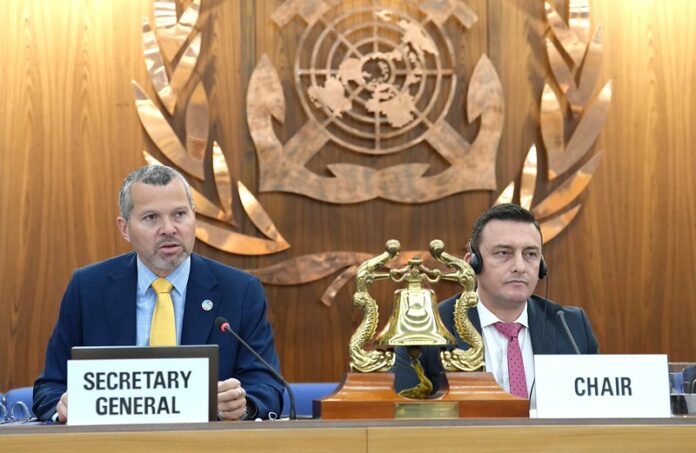
The International Maritime Organization has adopted the first International Code of Safety for Maritime Autonomous Surface Ships (MASS Code), creating a global framework for the safe operation of AI-enabled and remotely operated commercial vessels.
The new code applies to cargo ships and will enter into force on 1 July 2026 as a non-mandatory instrument. Member States will use this period to test the framework before mandatory rules are introduced under the SOLAS Convention.
The MASS Code establishes requirements covering vessel design, navigation, remote operations, connectivity, fire safety, cybersecurity and search and rescue procedures. The framework also introduces requirements for Remote Operations Centres and emphasizes risk assessment and system reliability.
IMO Secretary-General Arsenio Dominguez described the adoption as a major milestone for shipping innovation and regulation. The organization said the framework aims to ensure autonomous ships achieve safety, security and environmental protection standards equivalent to conventional vessels.
Under the code, ship masters will retain overall responsibility for vessel operations even when not physically onboard.
The code is the result of almost a decade of discussions, technical work and industry trials focused on integrating autonomous technologies into global shipping.
IMO plans to continue work on mandatory rules over the coming years. A mandatory MASS Code could be adopted by 2030 and enter into force in 2032.
Alongside the new code, IMO also advanced work on alternative fuel safety regulations, ship tracking systems and maritime security measures linked to ongoing disruption in the Strait of Hormuz.