

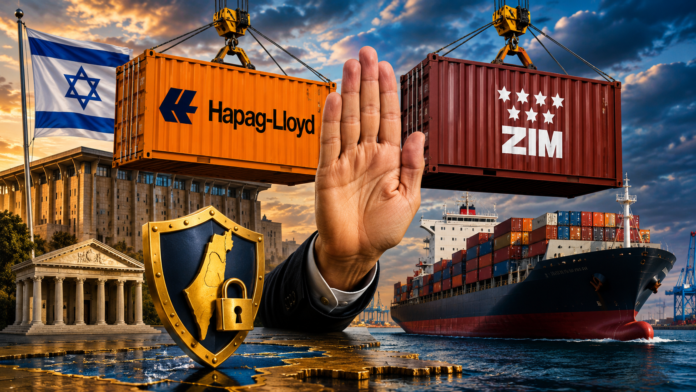
Growing opposition is emerging within the Israeli government against the proposed US$4.2 billion acquisition of ZIM Integrated Shipping Services by Hapag-Lloyd and the FIMI fund, with concerns focusing on national security, supply chain resilience and food security, according to Calcalist.
According to Calcalist, Israel’s Ministry of Economy and Ministry of Agriculture have joined the Shipping and Ports Authority and Ministry of Transportation in opposing the transaction.
The proposed deal would create a new local entity, Zim Israel, to comply with Israel’s golden share requirements. However, according to Calcalist, critics argue the new company would be significantly smaller, operating only 16 vessels compared with Zim’s current fleet of 99 ships.
According to documents cited by Calcalist, the Ministry of Economy warned the structure could create risks for maritime trade and national interests, arguing that transferring most operations to a foreign-controlled entity could weaken Israel’s shipping resilience. Officials also raised concerns over ownership links involving sovereign wealth funds from countries without diplomatic relations with Israel.
Calcalist reported that 98% of Israeli imports arrive by sea, while maritime transport handles around 90% of exports. Zim currently accounts for approximately 22% of Israel’s full-container shipping market.
The Ministry of Agriculture also expressed concerns over food security, noting that Israel relies heavily on maritime imports for food and agricultural supplies. According to Calcalist, the ministry estimated Zim currently handles around one-third of food-related maritime imports into the country.
Calcalist further reported that the Shipping and Ports Authority previously argued that the proposed Zim Israel structure would not provide an adequate strategic replacement for the existing company and could undermine supply chain continuity during emergencies.
The proposed transaction remains under increasing scrutiny as multiple government bodies evaluate its potential impact on Israel’s maritime and logistics infrastructure, according to Calcalist.