
Washington wants to turn shadow-fleet tankers into legitimate ships. The capacity gain is small. The change to how sanctions work is not.
This content is locked
Select a CN Premium Subscription Package To Unlock The Content!
The policy turn
For two years Washington treated the shadow fleet as something to shrink. It designated tankers, seized a few and, in the spring, opened a licensed route to the scrapyard.
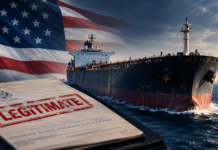
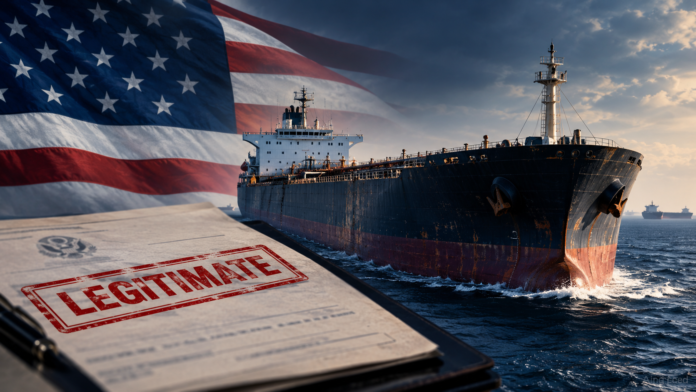
On 19 October Energy Secretary Chris Wright described a different idea. Sanctioned tankers will be sold to approved investors, refurbished and put back to work carrying only non-sanctioned oil.
In his words, ships move from the “bad-guy fleet” to the “good-guy fleet.”
He insists nothing is being delisted, yet on 8 October OFAC removed two Iran-linked ships from its list after they were sold to US-aligned operators.
Why now
The motive is the Hormuz war. Since 28 February the strait has been effectively closed and tonnage has piled up around the Gulf.
More than 40% of the world’s roughly 850 VLCCs sit in or near it. Moving crude to East Asia costs over six times its pre-war level and supertanker earnings touched a record of about $805,000 a day on 9 October.
Attacks on tankers hit their highest weekly count of the war in early October. High freight makes US crude less competitive in Asia and feeds pump prices two weeks before the midterms.
The capacity illusion
Wright counts some 1,600 dark tankers, but few can be converted quickly. Analysts at Energy Aspects note that most ships sanctioned over Russian or Venezuelan links are already trading, so legalising them adds little real capacity.
Many lack class certificates, most are over fifteen years old and licences can take months.
The idle pool is mostly Iran-linked tonnage stranded by the blockade. Even so, freight futures fell and VLCC rates eased on the announcement alone.
The market priced the signal before any ship changed hands.
Washington is not lifting sanctions. It is turning them into a used-ship clearing house.
A three-tier fleet
A US licence does not clean a hull in Europe. Insurers in the International Group of P&I clubs are bound by EU and UK law, Britain keeps designating and can interdict ships in its waters, and France boarded a sanctioned tanker on 12 October.
A converted ship may be legal in Washington and blacklisted in Brussels. That creates a middle tier between the compliant and shadow fleets, insured outside the mainstream and confined to US, Gulf and Asian trades.
It is the first open split between the US and Europe on maritime sanctions since the price cap was built jointly.
Who gains, who pays
Sanctioned owners gain a profitable exit. Instead of a scrap price they sell at trading values close to an eighteen-year high, and that cash can buy younger hulls for the shadow trade.
Mainstream owners, including EU fleets barred from buying EU-listed ships, watch the arbitrage go to others. Charterers, banks and ports must now check a ship’s status in two jurisdictions.
The scrapping route loses its appeal, so old tonnage stays afloat in the most dangerous waters, where one casualty involving a “legitimised” tanker would carry heavy political cost.
What it means
The effect on freight will be modest. The effect on the industry will last. Rehabilitated hulls join a market whose orderbook is already about a fifth of the fleet, deepening the oversupply expected once Hormuz reopens.
Most of all, the move turns sanctions from a fixed exclusion into a licensing market run from Washington.