Drayage Zero-Emission Mandate Collapse Leaves Port Fleets With a New Compliance Puzzle
For two years, drayage carriers serving California’s container ports built their capital plans around a hard deadline: comply with the state’s Advanced Clean Fleets rule or lose the ability to register new diesel trucks in drayage service. That deadline is effectively gone. In 2025, the California Air Resources Board agreed to repeal the drayage and high-priority fleet requirements of the Advanced Clean Fleets (ACF) regulation as part of a legal settlement, and the agency’s staff are required to finalize that repeal with the state’s Office of Administrative Law no later than August 31, 2026.
For a fleet manager running fifteen trucks or five hundred between a rail yard and a marine terminal, the mandate’s collapse should feel like relief. In practice, it has replaced one problem with a messier one. The state-level purchase requirement is gone, but the port-level rules that predate it — truck registration, per-container fees, and terminal access restrictions — are still fully in force. Drayage operators now have to manage compliance across two systems that no longer point in the same direction, all while deciding how long to keep their existing diesel equipment running.
Key Takeaways
- California’s Advanced Clean Fleets rule no longer requires private or federal drayage fleets to purchase zero-emission trucks, following a 2025 legal settlement and a CARB repeal vote.
- The repeal does not touch port-level programs — the Port Drayage Truck Registry and Clean Truck Fund Rate at the ports of Los Angeles and Long Beach remain fully in effect.
- CARB’s separate Advanced Clean Trucks sales mandate on manufacturers is unaffected, so zero-emission truck availability keeps expanding even without a fleet purchase requirement.
- Diesel drayage trucks are staying in service longer than fleets originally budgeted for, raising the stakes on diagnostics and preventive maintenance.
- Mixed diesel-electric drayage fleets need centralized visibility into registration status, exemption deadlines, and per-truck compliance data that a single-technology fleet never had to track.
What Actually Happened to California’s Drayage Rule
CARB approved the Advanced Clean Fleets regulation in April 2023, setting a phased transition to zero-emission trucks for drayage fleets, high-priority private fleets, and public agencies starting January 1, 2024. The rule required states to secure a Clean Air Act preemption waiver from the U.S. Environmental Protection Agency before California could enforce vehicle purchase mandates on privately owned trucks — federal law generally reserves that authority to the EPA. When it became clear the incoming federal administration was unlikely to grant that waiver, CARB withdrew its request in January 2025.
That withdrawal set off a legal settlement with a coalition of roughly 17 states, led by Nebraska, alongside the California Trucking Association. Under the settlement, CARB agreed it would not pursue enforcement of the high-priority or drayage fleet requirements for any conduct dating back to November 1, 2023, and that its staff would present a formal repeal proposal to the CARB Board. The Board voted to repeal those provisions in late 2025, and the rulemaking is due for final action with the Office of Administrative Law by the end of August 2026.
What’s Left of the Rule
The repeal is narrower than the headlines suggest. It removes the zero-emission purchase requirement for private and federal drayage and high-priority fleets. State and local government fleets remain under a modified version of ACF, with a 50% zero-emission purchase requirement pushed back three years and a 100% requirement by 2030, plus exemptions for small fleets and low-population counties through 2030. Neither version of the rule ever required retiring an existing diesel truck early — the pressure was always on new purchases, not the trucks already on the road.
Separately, CARB’s Advanced Clean Trucks rule — which regulates manufacturers rather than fleets — remains in effect. That means the share of zero-emission trucks manufacturers are required to sell in California keeps climbing regardless of what happens to fleet purchase mandates, so the market keeps shifting even without a rule forcing any individual fleet’s hand.
The Port-Level Rules That Never Went Away
The Advanced Clean Fleets fight has dominated the headlines, but it was never the only program pushing drayage fleets toward zero-emission equipment. The ports of Los Angeles and Long Beach run their own Clean Air Action Plan, adopted independently of CARB and targeting a fully zero-emission drayage fleet by 2035. None of that plan depended on the ACF rule surviving, and none of it changed when the rule collapsed.
Registration Still Isn’t Optional
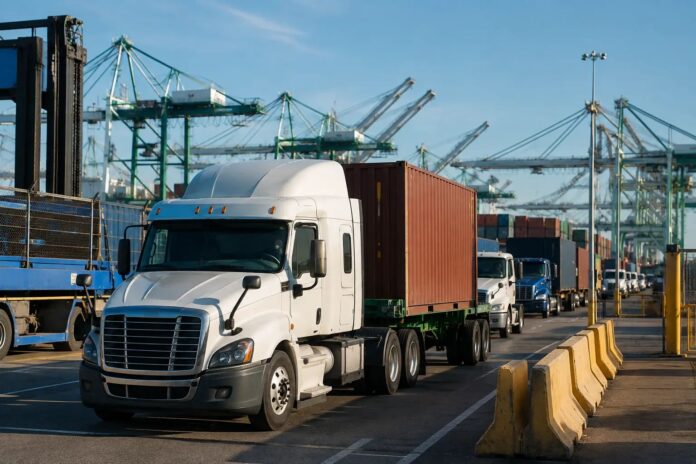
Every drayage truck calling at a San Pedro Bay terminal must be enrolled in the Port Drayage Truck Registry and meet CARB’s long-standing, separate drayage truck emissions regulation. A truck that isn’t registered doesn’t get past the gate — mandate or no mandate. Fleets that assumed the ACF repeal loosened their obligations at the terminal are working from an outdated picture.
The Clean Truck Fund Rate Keeps Diesel Expensive
Cargo owners pay a Clean Truck Fund Rate of $10 per loaded TEU, and $20 for larger containers, on freight moved by conventional drayage trucks; zero-emission trucks are permanently exempt, and low-NOx trucks hold a temporary exemption running through December 31, 2027. The ports have already collected well over a hundred million dollars through that rate and are recycling it into truck replacement incentives, including new port-funded vouchers stacked on top of the state’s HVIP program for battery-electric Class 8 drayage trucks. The financial pressure to electrify a drayage fleet calling at these terminals hasn’t gone anywhere — it just no longer comes from Sacramento.
The Real Operational Challenge: Diesel Trucks Staying in Service Longer
Fleets that built replacement schedules around the original ACF deadlines are now recalculating. With the purchase mandate gone and battery-electric trucks still carrying higher upfront costs and route or range constraints for port-to-warehouse cycles, many operators are choosing to keep existing diesel trucks in drayage service well past the dates they had originally budgeted for replacement. That decision comes with a maintenance cost that’s easy to underweight.
Aging Equipment, Rising Diagnostic Stakes
An older diesel engine accumulates more complex fault patterns as aftertreatment components — the DPF and SCR system in particular — wear past their original service intervals, and unplanned downtime at a terminal gate is costlier than it is on an over-the-road route, since appointment windows and detention charges don’t bend for a truck that fails inspection. Getting a fast, accurate read on those fault codes matters more when a truck is being pushed past its planned replacement date. Shops that lean on a structured diagnostic process rather than a scan-and-guess approach catch injector and aftertreatment problems early, before they turn into a truck sitting out of service — or failing a registry inspection — during a peak shipping week.
That also means the maintenance intervals a fleet sets when it expects to retire a truck on the original ACF timeline no longer match reality. A drayage truck now running two or three extra years needs a preventive maintenance schedule built around its actual extended service life, not the interval a shop penciled in when the truck was still expected to be replaced on the state’s original clock.
Tracking Compliance Across a Mixed Fleet
As diesel trucks stay in service alongside a growing number of zero-emission trucks bought through port and state incentive programs, fleet managers are left tracking several moving parts at once: which trucks are registered in the Port Drayage Truck Registry, which low-NOx trucks are approaching their exemption expiration, which incentive-funded electric trucks still need to log a minimum number of annual drayage trips to satisfy their voucher agreements, and which diesel trucks are approaching the mileage or engine-hour thresholds that call for closer preventive service.
Why Telematics Data Matters More Now, Not Less
None of that tracking holds up on memory or a spreadsheet once a fleet is running a mix of diesel and electric equipment across overlapping registries and exemption deadlines. A telematics platform built for mixed heavy-duty fleets can flag an approaching exemption deadline or a truck falling short of its required drayage trips while there’s still time to act on it, instead of finding out at the terminal gate or during a voucher audit.
The Bottom Line
California’s Advanced Clean Fleets mandate is functionally dead for private drayage fleets, but the compliance and maintenance workload it created hasn’t disappeared — it has shifted onto a longer list of overlapping port-level and voluntary programs that fleets now have to track on their own, while stretching the working life of diesel trucks they already own. The operators who treat the repeal as reduced pressure are the ones most likely to get caught by a registry lapse or an unplanned breakdown. The ones who build maintenance discipline and centralized compliance tracking into this transition will be the ones still moving containers on schedule when the next rule change comes.
Quick Reference
- Confirm your drayage trucks’ registration status in the Port Drayage Truck Registry (or the equivalent registry at your home port) — don’t assume the ACF repeal changed port-level requirements.
- Check low-NOx exemption expiration dates for each truck (December 31, 2027 at the ports of Los Angeles and Long Beach) before finalizing replacement timing.
- Increase preventive-maintenance and diagnostic frequency on diesel trucks kept in service past their originally planned replacement date.
- Verify that incentive-funded zero-emission trucks are still meeting the minimum annual drayage-trip requirements tied to their voucher agreements.
- Centralize registration, exemption, and maintenance data in a single system rather than tracking each program separately.