
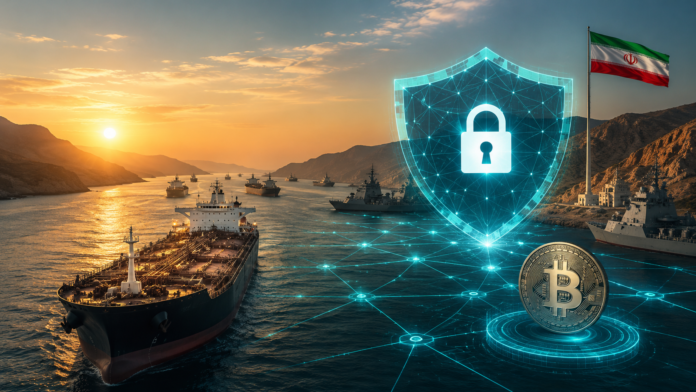

The intersection of global shipping and decentralized finance has reached a new turning point. Following months of regional instability, Tehran has launched a crypto-backed maritime insurance platform called Hormuz Safe.
The platform operates alongside the newly created Persian Gulf Strait Authority (PGSA), a body linked to Iran’s naval forces. Iranian media says the initiative aims to strengthen economic control over the Strait of Hormuz while reducing reliance on Western financial systems.
Regional tensions reshape Hormuz operations
The move follows escalating tensions in early 2026. After major air strikes in late February, vessel traffic through the Strait of Hormuz faced severe disruption. By early May, more than 1,500 commercial ships were delayed or waiting in the Persian Gulf due to rising security risks and soaring war-risk insurance costs.
Instead of relying only on military enforcement, Iran introduced the PGSA to formalize transit management. Ships passing through the strait must now submit crew manifests and cargo details before entering designated transit lanes.
Hormuz Safe relies on Bitcoin payments
The Hormuz Safe system uses blockchain-based insurance certificates. Shipping companies using the state-monitored routes must pay premiums exclusively in Bitcoin.
Iranian media estimates the platform could generate more than US$10 billion in annual revenue. Once a Bitcoin transaction receives blockchain confirmation, the vessel receives an encrypted digital certificate allowing faster passage through the strait.
The system operates independently from the SWIFT network and traditional banking systems.
Shipping industry raises concerns
The initiative has triggered skepticism across the maritime sector. Analysts warn that a crypto-only insurance structure lacks the financial backing normally provided by major global reinsurance networks.
Because international sanctions isolate Iran from traditional marine insurers such as Lloyd’s of London, the real financial strength behind Hormuz Safe remains unclear.
The United States Office of Foreign Assets Control (OFAC) also warned that companies dealing with the PGSA or transferring digital assets to related wallets could face sanctions penalties.
“Unregulated alternative insurance loops lack the systemic capital backing to cover genuine catastrophic risks,” said Rob Hamilton, Chief Executive Officer at AnchorWatch.
Cybersecurity concerns are also growing. Fraudulent websites imitating the Hormuz Safe platform have reportedly emerged, targeting shipping companies seeking secure transit routes.
A divided shipping market emerges
The development signals a broader shift in global shipping. The market is increasingly splitting into two parallel systems.
One group includes Western-compliant operators facing higher insurance costs, delays and tighter oversight. The second includes a growing shadow fleet willing to use Bitcoin-based systems to secure faster transit through politically sensitive waters.
The emergence of Hormuz Safe highlights how geopolitical control over strategic trade routes is expanding into digital finance, creating new risks and new costs for global supply chains.