
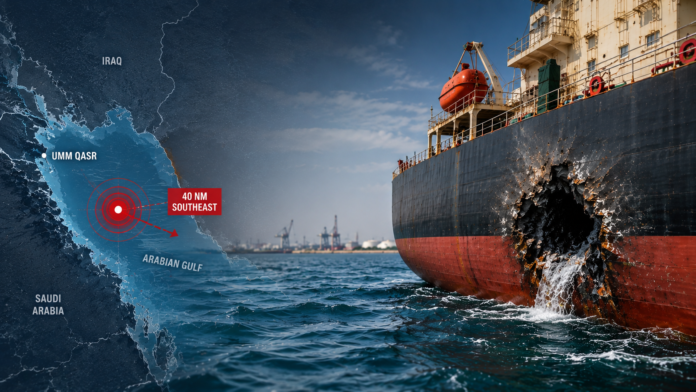
A cargo vessel was struck by an unidentified projectile near Iraq on 1 June, raising fresh concerns over vessel safety and maritime security across Gulf shipping routes.
According to the United Kingdom Maritime Trade Operations (UKMTO), the vessel was transiting around 40 nautical miles southeast of Umm Qasr when it suffered a large explosion after being hit on its starboard side.
Authorities are investigating the incident. UKMTO said there were no reports of environmental damage at the time of publication.
Following the attack, the maritime security agency advised ships operating in regional waters to transit with caution and report suspicious activity.
The incident comes at a sensitive time for shipping markets, with regional political tensions continuing to increase and operators closely monitoring developments around the Arabian Gulf and Strait of Hormuz.
The latest security incident also coincided with reports that Iran suspended indirect negotiations with the United States after escalating regional tensions linked to developments in Lebanon.
US President Donald Trump later downplayed the reported suspension, saying he was unconcerned if negotiations had ended.
Trump told CNBC he “couldn’t care less” whether talks continue, while separately stating that Washington could maintain pressure measures without immediate military escalation.
Although authorities have not linked the vessel strike to wider geopolitical developments, the combination of diplomatic uncertainty and another maritime security incident is likely to increase attention on Gulf shipping risks.
Shipowners, tanker operators, insurers, and charterers are expected to closely watch whether regional tensions translate into higher insurance costs, changing vessel routing decisions, or additional security measures.
The Arabian Gulf remains one of the world’s most important maritime corridors, handling major volumes of crude oil, LNG cargoes, container flows, and bulk commodities. Any deterioration in regional security conditions could quickly affect global shipping markets.