
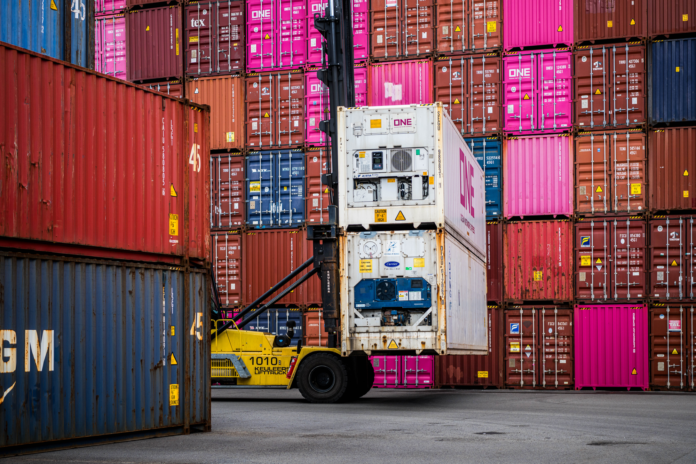
The Port of Antwerp-Bruges recorded a strong recovery in container traffic during the third quarter of 2026, achieving its best quarterly performance since the final quarter of 2020.
The improvement followed a difficult first half marked by weather disruptions, strikes and operational incidents.
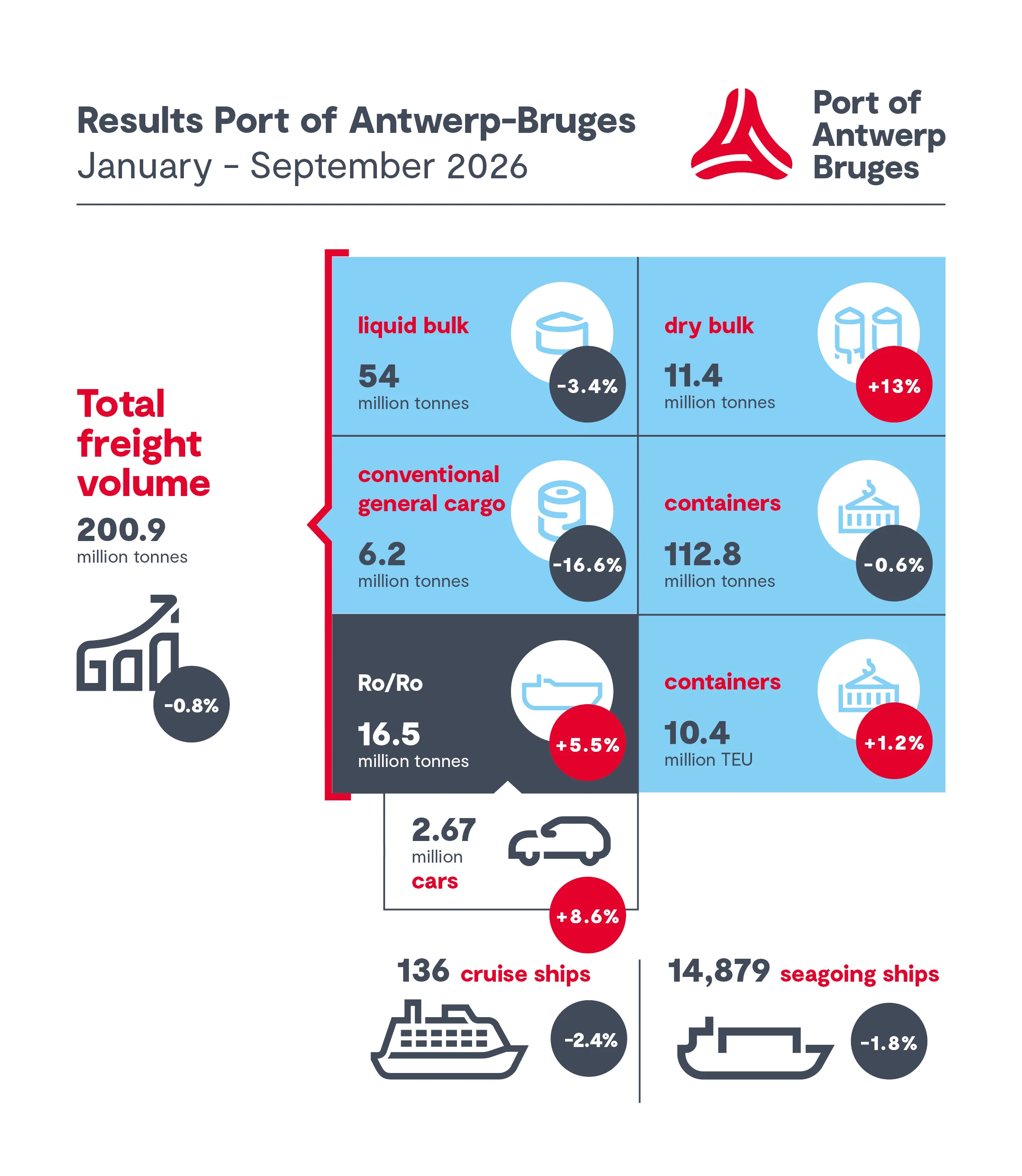
Total cargo throughput reached 200.9 million tonnes in the first nine months of 2026, down 0.8% compared with the same period last year.
Container volumes increased by 1.2% in TEUs, although container tonnage declined by 0.6%.
Empty containers drive throughput growth
The increase in container traffic was mainly driven by empty containers, which rose by 11.7% in TEUs. In contrast, full container volumes declined by 1.3%.
According to the port authority, rising imports and weaker exports have increased the imbalance between inbound and outbound container flows.
This has created greater demand for empty container repositioning, particularly towards Asia.
Container operations also faced several disruptions earlier in the year. These included adverse weather, strikes and an oil spill in the Deurganck Dock.
In July, a damaged container carrying hydrofluoric acid caused further disruption at the dock.
Traffic began recovering in August, helping the port achieve its strongest quarterly container performance in nearly six years.
“The strong recovery of container throughput in the third quarter shows the resilience of Port of Antwerp-Bruges,” said Rob Smeets, CEO of Port of Antwerp-Bruges.
Middle East tensions reshape cargo flows
Geopolitical developments have also affected the port’s trade patterns.
Container exports to the Persian Gulf fell by 70%, while exports to other parts of the Middle East increased almost fivefold.
The port authority said shipping lines had adjusted their schedules and introduced alternative routes to maintain connections with the region.
Energy shipments were also affected. The port has received no LNG cargoes from Qatar since March, while diesel supplies from the Middle East stopped in mid-May.
Other cargo segments recorded mixed results during the first nine months.
RoRo throughput increased by 5.5%, supported by a 9.3% rise in new vehicle volumes, particularly from China and Japan.
Dry bulk volumes grew by 13%, driven mainly by iron ore and other ores.
However, conventional general cargo declined by 16.6%, with iron and steel volumes falling by 17.5%.
Liquid bulk also remained under pressure amid weaker European industrial demand and high energy costs.
Despite the recovery in container traffic, the port authority warned that trade barriers, geopolitical tensions and weak industrial activity continue to affect cargo flows.