
AD Ports Group announced the successful completion of the financial closing of its acquisition of Corredor Logística e Infraestrutura, Brazil’s leading independent agri-bulk port terminal operator from funds managed by Macquarie Asset Management and IG4 Capital.
The transaction, announced on 2 June 2026, was completed following the satisfaction of customary closing conditions, including regulatory and antitrust approvals.
AD Ports Group received the necessary approvals from Brazil’s National Waterway Transportation Agency and the Administrative Council for Economic Defense, enabling the transaction to proceed to completion.
The acquisition was conducted at an enterprise value of US$ 835 million, making it the largest acquisition in the Group’s history.
With the closing now finalised, CLI has become an operational member of AD Ports Group’s international portfolio and represents the Group’s first strategic entry into South America.
Mohammed Al Tamimi, Chief Executive Officer of Noatum Ports, said the formal completion of the CLI acquisition marks an important development in AD Ports Group’s international growth and strengthens our presence in one of the world’s most important agricultural export markets.
Fernando Lohmann, Head of Macquarie Asset Management in Brazil, added that with the transaction now completed following all required approvals, AD Ports Group is well positioned to build on that platform, which has clear relevance to Brazil’s trade flows, and support CLI’s next phase of development.”
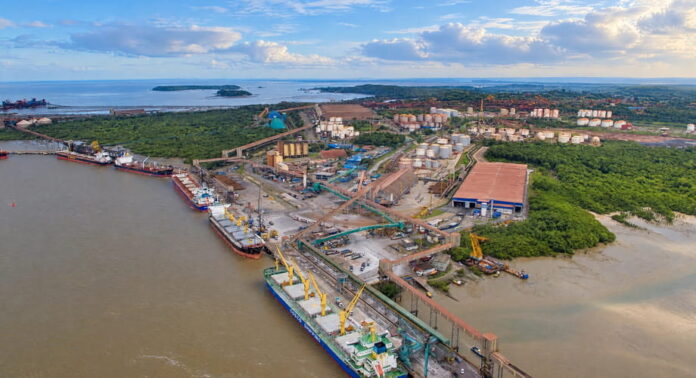
CLI operates two strategically important agri-bulk export terminals under long-term concessions.
CLI Sul, at the Port of Santos, is a leading sugar export terminal that also handles corn and soybeans, while CLI Norte, at the Port of Itaqui, forms part of Brazil’s “Arc of the North”, an important logistics corridor for agricultural exports. Together, the terminals connect Brazil’s major producing regions with global markets.
The acquisition strengthens AD Ports Group’s growing agrifoods platform and broadens its ability to serve customers across the agricultural supply chain.
It also creates opportunities to connect Brazilian export flows with the Group’s wider network across ports, maritime and shipping, logistics, economic cities, and digital trade services, supporting new trade links between South America, the Indian Subcontinent, East Africa, and Southeast Asia.