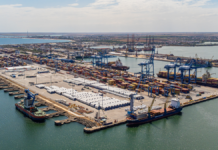
Suez Canal Container Terminal, part of APM Terminals, has signed a power purchase agreement with Egypt’s New and Renewable Energy Authority in close collaboration with the Suez Canal Economic Zone authority, enabling the terminal to source 100% of its electricity from renewable energy.
The agreement was signed at the Cabinet headquarters in Cairo in the presence of Prime Minister Dr Mostafa Madbouly, reflecting the strategic importance of the energy transition to Egypt’s port and trade infrastructure.
Once in effect, the agreement is expected to avoid approximately 30,000 tonnes of CO2 emissions annually by replacing fossil-based grid electricity with solar and wind power, representing a 6% reduction in APM Terminals’ group emissions against baseline.
The initial agreement runs for one year with an option to renew.
The milestone positions SCCT among the early adopters of fully renewable-powered port operations in Egypt and contributes meaningfully to APM Terminals’ global target of sourcing 100% renewable electricity by 2030 and achieving net-zero greenhouse gas emissions across its entire value chain by 2040.
With approximately 62% of electricity already sourced from renewables globally across its portfolio, the SCCT agreement marks a further tangible step in the company’s low-carbon transition programme.
Prime Minister Madbouly described the agreement as a successful model of integration between government entities and the private sector in delivering Egypt’s green transition objectives and strengthening the competitiveness of the Egyptian economy.
Walid Gamal El-Din, Chairman of the Suez Canal Economic Zone authority, highlighted the agreement as reflecting progress in integrating environmental sustainability standards into port development and operations.
Keld Mosgaard Christensen, CEO of SCCT, characterised the agreement as a defining moment for sustainable port operations in Egypt, demonstrating what is possible when industry and government advance the energy transition in partnership.