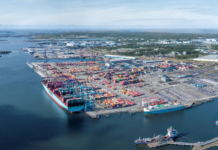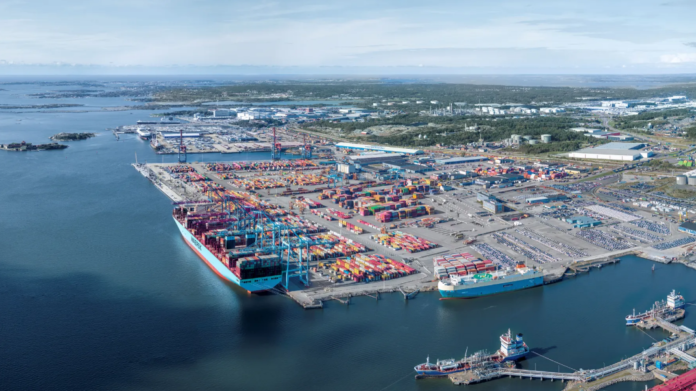
The reinforcement of the south quay at the container terminal at the Port of Gothenburg has been completed on schedule and within budget following more than two years of extensive work by NCC.
The completion marks a significant milestone in the Skandia Gateway project, with blasting and dredging works commencing on October 13 as the development enters its next major phase.
Since spring 2024, NCC carried out reinforcement works along the westernmost 700 metres of the container terminal’s south quay, a technically complex undertaking essential to enabling the deepening of the area closest to the quay.
This will allow larger container vessels with deeper draughts to call at the port from the turn of 2028 to 2029.
Boskalis Sweden will now carry out blasting and dredging works covering the first 50 metres of water alongside the westernmost 700 metres of the south quay, removing more than 200,000 cubic metres of soft dredged material and approximately 30,000 cubic metres of rock.
The area is being designed to accommodate vessels with a maximum draught of 17.5 metres, with works expected to be completed in March 2027.
In parallel, the Swedish Maritime Administration is procuring the more extensive blasting and dredging works in the fairway and turning basin alongside modifications to navigational aids, with a contract planned for early 2027 and works scheduled to begin in August 2027.
The shared ambition of the Port of Gothenburg and the Swedish Maritime Administration is for the new fairway and quay to become operational before the end of 2028.
Skandia Gateway is being designed to accommodate container vessels up to 430 metres long and 65 metres wide, vessels 30 metres longer and five metres wider with draughts up to four metres deeper than those currently calling at the terminal.
Elin Dörrheide, Project Manager for quay reinforcement at the Port of Gothenburg, described the completion as the result of excellent collaboration and confirmation that the project is making strong progress, with strategic importance for Swedish industry’s access to global markets as several major European container ports face constraints in water depth and capacity.