

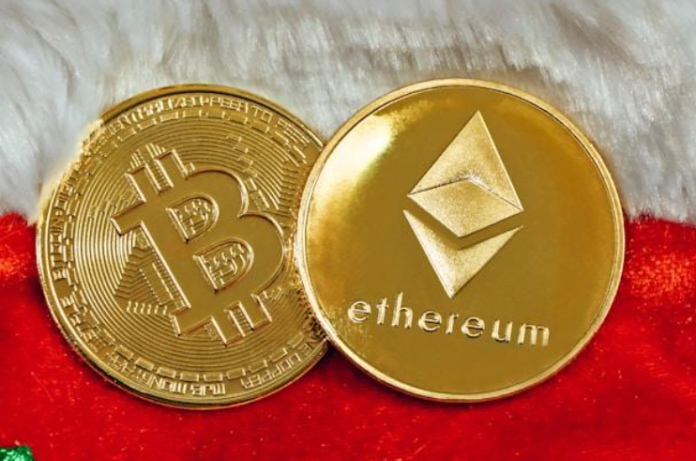
The cryptocurrency market rarely moves in a straight line, which means that prices go up and down, trends pop up from time to time, and corrections happen along the way. Tempting as it may be to assume that an upward rally will continue forever and ever, it’s not the best idea. The cryptocurrency market needs a break, and pullbacks should be viewed as healthy resets, not evidence of systemic failure. If a coin doesn’t do well, whose fault is it? Does it lack intrinsic value/worth? Or does it react to fear, greed, and shifting narratives? It could be any of these, or all of these.
Any asset can have a negative ROI under certain circumstances and perform far worse than expected. Take money from the ‘living dead’, aka investments that fail to achieve growth or profitability, and move it into stuff that has an acceptable risk level and brings a handsome return. You don’t need to ask anyone’s permission before making a decision, so if you want a change, go for it, on whatever timelines make sense for you. But this freedom can be a double-edged sword. Nothing’s stopping you from chasing shiny objects. If you’re going out of your mind choosing between different tokens, here’s one for you: rotate from P2P Bitcoin (BTC) to Ethereum (ETH).
Why Even Choose Between BTC And ETH In 2026?
Bitcoin and Ethereum are large, reputable, and financially sound cryptocurrencies with a history of stable earnings and reliable performance. Whenever prices come tumbling down, investors seek protection in safe-haven assets that retain or even gain value during periods of economic turbulence. Of course, you should carry out due diligence and check out the ETH/BTC ratio to wrap your head around where things are headed. Although Bitcoin’s market cap is 4 times larger than Ethereum’s, the ETH/BTC ratio proves that size alone doesn’t dictate success. Privilege can lead to dependency and laziness, and at the end of the day, Bitcoin will only take you so far if not paired with hard work.
Bitcoin and Ethereum aren’t exactly the new kids on the block. They’ve been around for well over a decade and are the only ones that withstood the test of time, fighting adversity like pros. Bitcoin is the founding father of the cryptocurrency ecosystem, having laid the blueprint for the world’s experiment with decentralized finance, while Ethereum is the revolutionary architect, having left an indelible mark on the economic activity that results from billions of everyday online connections among people. To buy and sell Bitcoin or Ethereum, you need to choose a cryptocurrency exchange.
These Are The Main Indicators To Watch To Time Your Capital Rotation
As the cryptocurrency economy contracts and expands, so does the performance of assets across sectors like memes, AI and big data, gaming, decentralized physical infrastructure networks (DePIN), metaverse, and so on. If Bitcoin’s outlook turns sour, you can sell out and switch to Ethereum if you’re chasing high yields, but don’t go further out the risk spectrum. Investors who procrastinate are more likely to miss out on the cryptocurrency market’s potential growth. The idea is to park your cash efficiently, making it work for you even if it’s for a little while. These are the key signals to keep an eye out for if you’re thinking about rotating capital:
The ETH/BTC Ratio
As we highlighted earlier in our conversation, the ETH/BTC ratio offers a window into how investors feel about the cryptocurrency market, which can influence buying and selling activity. On trading platforms, it’s presented directly as an order book pair, making it possible for users to trade Ethereum against Bitcoin without extra conversions. Historically, when the ratio bottoms and more join the trend, allowing for even higher highs, it means that Ethereum is flipping Bitcoin. You should wait for a confirmed break above the upper, descending resistance (the ‘Line of Death’) before investing a lump sum of money.
Bitcoin Dominance
Everyone wants a slice of the pie, but the moment of truth is catching up. If you want to know how big Bitcoin is compared to the rest of the cryptocurrency market, all you have to do is take a quick look at the Bitcoin dominance (BTC.D). A shift of just a few percentage points can hint at whether the market is gearing up for an altcoin season or tightening around Bitcoin again. Right now, investors are pinning their hopes on Bitcoin. Capital rotation typically begins when BTC.D peaks and goes south quickly; Bitcoin’s price stays the same, altcoins catch up, so make sure you don’t get on the wrong train.
The Altcoin Season Index
Altcoins are meant to improve/rectify the loopholes and perceived shortcomings within Bitcoin’s functioning. Some try to fix or upgrade Bitcoin’s original design (speed, fees, energy use, privacy, etc.), while others are built for completely different jobs, such as stable payments, smart contracts, and connecting blockchains. The altcoin season index lets you know if the top 50 altcoins by price and market cap are outperforming BTC over a 90-day period. We’re still in a Bitcoin-dominant phase, but the index is slowly but surely climbing from the lows of early 2026, which means conditions are shifting in a way that could benefit Ethereum over time.
Risks And Common Mistakes In The BTC-To-ETH Rotation
Rotating Bitcoin to Ethereum can be a genius move or a fatal trap, so open up a clear line of communication between your mind and your gut to understand what’s right for you. Just so you know, it’s a high-stakes balancing act where timing and discipline are everything. If you jump into Ethereum too soon, you risk buying at the top and selling at the bottom. Above all, don’t underestimate the ETH/BTC correlation. If Bitcoin crashes, it will trigger a sell-off, and Ethereum isn’t immune to these sorts of things. As a matter of fact, Ethereum drops harder when it loses its grip, and you’ll get caught up in the storm.