
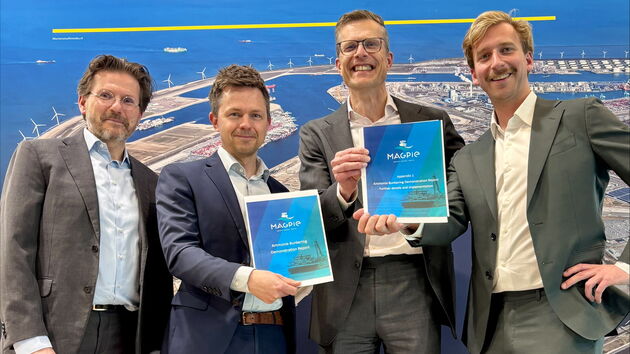
The Port of Rotterdam has published the findings of a full-scale ammonia bunkering demonstration conducted on April 12, 2025, confirming that ship-to-ship ammonia bunkering can be carried out safely within an active port environment when supported by robust safety procedures, specialised equipment and appropriate regulatory frameworks.
The demonstration was conducted under the EU-funded MAGPIE project, with results compiled by the Mærsk Mc-Kinney Møller Center for Zero Carbon Shipping and project partners into a comprehensive publicly available report.
Ammonia is widely regarded as a promising low-carbon marine fuel, but its specific hazards, including toxicity and the need for specialised handling infrastructure, have necessitated thorough safety validation before commercial-scale deployment can proceed.
The Rotterdam demonstration addressed this challenge directly, validating the port’s safety framework for ammonia as a marine fuel alongside the International Association of Ports and Harbours’ Port Readiness Tool.
The results confirm that both instruments provide a solid and practical foundation for ports preparing to introduce ammonia and other alternative fuels.
The published report offers practical guidance including learnings, validation sheets and recommendations applicable to ports, regulators and industry stakeholders globally, supporting the development of future permitting and regulatory processes for ammonia bunkering.
Bo Cerup-Simonsen, CEO of the Mærsk Mc-Kinney Møller Center for Zero Carbon Shipping, highlighted the report’s value as a practical reference for building confidence in ammonia bunkering worldwide.
Boudewijn Siemons, CEO of the Port of Rotterdam, framed the pilot as an important step in developing complete alternative fuel value chains from import through to vessel application, demonstrating that innovation, safety and scalability can be pursued simultaneously.
By making the findings openly available, the MAGPIE partners aim to accelerate the safe adoption of ammonia as a marine fuel and support the broader transition toward sustainable and integrated port systems globally.