
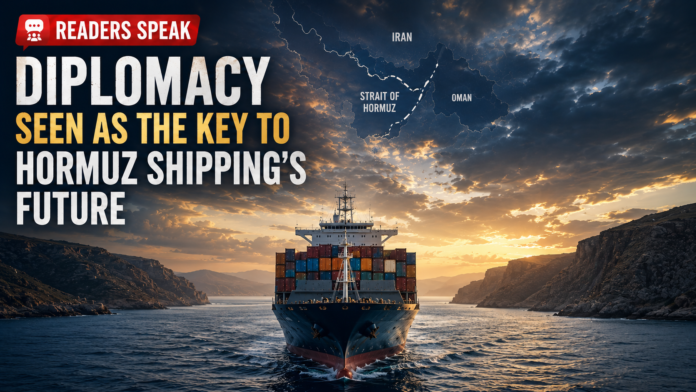

The latest Readers Speak poll asked readers a forward-looking question:
What will shape Hormuz shipping most?
The results reveal a clear industry message: while regulations, military pressure, and regional politics all matter, readers believe diplomatic progress will ultimately have the greatest influence on the future of shipping through the Strait of Hormuz.
Diplomacy emerges as the leading factor
Diplomatic progress received the strongest support across both LinkedIn and website participants, making it the top choice overall.
The result suggests that many readers see political agreements and negotiated solutions as the only realistic path toward restoring predictability in one of the world’s most strategically important shipping corridors.
After months of disruptions, restrictions, military incidents, and competing claims over transit management, respondents appear to believe that lasting stability cannot be achieved through operational measures alone.
Iran’s transit rules remain a major concern
The second strongest response focused on Iran’s transit rules.
Recent developments surrounding transit authorization requirements and the management of vessel movements have highlighted the growing role of regulatory control in the region.
The result indicates that many industry participants view these measures as a significant factor shaping carrier decisions, voyage planning, and overall confidence in the route.
Military pressure receives limited support
A smaller share of respondents selected U.S. military pressure as the dominant influence.
While military activity continues to affect the security environment, readers appear less convinced that naval deployments or deterrence alone will determine the long-term future of shipping through the region.
The findings suggest that military measures are increasingly viewed as part of a broader geopolitical framework rather than a standalone solution.
Oman’s role gains little support despite growing attention
Only a small percentage of respondents identified Oman’s role as the primary factor shaping Hormuz shipping.
This result is particularly interesting given the increasing discussion surrounding Oman’s strategic position and mediation efforts.
While readers acknowledge the country’s importance, the poll suggests that most still view broader diplomatic negotiations and transit policies as more decisive influences on future shipping conditions.
A shift toward long-term thinking
The results show how industry sentiment continues to evolve.
Earlier polls focused heavily on:
- security threats
- vessel attacks
- carrier responses
- operational disruption
This week’s findings point toward a broader strategic question: what ultimately determines the future operating environment?
Readers appear to believe that the answer lies primarily in diplomacy rather than force.
Conclusion
The message from readers is clear:
Diplomatic progress is seen as the factor most likely to shape the future of shipping through the Strait of Hormuz.
While transit rules, military pressure, and regional actors will continue to influence developments, industry participants appear to believe that meaningful political progress remains the key requirement for restoring stability and confidence across the region.