
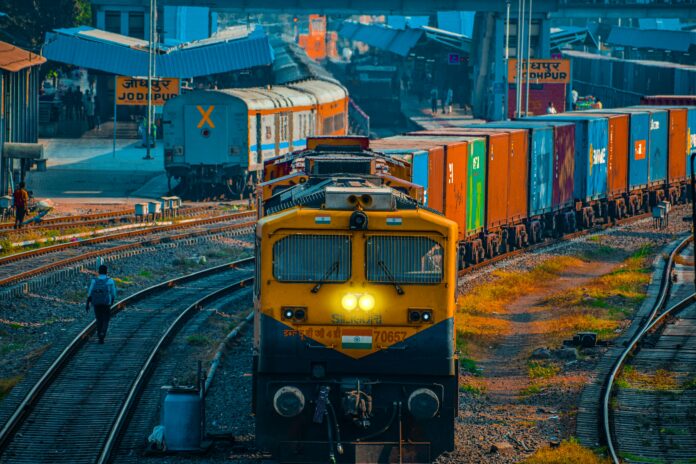
Poland’s intermodal rail market recorded its strongest first quarter on record in 2026, underlining the growing role of rail in container transport and inland logistics.
According to the Polish Office of Rail Transport (UTK), rail operators transported more than 484,700 intermodal units during the first three months of the year. That represents a 12% increase compared with the first quarter of 2025. Container volumes reached almost 789,800 TEUs, up 16% year on year.
The volume of intermodal freight also continued to grow. Operators transported nearly 7.73 million tonnes of cargo, while transport performance reached almost 2.58 billion tonne-kilometres. Both indicators increased by 16.4% compared with the same period last year.
The results lifted intermodal transport to record market shares within Poland’s rail freight sector.
Intermodal accounted for 15% of all rail freight by cargo volume and 19.2% of total freight transport performance during the quarter. Both figures represent the highest shares recorded since the regulator began publishing comparable statistics.
Despite the strong annual growth, activity eased slightly compared with the fourth quarter of 2025. The number of intermodal units fell by 4%, TEU volumes declined by 2.1%, freight tonnage decreased by 1.7%, and transport performance slipped 4.3%, reflecting normal seasonal trends.
UTK President Ignacy Góra said the figures confirm that intermodal transport remains one of the main drivers of Poland’s rail freight market. He noted that the sector continues to deliver double-digit annual growth despite challenging market conditions and is strengthening its role within the country’s transport system.
The market remained concentrated among a small number of operators. PCC Intermodal retained the largest market share by freight volume with 19.7%, followed by PKP Cargo with 19.3% and DB Cargo with 10.4%. Smaller operators also increased their presence, including Service and Logistics Group, Orlen Kolej and Eurotrans.
Looking ahead, UTK said geopolitical developments and global supply chain disruptions will continue to influence intermodal demand. The regulator noted that rail becomes more competitive when maritime trade faces congestion or disruption. At the same time, it stressed that Poland still has significant potential to increase the share of rail in moving cargo to and from its seaports.