Lloyd’s Register (LR), A.P. Moller – Maersk, the Port of Felixstowe and the Port of Charleston have launched the Pink Corridor project.
The project will explore what is needed to operate a nuclear-powered containership between the UK and US.
The partners will focus on safety, security, port access and regulation. The project remains at an early, conceptual stage.
Project focuses on nuclear shipping requirements
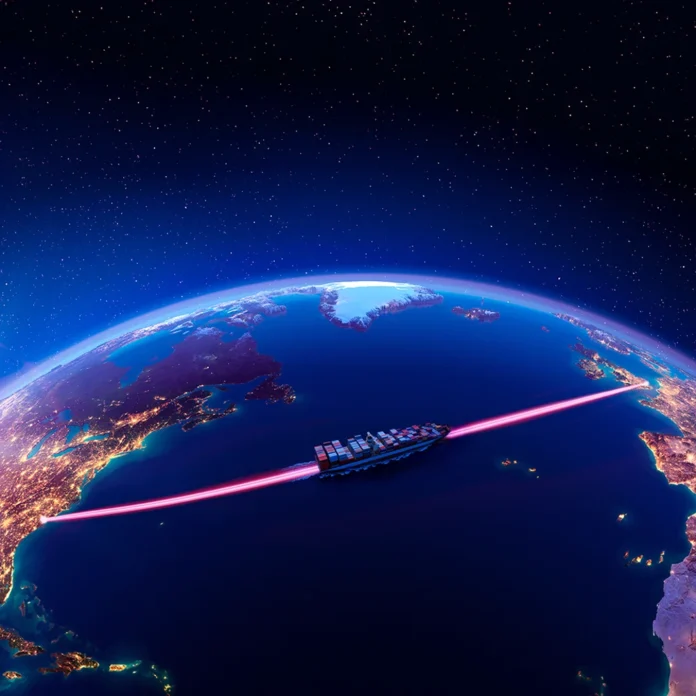
The Pink Corridor will examine a theoretical nuclear-powered containership trading between Felixstowe and Charleston.
The study will cover ship security, nuclear safeguards and cyber resilience. It will also examine emergency response and insurance requirements.
Another key area will be regulation. The partners will study how maritime and nuclear rules could work together.
“The Pink Corridor joint development programme is an important step for the application of nuclear technology in merchant shipping,” said Nick Gross, Global Containerships Segment Director at LR.
He said the project will help identify the requirements for safe and secure operations.
Ports bring operational experience
Felixstowe and Charleston will provide the project with practical port expertise.
Their involvement will help the partners understand what ports would need to handle nuclear-powered containerships.
“As the UK’s largest and busiest container port, the Port of Felixstowe is well-positioned to support the Pink Corridor,” said Adam Ramsey, Commercial Director at the Port of Felixstowe.
Meanwhile, Charleston will provide insight from the US side of the proposed route.
Tom Boyle, SC Ports’ Director of Vessel Operations and Carrier Sales, said the project will study the possibility of a nuclear-powered maritime corridor.
Pink Corridor builds on earlier work
The project follows a regulatory study carried out by LR and CORE POWER in 2024.
LR and Maersk later launched a joint project to study advanced nuclear power for container shipping.
That work focused on safety, operations and regulation.
The Pink Corridor takes the research further by examining a specific transatlantic route and its two ports.
The project also supports cooperation between the US and UK on civil maritime nuclear technology.
Results from the first phase could lead to a second phase. This could include further work on engineering, regulation, legislation and security.