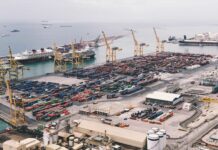


The Panama Canal reported increased vessel transits and cargo volumes during the first half of fiscal year 2026, reflecting stronger demand and shifting dynamics in global maritime trade.
The update was presented during a market briefing hosted by Bank of America, where canal executives outlined operational performance and ongoing infrastructure developments. The session included Panama Canal Administrator Ricaurte Vásquez Morales, Deputy Administrator and Chief Sustainability Officer Ilya Espino de Marotta, and Vice President of Finance Víctor Vial.
Between October 2025 and March 2026, the canal recorded 6,288 transits, up by 224 compared to the same period a year earlier. Total cargo volumes reached 254 million PC/UMS tons, representing a 5% increase year-on-year.
Traffic levels have accelerated in recent months, with daily averages reaching 34 vessels in January and 37 in March. Peak days have recently exceeded 40 transits, highlighting sustained demand for the waterway.
“The Panama Canal is open and fully operational, thanks to the dedication of some nine thousand Panamanians who keep this waterway running,” said Ricaurte Vásquez Morales, Administrator of the Panama Canal. “Amid all the geopolitical complexities in the world today, the shifts and various factors affecting international trade, the Panama Canal remains open and reliable. With water levels currently at optimal levels, we are accommodating an ever-growing volume of traffic.”
The canal authority also pointed to strong performance in container shipping and liquefied petroleum gas shipments, with energy products playing an increasingly important role in overall volumes.
Despite rising demand, operations continue to run without congestion. According to Víctor Vial, most vessels secure transit slots in advance through reservation systems, ensuring a predictable flow of traffic and eliminating queues. While some auction-based slots have recently exceeded $1 million, these reflect temporary market conditions driven by heightened demand.
Prior to the recent Middle East tensions, average auction prices ranged between $135,000 and $140,000. This increased to around $385,000 between March and April as demand intensified.
The canal offers multiple booking options, including long-term slot allocation systems and dedicated arrangements for LNG carriers, alongside last-minute reservations and daily auction slots.
Water levels and climate conditions remain a key focus. Ilya Espino de Marotta noted that preventive measures have been implemented in anticipation of a potential El Niño event. Strong rainfall during the dry season has kept Gatún and Alhajuela Lakes at maximum levels, supporting uninterrupted operations.
“We don’t anticipate anything significant between now and December, but we continue to monitor the situation closely. We want to keep the lakes as high as possible heading into the next dry season, so we can continue delivering a high-quality service,” said Ilya Espino de Marotta.
Canal officials said they will continue to monitor both operational and environmental conditions closely, as demand for one of the world’s most critical maritime corridors continues to grow.