
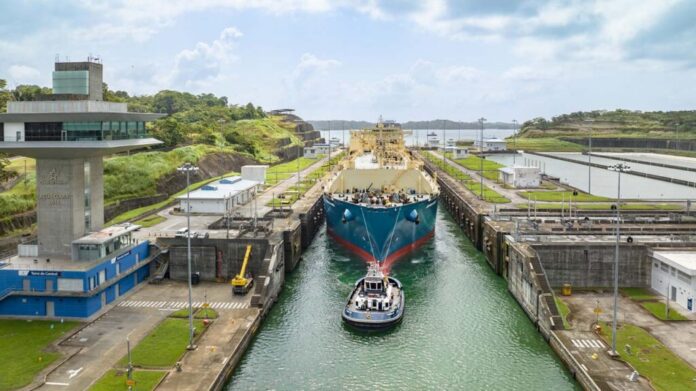
The Panama Canal has marked the tenth anniversary of its expanded waterway after handling more than 31,000 Neopanamax vessel transits since operations began in June 2016.
The expanded Canal now generates more than half of the waterway’s total revenues, highlighting its growing role in global trade.
The expansion entered service on 26 June 2016 with the transit of the COSCO Shipping Panama. It was the Canal’s largest infrastructure project since the original waterway opened in 1914.
During the first eight months of fiscal year 2026 (October 2025-May 2026), the Canal recorded 8,593 transits. Of those, 2,385 involved Neopanamax vessels, representing 27.7% of total traffic.
The Panama Canal Authority said improved water levels at Gatun and Alhajuela lakes have allowed the Canal to maintain safe and reliable operations after the severe drought that disrupted traffic in 2023 and 2024.
Since its inauguration, the expanded Canal has opened the waterway to larger vessel segments.
The first LPG carrier, Lycaste Peace, transited the Canal in June 2016. One month later, the LNG carrier Maran Gas Apollonia completed its inaugural passage.
In August 2024, MSC MARIE set a new capacity record for the Canal. The vessel measures 366 metres in length and has a capacity of 17,640 TEUs.
The Canal also welcomed Virgin Voyages for the first time in March 2026 with the transit of Brilliant Lady, reflecting growing interest from the cruise sector.
Looking ahead, the Panama Canal Authority continues to focus on long-term water security.
Projects such as the proposed Rio Indio Lake form part of its strategy to strengthen climate resilience while ensuring reliable water supplies for both Canal operations and local communities.
To mark the anniversary, the Canal Authority presented commemorative plaques to five Neopanamax vessels in recognition of their contribution to the success of the expanded waterway during its first decade.