
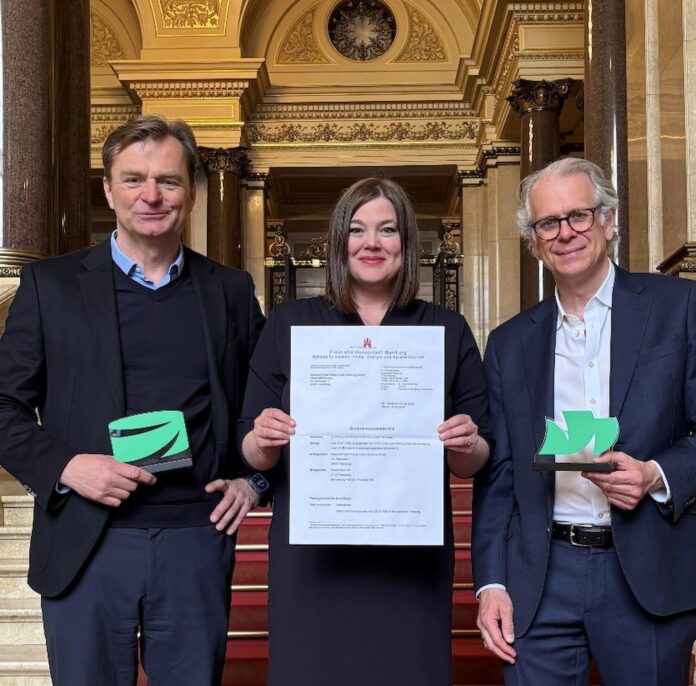
MB Energy has been granted a permit to construct and operate an ammonia import terminal at the Blumensand tank terminal site in the Port of Hamburg, marking a significant step toward establishing Germany’s first large-scale ammonia import hub.
The project remains subject to a final investment decision before construction commences.
The planned terminal is designed to handle an estimated 600,000 metric tonnes of ammonia per year, serving multiple end-use functions.
Ammonia is both a carrier medium for hydrogen and an industrial raw material, and is increasingly considered an alternative fuel for shipping and a potential input for gas-fired power generation.
The terminal is also intended to handle lower-carbon and renewable ammonia where technically feasible and commercially available, supporting the broader energy transition agenda.
The facility will be built on the site of Blumensand, the largest tank terminal in the Port of Hamburg, owned by enport by MB Energy, the storage unit of the MB Energy group.
Infrastructure plans include a new ammonia storage tank, upgrades to the existing berth for inland barges and seagoing vessels, and loading facilities for railcars.
The project also contemplates a potential feed-in connection to a future cracker plant where ammonia could be split into hydrogen and integrated into the developing hydrogen grid network.
The ammonia terminal forms part of the broader New Energy Gate Project at the Blumensand site, which also encompasses methanol handling operations.
Volker Ebeling, Senior Vice President New Energy, Supply and Infrastructure at MB Energy, described the permit as a key milestone in advancing the project and a strong signal toward a future-oriented and reliable supply of energy and raw materials for Hamburg and Germany more broadly.