
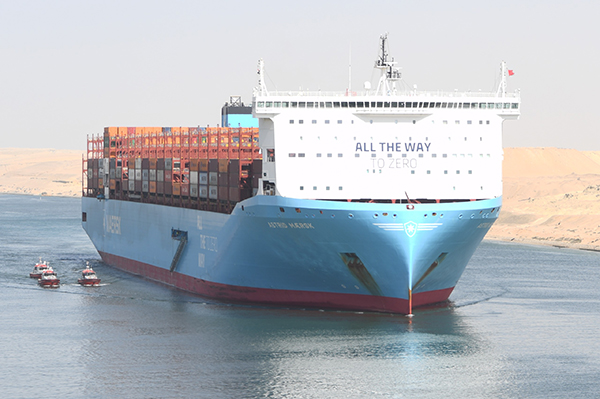
Maersk has expanded its contingency measures across the Middle East as regional instability continues to disrupt shipping and logistics operations.
In its latest Middle East Operational Update 40, the carrier said it is taking additional steps to protect cargo, maintain network stability and support customers through alternative transport solutions as the situation remains highly volatile.
Landbridge network expands
Maersk said it continues to expand its multimodal landbridge solutions across Saudi Arabia, Kuwait, Bahrain, the UAE, Qatar and Iraq. However, the company has temporarily paused selected landside bookings on several routes while maintaining other domestic and cross-border transport services, subject to capacity and local regulations.
Booking restrictions remain
The carrier has also maintained booking restrictions for several cargo categories, including reefer, dangerous goods and out-of-gauge cargo, on routes involving multiple Gulf countries. At the same time, Maersk continues to accept bookings on selected services, including cargo moving through ports such as Salalah, Sohar, Khor Fakkan and Jeddah under specific conditions.
Emergency Freight charges remain in force
For cargo already in transit or booked to affected destinations, Maersk continues to apply its Emergency Freightsurcharge to support alternative routing, temporary storage and additional operational measures.
The surcharge is set at US$1,800 per 20-foot dry container, US$3,000 per 40-foot dry container and US$3,800 for reefer, special and dangerous goods containers. In addition, cargo transported through the Strait of Hormuz is subject to an extra US$1,000 per container.
Alternative routing options
Maersk is offering customers three options for cargo affected by the disruption: continue the planned voyage with temporary storage, return cargo to origin or change the final destination. The company noted that each option is subject to operational feasibility and may incur additional costs depending on when the request is made.
The carrier has also revised several regional routings. Cargo destined for Kuwait, Iraq, Qatar, Bahrain and the UAE will now be transshipped through Salalah and Khor Fakkan, before moving via landbridge and feeder services where required. Cargo booked to Jeddah for consignees outside Saudi Arabia will also be rerouted through Khor Fakkan.
Temporary empty container measures
Maersk has introduced temporary empty container return arrangements across the region. Empty containers for several Gulf destinations will no longer be accepted at their usual return locations and must instead be delivered to designated depots until further notice. The company has also updated empty pickup and drop-off procedures in selected markets.
Maersk said it will continue to monitor developments closely and adjust its operational measures as conditions evolve.