

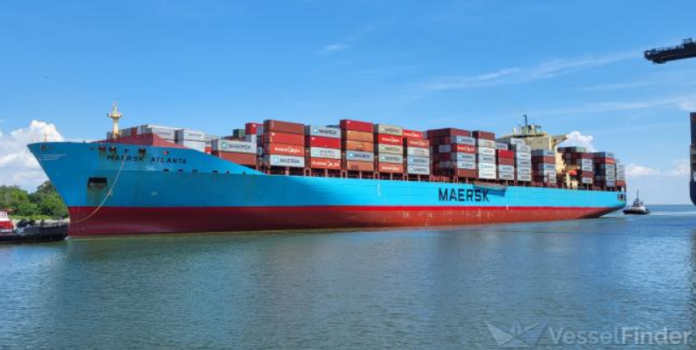
Maersk has adjusted cargo routings across the Gulf as disruption in the Middle East continues to affect its regional operations.
In its latest operational update, the carrier said cargo for Kuwait, Iraq, Qatar, Bahrain and the United Arab Emirates will no longer transship through Jeddah.
Instead, these shipments will move through Salalah and Khor Fakkan. Cargo will then travel by landbridge to Sharjah before connecting with Maersk’s intra-Gulf feeder network.
Jeddah cargo routings change
Maersk has also changed the handling of some cargo booked for Jeddah.
If a shipment is booked for Jeddah but the consignee is based in another Middle Eastern country, Maersk will not discharge the cargo there. Instead, the shipment will move to the consignee’s country via Khor Fakkan.
The carrier noted that additional charges may apply because of the rerouting.
Saudi Arabian import and export cargo will continue to move through Jeddah. This includes shipments destined for Riyadh and Dammam through Maersk’s existing Jeddah landbridge.
Some Gulf landbridge bookings remain paused
Maersk continues to operate several alternative landbridge connections across the region.
Export landbridge options remain available from Kuwait, Qatar, Bahrain and the UAE via Salalah and Khor Fakkan. Cargo from Iraq can also move through Aqaba.
However, the carrier has temporarily paused several landside booking options.
These include cargo from the UAE and Qatar moving via Jeddah and Oman. Bookings from Jeddah to the UAE, Oman and Qatar are also paused.
In addition, Maersk is not currently accepting landside bookings from Salalah and Sohar to the UAE, Saudi Arabia, Kuwait, Bahrain and Qatar.
Ocean booking restrictions continue
Booking restrictions also remain in place for several cargo categories.
For dry cargo, Maersk has suspended bookings to and from the UAE, except Khor Fakkan and Jebel Ali, as well as Iraq and the Saudi ports of Dammam and Al Jubail.
However, dry cargo bookings remain available to and from Jeddah, King Abdullah Port, Jordan, Salalah, Sohar, Lebanon, Kuwait, Qatar, Bahrain and Israel.
Khor Fakkan remains open for imports, while Jebel Ali is available through the landbridge solution.
Restrictions are broader for dangerous goods and out-of-gauge cargo.
Emergency freight charges remain in place
Maersk is also maintaining its Emergency Freight rates for affected cargo in transit.
The charges stand at US$1,800 per 20-foot dry container and US$3,000 per 40-foot dry container. Reefer, special and dangerous goods containers face a US$3,800 charge.
In addition, vessels transiting the Strait of Hormuz incur an extra US$1,000 per container.
Maersk said the additional charge covers higher costs such as insurance premiums and crew risk compensation. The US$1,000 fee is applied on top of the Emergency Freight rate.
The carrier said it continues to monitor the situation and warned that operational arrangements may change as conditions develop.