Lloyd’s Register (LR) has identified 200,000-cbm LNG carriers as a viable option for the next phase of global LNG fleet renewal.
A new LR Advisory study found that vessels of this size could increase cargo capacity and improve transport efficiency while retaining access to most major LNG terminals worldwide.
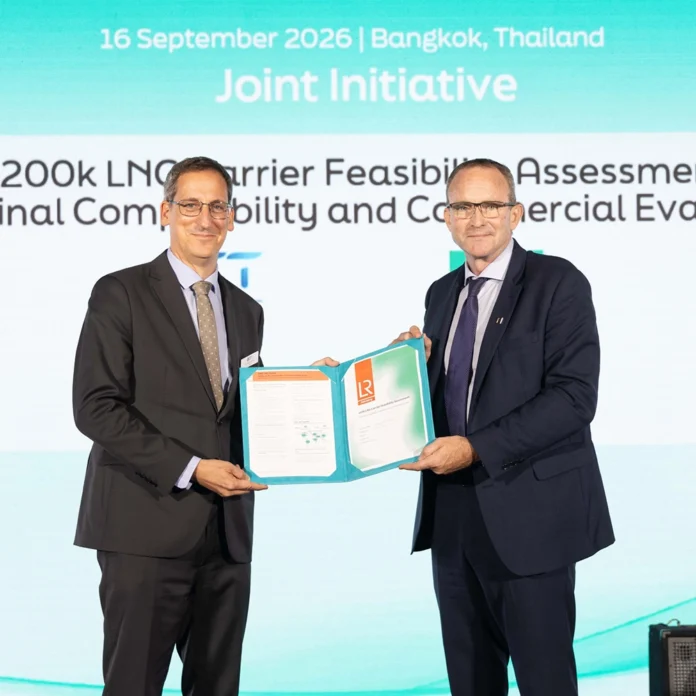
The study, prepared for GTT and presented at Gastech 2026, assessed representative 200,000-cbm LNG carrier designs against existing terminal infrastructure. It also examined their commercial performance on Atlantic and Pacific trade routes.
Larger LNG carriers retain broad terminal access
According to the analysis, 88 LNG terminals worldwide could accommodate the 200,000-cbm carrier concepts. This compares with 97 terminals accessible to a conventional 174,000-cbm LNG carrier.
Despite the reduction, LR said the available network includes many major LNG trading hubs. Modern terminals across Asia Pacific, Europe, North America and the Middle East are generally capable of accommodating vessels of this size.
The study also found little difference in terminal accessibility between three-tank and four-tank configurations.
Instead, vessel beam emerged as the main factor affecting compatibility, alongside draft and displacement.
“The significance of these findings is that larger LNG carriers do not appear to require a wholesale rethink of terminal infrastructure,” said Constantinos Chaelis, Global Gas Segment Director at LR.
LR estimates US$85.5 million potential owner benefit
LR’s commercial modelling also identified potential economic benefits from increasing LNG carrier capacity.
The study estimates a potential benefit to owners of approximately US$85.5 million over a 30-year period. Larger vessels could carry more LNG per voyage, reducing the number of sailings required to transport a given volume.
LR said this could become increasingly relevant as LNG carriers operate at lower average speeds and owners look to balance fleet renewal with transport efficiency and long-term operational flexibility.
“The industry is entering a period where fleet renewal decisions will shape LNG transportation for decades to come,” said Sujith Tooneri, Global Head – Newbuild Advisory Services at LR.
“Our analysis shows that 200,000m³ LNG carriers can retain access to most major LNG terminals while increasing cargo carrying capacity.”
The findings suggest that the 200,000-cbm segment could provide a practical step up from today’s conventional 174,000-cbm LNG carriers without requiring major changes across existing terminal infrastructure.