
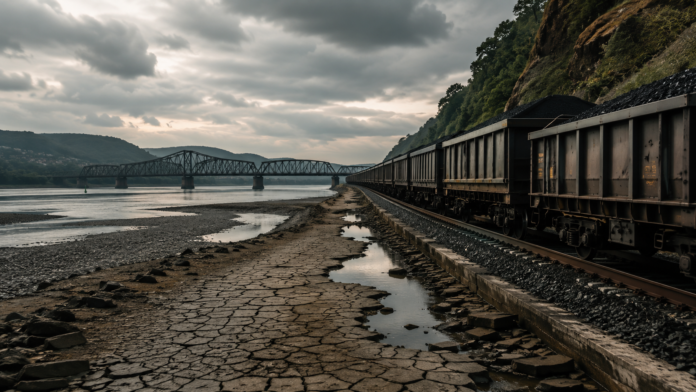

Low water levels on the Rhine are pushing more freight onto rail as inland shipping capacity comes under growing pressure.
RheinCargo has added trains between Rotterdam and Duisburg to support cargo flows affected by the low water. Meanwhile, DB Cargo has made around 400 additional freight wagons available at short notice.
The measures come as low Rhine water continues to disrupt European supply chains, including container, bulk and industrial cargo flows.
DB Cargo mobilises 400 additional wagons
DB Cargo is working directly with customers affected by restrictions on inland waterways.
The rail freight operator is assessing which shipments could move to rail. Around 400 additional freight wagons can be made available at short notice.
However, DB Cargo has not announced specific routes or cargo volumes for the additional capacity.
Instead, potential solutions will be assessed with customers based on their transport requirements and available rail capacity.
The move gives affected shippers another option as low water restricts freight movements on German inland waterways.
RheinCargo adds Rotterdam-Duisburg trains
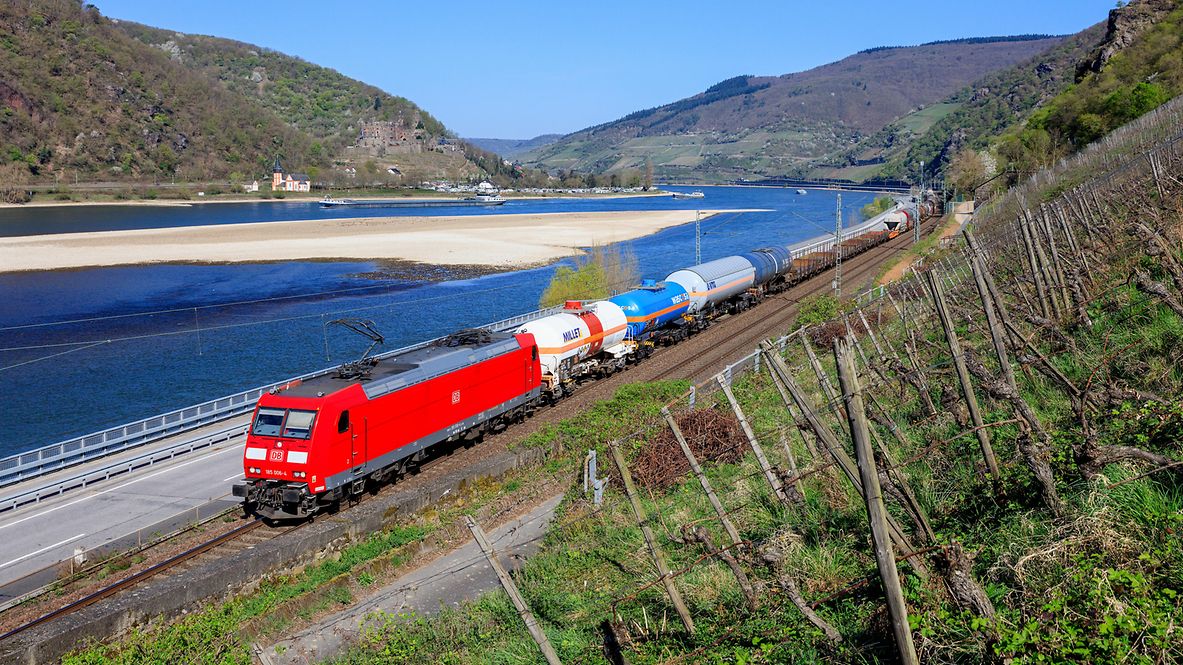
RheinCargo has already introduced additional trains between Rotterdam and Hüttenwerke Krupp Mannesmann (HKM) in Duisburg.
The trains supplement coal and iron ore shipments operated by HGK Dry Shipping on the Rhine.
Normally, HGK Dry Shipping transports around 24,000 tonnes of coal and iron ore per day from Rotterdam to Duisburg. However, low water has reduced this volume to approximately 14,500 tonnes per day.
To help cover part of the shortfall, RheinCargo is operating three train round trips per week.
Each train carries around 2,000 tonnes of coal. As a result, the additional rail operation provides approximately 6,000 tonnes of capacity per week.
RheinCargo has also leased 46 freight wagons for the operation. A Class 193 Vectron locomotive is being used to haul the trains.
The additional services are planned for at least eight weeks and initially until the end of September. Any continuation will depend on water levels on the Rhine.
Δείτε αυτή τη δημοσίευση στο Instagram.
Low Rhine levels put rail alternatives in focus
The latest measures follow growing disruption to freight and container transport along the Rhine.
Barge calls at the terminal became impossible under the prevailing conditions. As a result, containers have to move through alternative locations.
The additional capacity from DB Cargo and RheinCargo now shows how rail is becoming increasingly important as Rhine shipping remains restricted.
Rail provides a buffer
Despite the additional capacity, rail cannot fully replace the large volumes normally transported by inland vessels.
This is particularly clear on the Rotterdam-Duisburg route.
HGK Dry Shipping’s daily waterborne capacity has fallen by around 9,500 tonnes. By comparison, RheinCargo’s additional trains provide around 6,000 tonnes of capacity across an entire week.
Therefore, rail is acting as a buffer while inland shipping remains restricted.
For DB Cargo, the amount of freight that eventually moves to rail will depend on customer demand and available transport capacity.
The measures nevertheless show how rail operators are responding as persistent low water puts pressure on one of Europe’s most important inland freight corridors.