

KONGSBERG and the Ocean Exploration Trust (OET) have launched a new expedition to map unexplored areas of the Central Pacific seafloor.
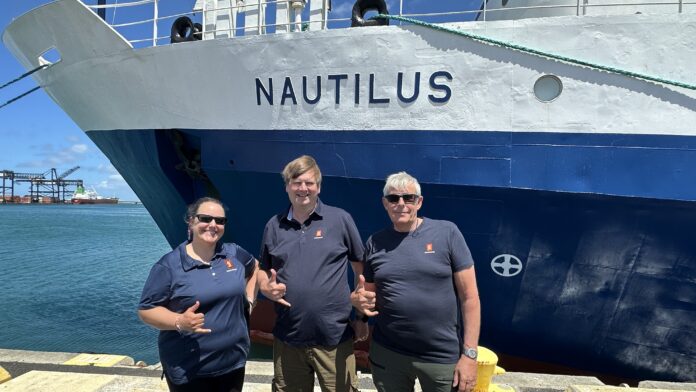
The Pacific Mapping (NA178) mission runs from 10 to 24 June aboard the Exploration Vessel Nautilus.
The expedition marks the first deployment of KONGSBERG’s EM 304 MKII multibeam echo sounder.
KONGSBERG has placed three engineers onboard Nautilus for the 14-day mission. The team will use the expedition to test and refine the system in real-world conditions.
Large areas of the world’s oceans remain unmapped at high resolution. Deep-water environments remain particularly challenging due to cost, access and technical limitations.
The EM 304 MKII is designed to improve mapping efficiency. The system operates at full ocean depth and combines wide coverage with high-resolution data collection.
According to OET, the technology will help researchers map complex seabed features such as canyons, seamounts, ridges, trenches and underwater volcanoes in greater detail.
The new system is expected to double the area surveyed compared to previous equipment while reducing operational time and costs.
The expedition also serves as a live testing platform for KONGSBERG.
Engineers will analyze data collected across different seabed environments to improve both hardware performance and software functionality.
Colleen Peters, Product Manager Mapping Software at KONGSBERG, said real-world testing is essential to validate system performance under the same conditions faced by customers.
She added that Nautilus provides an ideal environment for testing new technologies and evaluating how users interact with mapping software.
The project forms part of a broader collaboration between KONGSBERG, OET and the U.S. Navy’s Office of Naval Research, which supported the vessel’s recent technology upgrade.
KONGSBERG said the partnership will help accelerate innovation, improve seabed mapping capabilities and support future scientific, environmental and industrial applications.