
Strict warehouse climate controls help ensure product quality, structural integrity, compliance, and employee wellness. Maintaining the right temperature and humidity levels means approaching certain challenges strategically, such as thermal stratification, loading dock activity, building envelopes, and large spatial volumes.
Let’s take a closer look at warehouse layouts to understand their unique temperature requirements and find better solutions, including smart zoning, ductless HVAC technologies, destratification fans, and infiltration barriers.
Strategic Warehouse Zoning
First, get to know the heating and cooling conditions for every area in your warehouse. This will help you implement smart zoning strategies to manage costs, comfort, and quality. For instance, by dividing your facility into distinct thermal zones, you can cut back on AC costs in low-traffic storage aisles while increasing the AC in high-activity areas, like shipping and receiving zones.
Ductless HVAC Systems
One way to maintain different temperature settings for multiple zones is to install five-zone mini split systems, where five separate indoor units, called air handlers, connect to one outdoor unit.
These systems allow you to cool heat loads in high-occupancy zones like administrative offices and control rooms. Ductless split systems combined with VRF technologies provide much-needed targeted spot cooling in workshops and maintenance bays, where employees are exposed to rising heat levels from heavy machinery.
Ductless mini-split systems are also ideal for warehouse break rooms, as they often see intermittent spikes in occupancy, which cause fluctuating heat and humidity levels.
Destratification Fans
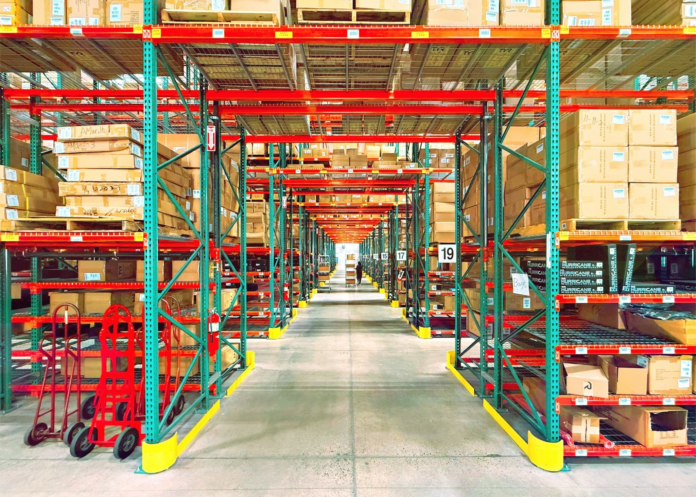
Keep in mind that warehouses have vast areas of storage space with high ceilings and concrete floors. These zones require stable temperatures to protect valuable inventory from degrading, warping, or spoiling if they’re perishable.
Destratification fans are crucial here, especially in a 40-foot-high warehouse where hot air rises and cold air settles near the concrete flooring. Without high-volume, low-speed (HVLS) ceiling fans, your commercial HVAC system will overwork itself, eventually becoming less reliable. These fans mix the air columns in storage zones to eliminate vertical temperature differences caused by thermal stratification, ensuring stable temperatures.
Common HVAC Challenges in Large Facilities
Traditional commercial HVAC systems, such as central heating and cooling, don’t have the capacity to distribute air throughout large buildings with deep envelopes. Such large spatial volumes in warehouses also cause cooled and filtered air to diffuse before it can reach work zones.
Another issue to be aware of is loading dock activity. Just think about the number of times doors are opened throughout the day. This constant activity quickly destabilizes indoor temperatures.
Instead, install high-speed roll-up doors, industrial air curtains, and dock seals. These infiltration barriers create a constant high-velocity air stream across the open loading dock bays, preventing outdoor air from rushing inside.
Implement Enhanced Warehouse Climate Controls
Calculate the potential savings of strategic temperature-control solutions, including reduced HVAC costs, product integrity, employee wellness, and warehouse efficiency. Next, add smart zoning, ductless systems, destratification solutions, and infiltration barriers to your warehouse climate checklist.
Warehouse temperature controls play a critical role in supply chain efficiency. Keep informing your supply chain management strategy with the latest news on freight operations, ports, and shipping services!