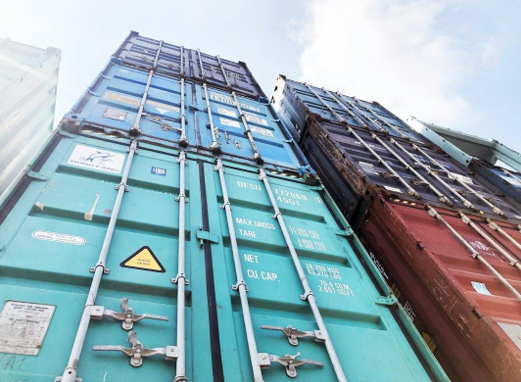
The container market is usually read from the deck or the quay. Rates, capacity, reliability and throughput all get measured close to the ocean leg. What happens after the box clears the terminal gate is somebody else’s beat. That last stretch is where the market’s decisions finally turn into stock on a floor, or into an empty space where stock should be.
Recreational marine retail is a useful place to watch that happen. A dealer such as Avalanche Motorsports NC sits at the end of that chain in eastern North Carolina. Its inventory starts on production lines overseas and finishes on a trailer beside a coastal highway. Boats, engines, trailers and accessories all take different routes to get there. The conditions this industry tracks daily reach that end months late, in a form most carriers never see.
Which Marine Goods Actually Move In Boxes?
Not everything on a dealership lot crossed an ocean, and not everything that did came in a container. The category splits roughly along size lines.
- Parts, accessories, electronics and apparel move as ordinary containerized freight.
- Outboard engines ship boxed and palletized, often in mixed consolidations.
- Trailers and small craft can fit a 40-foot box, sometimes nested.
- Larger hulls travel as breakbulk on cradles, or overland from domestic builders.
So the inbound mix runs from a part-filled 20-foot box to a flat rack. One retailer is therefore exposed to several freight modes at once. A rate move on the transpacific hits the accessory wall and the parts counter. It may not touch the boat on the showroom floor at all. Anyone reading retail demand from container volumes alone is working from a partial signal.
How Does Lead Time Turn Into a Stocking Decision?
A dealer’s binding constraint is not price. It is the gap between committing to an order and being able to sell the thing.
That gap forces a forecast. Floor space is finite, floorplan financing costs money, and a unit landing in the wrong month simply sits. So the order goes in against a guess about next season, made before this season has finished telling anyone what it wanted.
Reliability matters more here than speed. A predictable ten weeks is easier to plan around than a variable six. That is why monthly schedule reliability readings can be more useful to a downstream buyer than a spot rate print. A slipped sailing does not really cost a retailer freight dollars. It costs a selling week that never comes back.
Why Does the Spring Deadline Not Move?
Marine retail runs on a calendar that no commercial negotiation can shift.

Buyers shop in late winter and early spring, for the season ahead. Boat shows cluster in January and February. Water warms on its own schedule. A unit landing in July competes for a customer who already bought in April.
Seasonal goods with a hard deadline behave differently from general merchandise. At the retail end that shows up as a willingness to pay for certainty. It is not panic buying. It is a deadline that does not negotiate.
Do Parts and Whole Units Run On the Same Clock?
They do not, and the split is sharper than most upstream models assume.
A whole unit is an annual bet. A part is a same-week problem. When a customer’s engine is down in June, the part either exists in the region or the boat stays on its trailer. Service revenue depends on inventory depth that pure sales logic would call wasteful.
- Units: long lead time, seasonal deadline, high carrying cost, low reorder frequency.
- Parts: short tolerance, year-round demand, service revenue attached, frequent reorder.
- Accessories: sit between the two, and absorb much of the freight cost volatility.
Import compliance runs across all three. Classification, valuation and entry apply whatever the item is. Tariff classification and duty rates are already priced into the landed cost, before a single mile of trucking gets added. A duty change therefore reaches the parts counter faster than it reaches the boat ramp.
What Does the Inland Leg Really Cost?
Coastal does not mean close to a container port.
Eastern North Carolina reaches the box economy through gateways to its north and south. The southeast intermodal network has grown precisely because that leg was the expensive one. Four things decide what the final stretch costs a small receiver.
- Drayage distance from the discharge terminal to the dealer’s region.
- Chassis availability, which sets how quickly a box can actually leave.
- Storage and free-time overrun, which a receiver rarely controls.
- Final delivery into a yard laid out for boat trailers, not for 40-foot boxes.
Transloading a 40-foot ocean box into a 53-foot domestic trailer is routine once the move runs far inland. Detention and demurrage exposure lands here too, on a party with no say over the schedule that created it. The Federal Maritime Commission oversees much of that carrier relationship. For a small retailer, the last 100 miles can carry a cost share out of all proportion to its distance.
What the Showroom Tells the Liner Market
Downstream behavior is a slow signal, but it is a real one.
Retail order books reflect what the market did two or three quarters ago, filtered through a season that cannot be rescheduled. When a dealer orders conservatively, that is a judgment about landed cost and reliability, not only about consumer confidence. Read enough of those judgments together and a demand picture appears that no rate index publishes.
Small receivers also reveal where the system is failing quietly. They have the least buying power and the least schedule flexibility, so friction reaches them first. The far end of the chain is where the market’s abstractions finally become inventory.
Frequently Asked Questions About Marine Retail Freight
Do Boats Themselves Ship In Containers?
Smaller craft often do, and trailers and hull components frequently travel boxed. Larger boats move as breakbulk on cradles, or overland from domestic builders. Most dealership container exposure sits in parts, engines and accessories rather than finished hulls.
Why Is Schedule Reliability More Important Than Rate Level?
A retailer prices a season rather than a shipment. Predictable transit lets a unit be ordered against a known selling window. A cheap sailing that arrives late can cost the whole season’s margin on that unit.
What Makes Marine Retail Seasonality Different?
The deadline is set by weather and by boat show timing, not by a promotion calendar. Demand concentrates into a few months and does not roll forward. A late arrival converts a sale into a carryover unit.
How Much of Landed Cost Sits Inland?
It varies by gateway and by distance from the terminal. Drayage, chassis, storage and any free-time overrun can take a meaningful share. For a receiver well away from a major port, the inland leg is rarely a rounding error.