
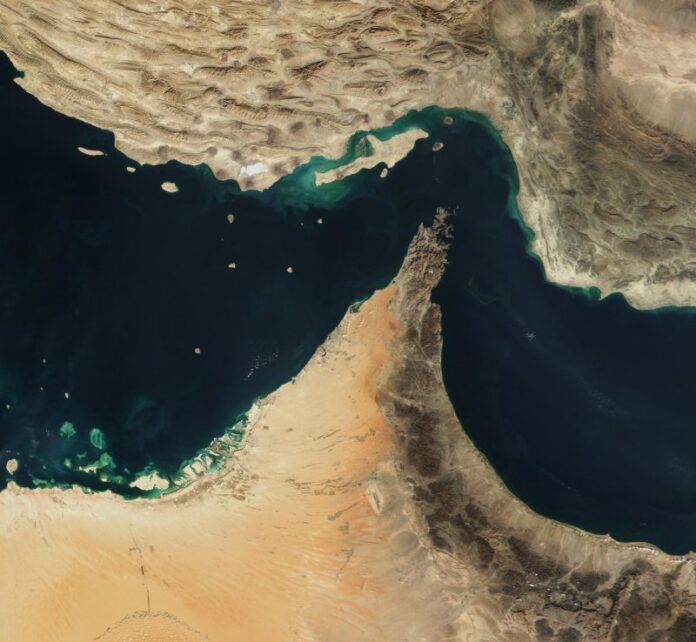
The US and Iran are set to sign an interim peace deal at the end of the week which will include an agreement to reopen the Strait of Hormuz, possibly within thirty days, and will start the clock on a sixty-day window to arrive at a final deal. As the sides haven’t released the text of the agreement, there is significant uncertainty around the Memorandum of Understanding’s details and timeline for the reopening.
The war’s broadest impact on freight markets has been via upward pressure on fuel prices. The reopening could mean some near term easing of fuel costs for carriers. President Trump asserts that the Strait will be fully open by the time of the signing, but even if both blockades are lifted then, the consensus is that a full return of traffic will likely take months as the narrow passage is further narrowed by Iranian mines. It will take time to de-mine the waterway, with some countries who have committed to the de-mining process hesitant to join the effort until a final peace deal is in place, meaning ships will have to rely on the few established safe lanes in the interim.
Experts estimate it will take several weeks for daily transits to recover to half of the pre-war norm, and much longer, possibly six months, for oil flows to normalize. In addition to out of place tankers and damage to infrastructure, even once vessels exit, it takes about seven weeks for crude to arrive in the Far East, with an even longer timeline for availability of refined products like bunker and jet fuel first dependent on those crude shipments arriving. The fact that many countries will seek to prioritize replenishing strategic reserves could likewise mean a commercial supply rebound will take time and that downward pressure on oil prices and on fuel costs will be gradual.
For the container market, near-term easing fuel costs would reduce some of the upward pressure on rates that have kept prices higher year on year since the start of the war. But while reduced Emergency Fuel Surcharges will be relevant for spot shipments, large shippers with annual contracts will still be paying higher rates via Q3 BAFs even as fuel costs decline.
Once fuel prices do normalize though, we could expect freight rates to pick up where they left off before the war: downward pressure on prices from a growing fleet. And if the peace deal hastens a broad carrier return to the Red Sea, that downward pressure will be even stronger.
Given this drawn out timeline for oil and fuel recovery however, this easing will come too late to make much of a difference for container rates this peak season. And in any case, spiking container rates at the moment are mostly being driven by peak season demand, not oil prices.
Spot prices on the major lanes were level last week, maintaining the sharp – $1k/FEU or more – GRI and PSS increases that carriers introduced to start the month. Reports that vessels are fully booked through the end of the month and that carriers are rolling containers and reducing allocations make it likely that mid-month increases will take too, with Asia – Europe daily rates already climbing about 10% this week.
Carriers have announced mid-month increases ranging from $1,000/FEU to $2,000/FEU above current levels for Asia – Europe lanes, with additional increases as much as $2,000/FEU higher than anticipated mid-June levels planned for the start of July. Likewise, CMA CGM has reportedly announced a $4,000/FEU PSS for all transpacific containers starting July 10th. And as carriers shift capacity to these lanes where demand is surging, rates are climbing on secondary lanes as vessels are moved away.
The early start to peak season – driven partially by frontloading ahead of BAF increases, tariffs, and coming manufacturer price hikes – has some observers expecting bookings to peak in June, which could mean carriers will find more resistance to July rate increases than they have to June price hikes so far.
Air cargo capacity and volumes continue to recover from the sharp March war-related deficit, with reports that Gulf carriers have restored capacity to about 70% of pre-war levels. But the remaining 30% gap, as well as non-Gulf carriers still mostly avoiding the Middle East, mean that the industry hasn’t normalized yet.
In addition to the lingering capacity slump, elevated jet fuel prices are also contributing to air cargo rates that continue to face upward pressure. Jet fuel prices are about 40% above pre-war levels though they have come down by about 35% from the war-period high reached in April, and some carriers are reducing Emergency Fuel Surcharges as a result.
The Freightos Air Index global benchmark closed last week level with the past two weeks and down 10% from its year high set in May, but still 30% higher year on year and relative to just before the war. Rates on the major lanes are showing similar trends.
China – N. America rates were level at $6.20/kg last week, a price 15% down from a peak in March but 17% higher year on year. China – Europe rates ticked up 3% to $4.62/kg, down 12% from their wartime peak, but still 30% higher than late February and 21% higher than last year. S. Asia prices are at about $4.50/kg to Europe and $3.17/kg to the Middle East, with Europe rates down 12% from their peak but up 50% year on year and Middle East prices 70% higher than a year ago but down 25% from their peak as Gulf capacity recovers.
Judah Levine, Head of Research, Freightos Group (Nasdaq: CRGO)