
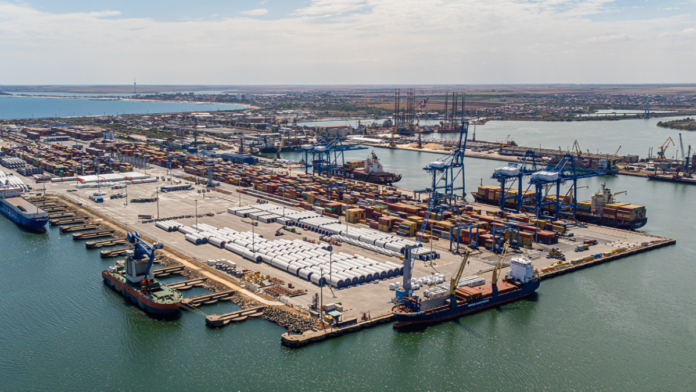
DP World has signed an agreement with French research organisation CEA and strategy specialist TerraWater Institute to conduct a feasibility study into the application of Small Modular Reactor technology at the Port of Constanța in Romania.
The study will assess how nuclear energy could meet the port’s long-term energy needs, support decarbonisation and strengthen operational resilience as electrification and industrial growth place increasing pressure on existing power systems.
The study will model projected energy demand at Constanța from 2030 to 2050, evaluate integrated low-carbon energy systems and assess the technical, strategic and economic feasibility of nuclear-based solutions.
Safety standards and considerations for surrounding communities will also be examined, drawing on CEA’s expertise in SMR design and nuclear safety.
Nicholas Mazzei, VP Sustainability for Europe at DP World, described nuclear SMRs as a competitive infrastructure asset rather than simply an environmental measure, framing the study as part of a broader effort to understand how nuclear energy can underpin the next generation of industrial activity and supply chains across Europe.
Myrto Tripathi of TerraWater Institute emphasised the importance of designing future energy systems around the actual needs of industries and communities rather than allowing supply considerations to dictate terms.
Stéphane Sarrade of CEA highlighted the value of applying advanced modelling to a real port environment to assess how SMRs could be practically integrated.
The Constanța study builds on DP World’s broader nuclear energy exploration, including a memorandum of understanding signed last year related to the company’s UK port operations, reflecting a sustained strategic interest in nuclear as a long-term energy solution across its global portfolio.