
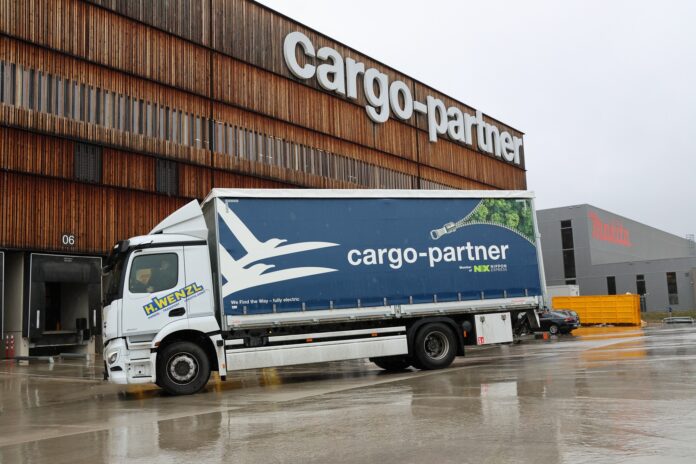
Cargo-partner, a member of the Nippon Express Group, has announced a significant expansion of its road transport services across Europe, with a strategic focus on trade corridors connecting Slovakia, the Czech Republic and Poland with Italy, Türkiye, the United Kingdom and Ireland.
The expansion responds to growing freight demand and increasing interest in nearshoring as European businesses reconfigure their supply chains closer to home markets.
On the Italy to Central and Eastern Europe corridor, cargo-partner offers up to five weekly departures in both directions, serving Slovakia, the Czech Republic, Austria, Hungary and Poland with door-to-door transit times starting from three days.
Demand on this route is particularly strong from the automotive, machinery and furniture sectors.
The Türkiye to CEE corridor is seeing growing interest driven by nearshoring trends, with weekly import and export services connecting Istanbul to destinations including Brno, with transit times from seven days.
Intermodal transport is gaining traction on this route as a cost-effective and environmentally preferable alternative to full truckload road transport, with the added benefit of reducing border delay risk.
For UK and Ireland trade, cargo-partner operates twice-weekly groupage departures from the UK to Poland, Austria, the Czech Republic, Slovakia, Hungary, Croatia and the Baltic states, complemented by daily groupage, part load, full load and express van services across the Irish Sea.
The expanded offering integrates transport with customs support, warehousing, consolidation, fulfilment and distribution across a broad European network.
Linehaul services from the Austrian hub reach destinations across Central and Eastern Europe, the Balkans and the former Soviet states, supported by warehouse facilities operated by cargo-partner and NX Group across the continent.
Mirko Blazevic, Director Road Europe Operations at cargo-partner, described the expansion as an effort to build a flexible and efficient network that actively removes obstacles from customer supply chains rather than simply moving goods from point to point.