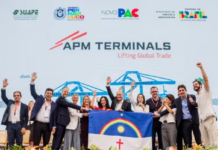

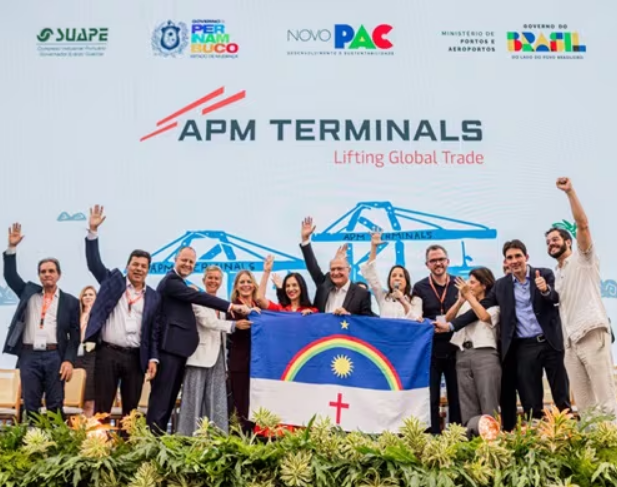
APM Terminals has delivered its new container terminal at the Port of Suape in Pernambuco, Northeast Brazil, as the facility enters its final stages before commencing commercial operations.
The terminal represents an investment of more than US$ 350 million and will be the first fully electrified container terminal in Latin America, setting a new benchmark for sustainable port operations in the region.
Designed to increase the Suape Port Complex’s container handling capacity by 55%, APM Terminals Suape will initially handle up to 400,000 TEUs per year.
The facility is expected to strengthen connectivity between Pernambuco and key markets across Latin America, North America, Europe and Asia, addressing a long-standing need to diversify Brazil’s logistics network beyond the South and Southeast regions.
A study by A&M Infra, Navarro Prado Advogados and APM Terminals projects that the terminal has the potential to generate up to BRL 4.8 billion in additional exports, approximately BRL 4.9 billion in GDP contribution and more than 43,000 jobs across foreign trade-related value chains.
The project has already created thousands of direct and indirect employment opportunities during its construction and commissioning phases.
Brazilian Minister of Ports and Airports Tomé Franca described the terminal as evidence of international confidence in Brazil’s role in global trade, framing it as a strategic investment that positions Pernambuco as a key node in the country’s relationship with international markets.
Armando Monteiro Bisneto, CEO of the Suape Port Complex, highlighted the terminal as a signal of Pernambuco’s readiness to attract major investment and lead a new cycle of sustainable growth and competitiveness.
Daniel Rose, Managing Director of APM Terminals Suape and Pecém, described the project as a long-term commitment to Brazil’s growth, developed in close collaboration with Brazilian authorities and partners, and positioned as both an intermodal gateway for the Northeast and a new standard for modern port operations across Latin America.