

Air vs Ocean Freight for Components: The Landed-Cost Math
A buyer looks at two freight quotes for the same crate of machined parts. Ocean: a few hundred dollars. Air: well over a thousand. The choice looks obvious — until the parts land five weeks late and a production line sits idle waiting on them. That’s the trap with freight mode. The number on the quote is the one cost everybody compares, and the one that matters least once the cargo is small, dense, and worth more than the container it ships in. For industrial components, picking ocean to save on freight can quietly cost more than air ever would.
Total landed cost is the all-in price of moving goods from a supplier’s dock to your own — freight, duty, brokerage, and every fee in between, plus the money tied up while the shipment is in transit. It’s the number that actually decides which freight mode is cheaper, and it rarely matches the freight quote.
Why the Freight Quote Lies
Most mode decisions start and end with the rate sheet. Air is dearer, ocean is cheaper, done. The physics behind the gap is real — aircraft burn far more fuel per kilo than a vessel, so air runs roughly 8 to 16 times the per-kilogram cost of ocean, and moves goods about 4 to 8 times faster.
Air’s Premium, Ocean’s Tail of Costs
But the ocean quote is only the start of the ocean bill. Drayage from the port, terminal handling, chassis fees — all after the fact. Then the ones nobody quotes: demurrage when a box sits too long at the terminal, detention when you hold the container past its free days, and the storage you eat when a customs hold lands at the worst possible time. A cheap port-to-port rate can swell by the time the crate reaches your dock.
Chargeable Weight, Not Actual Weight
Air pricing has its own quirk. You pay on chargeable weight — the greater of actual weight or volumetric weight. For light, bulky cargo, that hurts. But machined metal parts are the opposite: dense and small. A crate of them bills close to actual weight, which means air freight on heavy-for-their-size components is less brutal than the bulk-cargo rule of thumb suggests.
The 15% Rule and Where Small Parts Break It
Forwarders use a rough screen: air earns its keep when freight runs under about 15 to 20 percent of the goods’ value.
Freight as a Share of Value
The logic is simple. On a low-value, heavy shipment — furniture, say — freight can swallow a third of the cargo value, so ocean is the only sane call. On high-value cargo, the same freight bill barely registers as a percentage, and speed starts paying for itself. Ocean carries roughly 90 percent of world trade by volume, yet air still moves over a third of it by value. Light, costly things fly.
Where Precision Components Sit
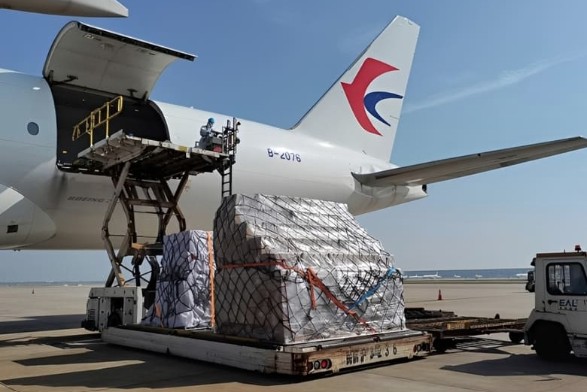
Industrial machined parts land squarely in the fly-it-maybe zone. A crate of precision components from a Shenzhen manufacturer — connector pins, titanium fittings, Swiss-machined shafts — weighs almost nothing against its value. Ship $80,000 of small parts and the air premium might be $700 over ocean. That sounds like money, until you price what the extra month at sea costs you. Which is the part most buyers skip.
The Costs That Never Hit the Quote
Here’s where the real number lives.
Money Asleep in a Container
Cargo in transit is capital you can’t touch. Carry $80,000 of components for an extra 29 days at a 20 percent annual carrying cost, and that’s about $1,270 — gone, just for choosing the slow boat. That alone wipes out the $700 you saved on freight. The cheaper mode lost, and nothing has even gone wrong yet.
When Something Does Go Wrong
| Cost element | On the freight quote? | Who eats it |
| Ocean or air freight | Yes | Buyer, per Incoterm |
| Import duty + Section 301 | No | Importer |
| MPF / HMF / brokerage | No | Importer |
| Demurrage / detention | No | Importer |
| Inventory carrying cost | No | Buyer |
| Stockout or line-down loss | No | Buyer |
The bottom rows are the killers. A delayed shipment of a $5 machined bracket can idle an assembly line that bleeds thousands an hour. Air doesn’t just move faster — it moves more predictably, with more flights and a shorter recovery if you miss one. Ocean’s failure modes pile up over weeks: blank sailings, port congestion, a missed transshipment.
A Worked Comparison
Put numbers to it. Same shipment — $80,000 of small machined parts, about 200 kg, China to the US. Figures are illustrative, and your lanes will differ, but the shape holds.
| Factor | Ocean (LCL) | Air |
| Door-to-door transit | ~35 days | ~6 days |
| Freight + drayage | ~$450 | ~$1,150 |
| Inventory carry, extra days | ~$1,270 | baseline |
| Line-down exposure | higher | lower |
| Position | freight-cheap, carry-heavy | freight-dear, carry-light |
On the freight line, ocean wins by $700. On landed cost, air is ahead before you even price the risk of a line going down. Flip the cargo to low-value bulk and the table inverts — ocean wins in a walk. That’s the whole point: mode depends on what’s in the box, not on which rate looks smaller.
I watched this play out on a first article run once. The buyer shipped a batch of machined housings by ocean to save a few hundred dollars, the box caught a peak-season general rate increase and a week of port congestion, and the parts showed up eleven days late. The receiving plant had already idled the cell waiting on them. The freight “saving” was gone many times over by lunchtime on day one. Nobody put that loss on a spreadsheet next to the freight quote — which is exactly the problem.
When Each Mode Actually Wins
Ocean is the right call far more often than air, and not only for bulk.
Ocean’s Territory
Stable demand, healthy lead times, and cargo where freight is a real fraction of value — that’s ocean’s home ground. If you can forecast it and afford to wait, the boat is cheaper on landed cost too, not just on the quote. Most steady production volume belongs at sea.
When to Pay for Air
Air earns it when value density is high and time is short: first production runs, a stockout about to halt a line, an engineering change that has to reach the floor now, or a high-value component where a month of tied-up capital costs more than the flight. Book it ahead, though — last-minute air can run three to five times the planned rate, which can break the very math that justified flying.
Bottom Line
Freight mode isn’t really a freight question. It’s a landed-cost question wearing a freight quote’s clothes. The rate sheet shows one number; the real cost folds in duty, the fees nobody mentions, the capital sleeping in transit, and what a stalled line does to a month’s margin. For small, dense, high-value components, ocean’s cheaper rate routinely loses once you total it all up — and for low-value bulk, air’s speed isn’t worth the premium. Price the whole journey, not the quote. The cheapest line on the invoice is almost never the cheapest way to ship.