

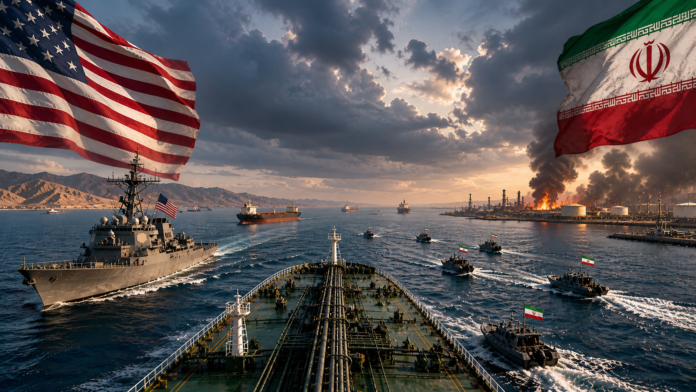
The fragile ceasefire in the Middle East is under growing strain as the United States and Iran intensify their confrontation over control of the Strait of Hormuz, as Al Arabiya English reported, and according to Reuters.
Naval clashes and “Project Freedom”
According to Reuters, the U.S. military said it destroyed six Iranian small boats, along with cruise missiles and drones, as part of an operation to escort stranded tankers through the strait.
U.S. President Donald Trump has branded the effort “Project Freedom,” aimed at reopening one of the world’s most critical energy corridors.
Iran, however, disputes the U.S. account. Iranian officials claim no such losses occurred and accused U.S. forces of targeting civilian vessels.
Conflicting narratives from both sides
Statements from both countries continue to diverge sharply:
- Iran said it fired warning shots at a U.S. warship approaching the strait, forcing it to turn back
- The U.S. denied any damage or successful Iranian action against its vessels
- Iran accused the U.S. of violating the ceasefire, while Washington maintains it is ensuring maritime security
Mohammad Bagher Ghalibaf said the situation threatens global shipping and energy transit, blaming the U.S. and its allies for escalating tensions.
Shipping incidents and regional fallout
Reuters reports multiple maritime incidents across the Gulf:
- Several merchant vessels reported explosions or onboard fires
- Two ships were struck off the UAE coast, according to the UK Maritime Trade Operations (UKMTO)
- A tanker linked to ADNOC was reportedly hit by Iranian drones
- A fire broke out at Fujairah following missile and drone attacks
South Korea also confirmed that one of its vessels, HMM Namu, experienced an onboard explosion, though the cause remains unclear.
Strategic choke point under pressure
The Strait of Hormuz, through which roughly 20% of global oil flows, has been largely disrupted since the conflict escalated in late February.
Iran’s Islamic Revolutionary Guard Corps is believed to be enforcing control through:
- Naval patrols
- Drones and missile systems
- Threats of sea mines
In response, the U.S. has imposed a blockade on Iranian ports while escorting commercial vessels.
Limited transit and market reaction
Despite the tensions, some vessel movements have been reported. According to Reuters, a U.S.-flagged ship—Alliance Fairfax—was escorted out of the Gulf with U.S. naval support, although Iran denied that any such transit occurred.
Oil markets reacted sharply, with prices rising as much as 6% before easing slightly on signs of limited progress in reopening the route.
Diplomatic efforts remain uncertain
Iranian Foreign Minister Abbas Araghchi said there is no military solution, noting that talks mediated by Pakistan are ongoing.
However, negotiations remain fragile:
- Iran has proposed delaying nuclear discussions until after a ceasefire agreement
- The U.S. insists nuclear issues remain central to any deal
According to Reuters, recent intelligence assessments suggest only limited damage to Iran’s nuclear program so far.
Outlook
With both sides maintaining military pressure and issuing conflicting claims, the situation in the Strait of Hormuz remains volatile.
The ongoing disruption continues to:
- Threaten global energy supply chains
- Increase shipping risk and insurance costs
- Drive uncertainty across commodity markets
For now, the ceasefire appears increasingly fragile, with further escalation still a significant risk.