
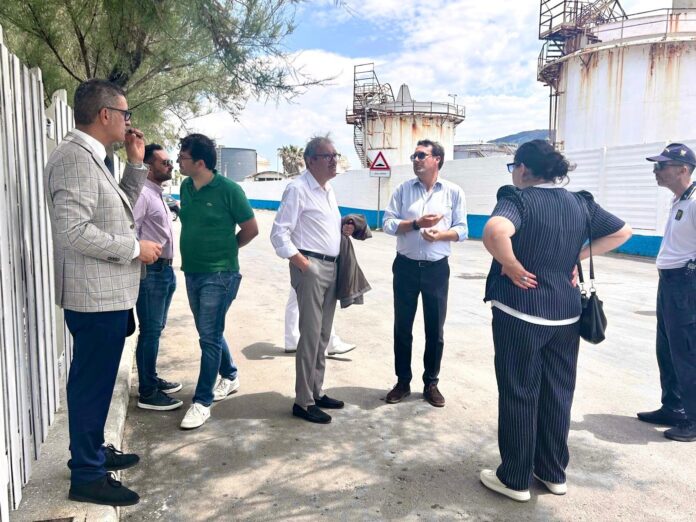
The Southern Tyrrhenian and Ionian Sea Port Authority convened an institutional meeting at Vibo Valentia Marina to share development plans for the port’s infrastructure and its interconnection with the surrounding urban fabric.
The meeting marks the first in a series of port visits planned by the Port Authority Management Committee, designed to engage local institutions directly in discussions about each port’s future development and review ongoing or forthcoming investments.
The delegation was led by Port System Authority President Paolo Piacenza, accompanied by Director of Peripheral Areas Giuseppe Cardona, colleagues from the Vibo Valentia Marina office, Frigate Captain Guido Avallone as port commander, and members of the Management Committee.
Following a sea tour of the port facilities, the delegation met with Vibo Valentia Mayor Enzo Romeo to discuss the contents of the Strategic Planning Document, the primary medium to long-term planning instrument governing port development under Italian port law.
President Piacenza presented the Committee, the Mayor and the Port Authority Captain with a portfolio of projects and their implementation timelines for the Port of Vibo Marina.
The programme includes the redevelopment of the Cortese Dock, the demolition of the former Civam building scheduled to begin by October 2026, and works related to the redevelopment of port entrances and offshore infrastructure.
The total investment across the 2026 to 2028 three-year period amounts to approximately €90 million, with investments planned for 2026 reaching approximately EUR€12.3 million.
The meeting reinforced the Port Authority’s commitment to strengthening institutional dialogue with local communities and building a shared vision for Vibo Valentia Marina’s role in the economic, logistical, tourism and infrastructure development of the broader region.