
The global maritime sector is navigating an unprecedented era of change, pushing Hellenic Shipping to balance rigid environmental mandates like the EU MRV and IMO DCS with the volatile costs of regulatory compliance.
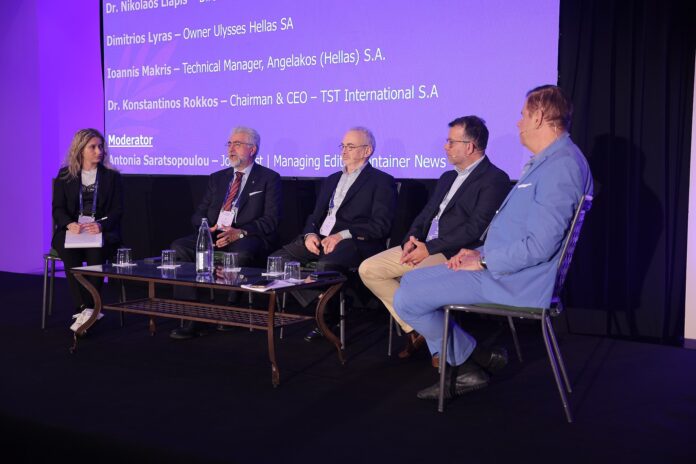
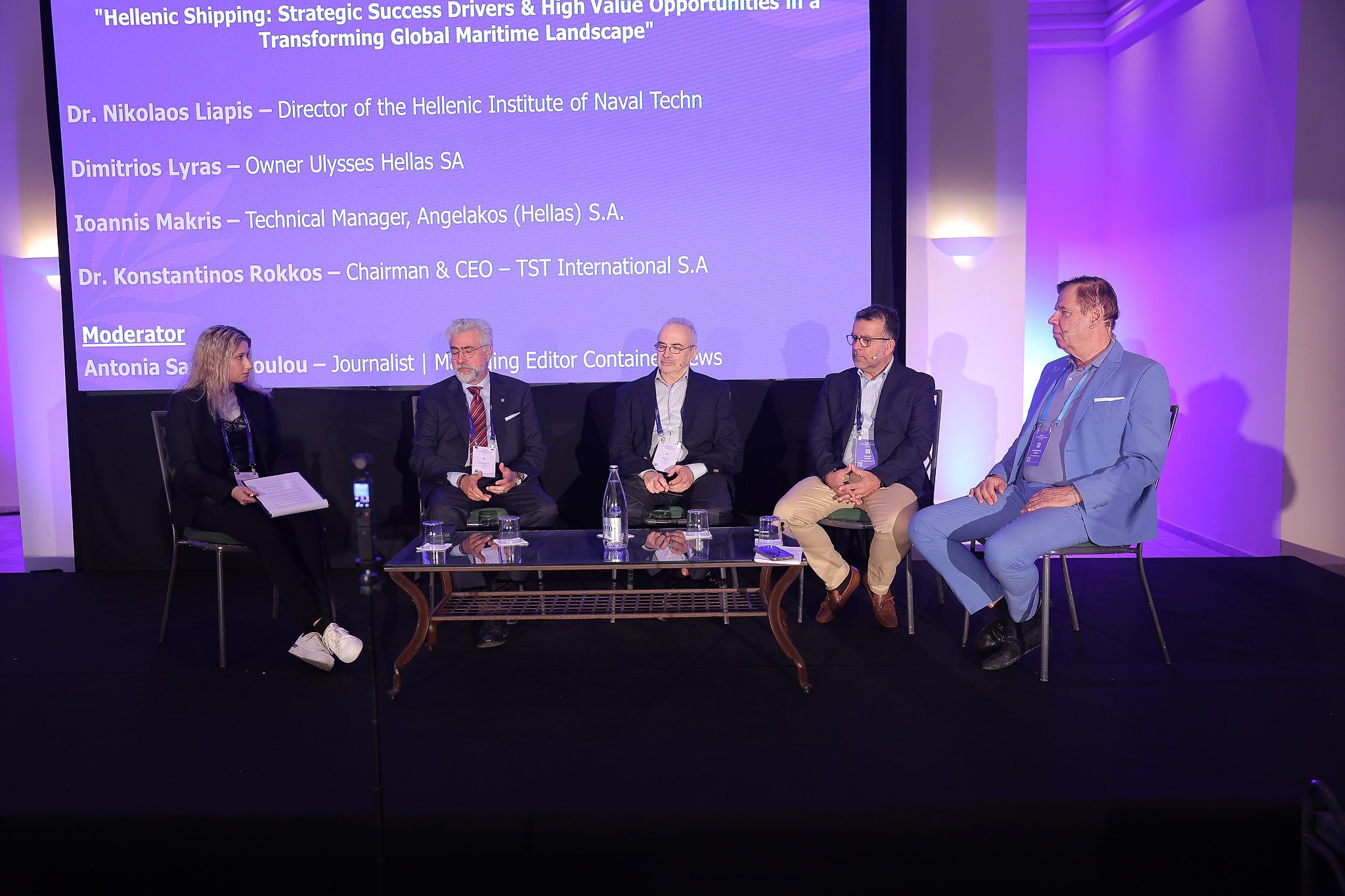
At the recent high-level Maritime Technical Networking Summit held at the Grecotel La Riviera in Greece, a panel of prominent industry figures gathered to dissect these pressing issues. The core panel session, titled “Strategic Success Drivers & High Value Opportunities in a Transforming Global Maritime Landscape,” was managed by Antonia Saratsopoulou, Managing Editor of Container News, who served as the overall summit moderator.
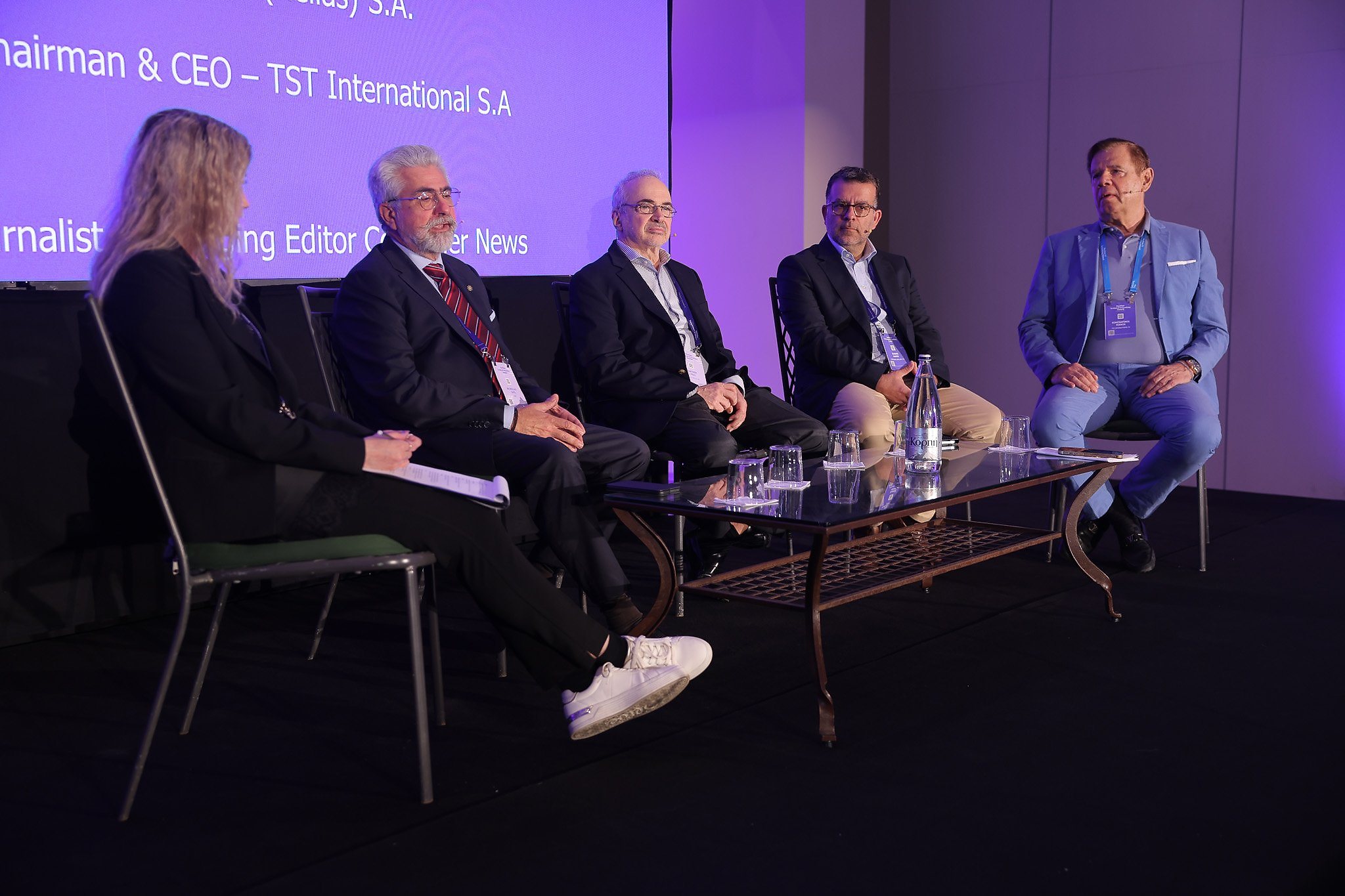
Drawing strictly from the executive insights shared during the event, this article outlines how the industry can leverage data, evaluate fuel alternatives, and empower the human element to maintain its global competitive edge.
Data Over Heavy Investment: Redefining Fleet Efficiency
A primary takeaway from the panel was a critical reality check on digitalization: the shipping industry does not necessarily need more data, but rather a drastic shift in how it interprets existing information. For leaders in the maritime sector, unlocking this data holds the key to immediate optimization without prohibitive capital expenditure.
Dimitrios Lyras, Owner of Ulysses Hellas SA, emphasized that shipping companies have been collecting massive volumes of streaming data for years. According to Lyras, the true bottleneck lies in the industry’s inability to integrate this information into daily strategic decision-making.
He noted that properly analyzing and acting upon the data already at hand can achieve an immediate 10% to 24% reduction in operating expenses (OPEX) across both shore-side operations and active vessels. Consequently, he urged companies to focus heavily on practical IT and data-driven workflow optimization rather than getting distracted by the industry’s theoretical decarbonization hype.
Adding a technical perspective to fleet efficiency, Ioannis Makris, Technical Manager at Angelakos (Hellas) S.A., pointed out that many captains still rely on traditional, fixed trim settings. In reality, optimal trim changes constantly based on real-time hydrodynamic and weather conditions, a process that requires specialized software-based data tools and high-frequency analytics to achieve maximum efficiency.
For physical modifications, Makris advocated for proven energy-saving devices with high returns on investment (ROI) and quick payback periods, such as Mewis Ducts. However, he closed with a warning that strict regulatory frameworks like the EU MRV, IMO DCS, and CII inherently favor large fleets capable of balancing emissions averages across multiple hulls.
As a result, smaller owners managing one to five ships face an existential threat of forced market consolidation because they lack the massive capital needed for heavy green upgrades.
Alternative Fuels vs. The Geopolitical Reality of Regulations
As the sector faces strict European and international environmental targets, the panel expressed pragmatic skepticism regarding the near-term viability of mainstream alternative fuels.
Dr. Nikolaos Liapis, Director of the Hellenic Institute of Naval Technology (HINT), shared a practical case study demonstrating that automating the pitch control on Controllable Pitch Propellers (CPP) using data analytics can effortlessly yield a 10% fuel saving by removing human error from the equation.
When discussing future fuels, Liapis dismissed ammonia and hydrogen as unviable and impractical options for commercial shipping. Instead, he proposed investing in the pyrolysis of plastic waste to create a cheap, renewable, drop-in fuel similar to traditional heavy fuel oil (HFO) that requires zero engine modifications. For ultra-large vessels, he highlighted molten salt nuclear reactors as the ultimate long-term autonomy solution.
Beyond technology, Liapis fiercely criticized Greece’s lack of permanent technical representation at the IMO. While countries like Japan send massive technical delegations to shape international maritime laws to their own commercial advantage, Greece often relies on underfunded individuals. He strongly demanded that state funds be directed toward establishing permanent scientific support for Greek delegations.
The fuel debate extended into an audience question regarding the long-term viability of LNG as a green fuel. Makris noted that LNG remains a fossil fuel hindered by severe methane slip risks across the supply chain, while Bio-LNG lacks the global biomass availability to scale effectively.
He argued that the maritime world will likely rely on heavy fuel oil paired with scrubbers for the foreseeable future. Instead, Makris championed cold ironing (shore-side electricity) as a more immediate, tangible solution for reducing emissions in port cities. However, he voiced major concerns over whether local power grids will actually be capable of delivering the massive electrical capacity required by ports before the upcoming European deadlines.
The Human Element: Leadership, Coaching, and Crew Incentives
While technical and fuel solutions dominated the regulatory debate, the panel firmly established that technology is ineffective without human alignment.
Dr. Konstantinos Rokkos, Chairman & CEO of TST International S.A., reminded the room that shipping is fundamentally about people, not just capital. He stated that no digital tool or hardware retrofit can succeed without building a robust culture of safety and optimization among the crew and office staff.
According to Dr. Rokkos, the ongoing technological revolution requires corporate leaders to change their management styles completely. He suggested that maritime executives should dedicate 20% to 30% of their daily routine to active coaching and mentorship to ensure all technical departments speak the same operational language.
Furthermore, the discussion highlighted the success of utilizing modern real-time telemetry—such as onboard cameras with automated office alarms—for predictive accident prevention. Crucially, Dr. Rokkos argued that companies must provide clear financial incentives to crews when specific voyage-optimization and fuel-saving targets are met, completing a vital chain of operational efficiency.
Summary of Key Operational Focus Areas
| Speaker | Primary Focus Area | Estimated Operational Impact |
| D. Lyras | Analytical utilization of existing streaming data | 10% – 24% OPEX reduction across office & fleet |
| I. Makris | Dynamic trim optimization via software; Mewis ducts | Low-cost optimization; rapid ROI |
| Dr. N. Liapis | Automated CPP pitch control; plastic waste pyrolysis | 10% fuel savings; drop-in fuel viability |
| Dr. K. Rokkos | Crew coaching, real-time telemetry, & financial bonuses | Enhanced safety culture; sustained fuel efficiency |
Conclusion: The Path Forward for Hellenic Shipping
The discussions at the summit made one reality connection clear: maintaining global dominance requires a shift from speculative, capital-intensive bets to pragmatic, immediate operational adjustments.
Rather than waiting for unproven alternative fuel infrastructures to mature, shipowners can secure substantial competitive advantages today by optimizing existing assets through streaming data, demanding stronger structural representation at international regulatory bodies like the IMO, and evolving corporate leadership cultures to prioritize continuous crew coaching alongside financial incentive programs.

As environmental regulations tighten and market pressures threaten smaller independent fleets with forced consolidation, the ultimate success driver will not be the size of the green investment, but the intelligence and agility of the operational execution.